CrossFit Grows in Korea as Seoul Level 1 Course Draws New Coaches
Seoul’s Level 1 course shows CrossFit’s coaching pipeline is still expanding fast in Korea, where affiliates have grown from 100 in 2021 to 325 today.
Seoul is where CrossFit’s coaching pipeline looks busiest right now
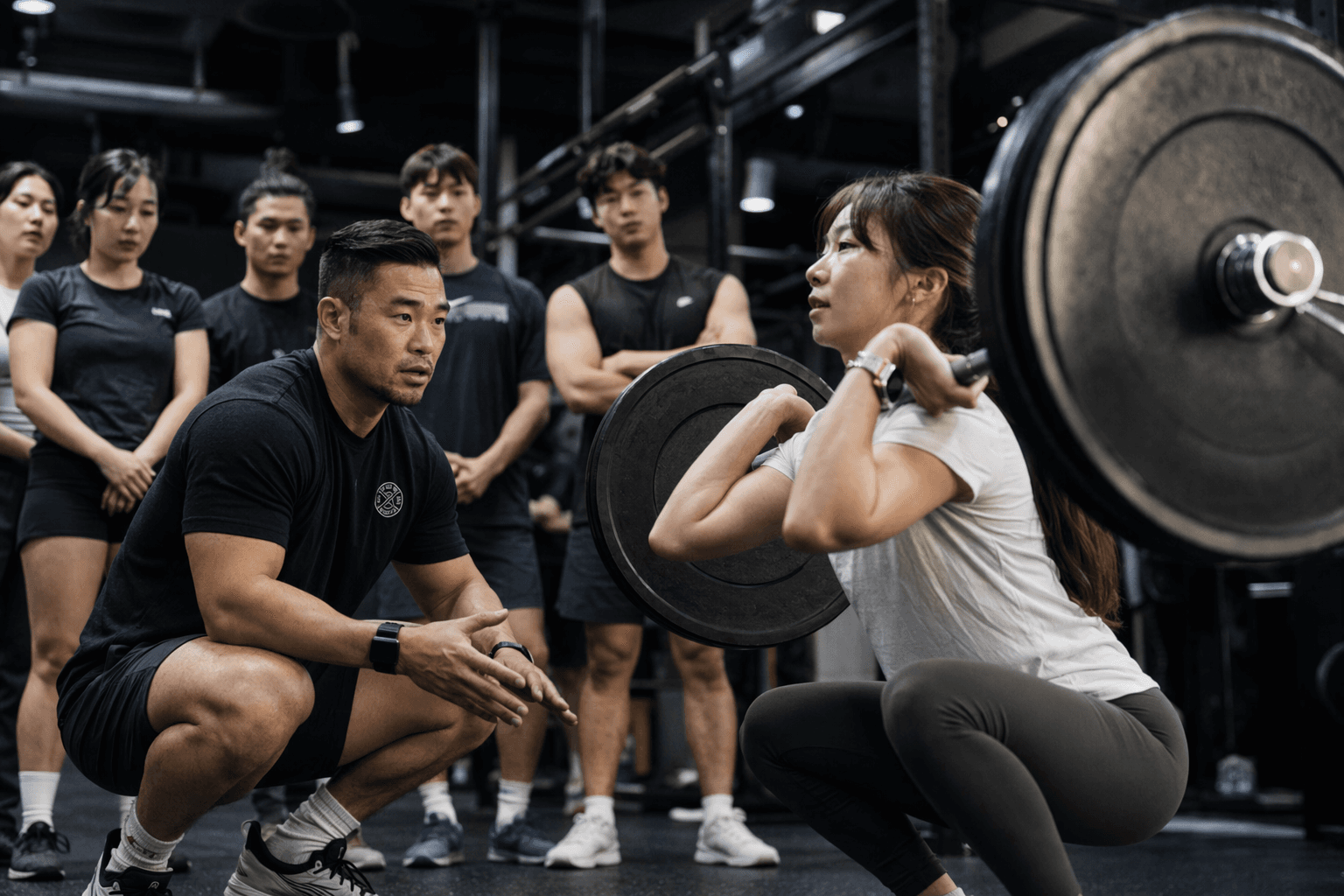
Inside CrossFit XX in Seoul, the story is not just a seminar room full of notebooks and barbells. It is a clear sign that CrossFit is still building from the bottom up in Korea, where the affiliate network has gone from a single gym in 2009 to 325 affiliates today. The Level 1 Certificate Course on the floor in Seoul is doing exactly what CrossFit wants it to do: turn curiosity into coaching competence, and turn that competence into stronger affiliates and better day-to-day athlete support.
The scale of that growth matters because it shows a real coaching culture, not just a market with a few big boxes. CrossFit says Korea had 100 affiliates in 2021, then climbed to 325 by April 30, 2026. That kind of jump is the kind of number owners, coaches, and seminar staff should care about, because every new affiliate needs more than equipment and a sign on the door. It needs trained coaches who know how to teach, scale, correct, and keep classes moving with confidence.
Why the Seoul seminar matters beyond certification
The Seoul Level 1 is not being held as a standalone credentialing event. It sits inside a larger system that CrossFit has been pushing for years in Korea, where the first CrossFit affiliate opened in 2009 and the first Level 1 Seminar followed in April 2010. Since then, the country has grown into a place where CrossFit now supports nearly 20 Level 1 seminars every year. That pace tells you the demand is not occasional or experimental. It is steady, and it is deep enough to keep filling courses.
That is the real status update here: Korea is no longer a place where CrossFit is trying to introduce itself. It is a place where the methodology is being reproduced through coaches, affiliates, and repeated in-person seminars. The more seminars that run, the more local coaches can enter the pipeline without having to leave the country, which lowers friction and speeds up the spread of consistent coaching standards.
Who is in the room, and why they are there
One of the clearest details from the Seoul feature is that the participants are not all chasing the course for the same reason. Some want to become better coaches. Others want a deeper understanding of CrossFit itself. That split is important, because it shows the Level 1 still works as both a professional-development track and an entry point into the wider culture around the methodology.
That mix is exactly why the course has stayed relevant. A coach can come out of it with a better handle on the basics of teaching, while a committed athlete can leave with a sharper understanding of how classes are built, why scaling matters, and how good coaching changes the training floor. In a country where the affiliate network has more than tripled from 100 in 2021 to 325 today, that understanding becomes practical fast.
What the Level 1 actually gives people
CrossFit describes the Level 1 Certificate Course as an in-person, two-day course built around classroom instruction, small-group training sessions, and coach-led workouts. That format matters. It is not a passive lecture track, and it is not just theory in a slide deck. It is hands-on, with people moving, correcting, asking questions, and seeing the methodology applied in real time.
CrossFit also says the course is designed to support athletes from absolute beginners to the more experienced. That broad reach explains why the seminar can draw both new coaches and experienced trainees. If you want to understand how CrossFit is taught on the ground, the Level 1 is still the front door. It gives people the language, structure, and movement standards that hold the affiliate model together from one gym to the next.
How stronger education feeds stronger affiliates
The affiliate side of the story is the business side, and CrossFit is explicit about that too. The company says its affiliate program provides support tools such as the Affiliate Toolkit and Affiliate Programming resources, including data-driven programming, class plans, daily coaching development tools, and logistical support. That is the infrastructure behind the growth in Korea: more seminars help produce more capable coaches, and those coaches help affiliates deliver more consistent training.
CrossFit also frames affiliation as a proven business model with low fixed and affiliation costs, high member retention, and strong brand recognition. Put that next to Korea’s jump from 100 affiliates in 2021 to 325 today, and the pattern is easy to read. When a market gets enough trained coaches, the affiliate model becomes easier to sustain. That means more stable gyms, more reliable class experiences, and more athletes getting better support from coaches who understand the standard.
Kelly Kim, Juria Maree, and the Seoul story CrossFit is telling
CrossFit’s April 24, 2026, Drop-In Diaries episode in Seoul pushes the same message from a different angle. It features Seminar Staff trainer and affiliate owner Kelly Kim, alongside Juria Maree, CrossFit’s South Asia country manager and Seminar Staff Flowmaster, visiting local affiliates in Seoul in a journey that blends culture, community, and CrossFit. That pairing matters because it shows the company is not treating Seoul as a backdrop. It is treating the city as an active part of the brand’s education and community strategy.
The food, the workouts, the affiliate visits, and the seminar floor all point to the same thing: CrossFit is still investing in in-person relationships as a way to grow. Seminar Staff trainers are not just delivering material, they are building trust with attendees. That is how a methodology becomes a local system instead of a foreign import. In Korea, that system is now mature enough to run nearly 20 Level 1 seminars a year and support a network of 325 affiliates.
The bigger takeaway for CrossFit’s global growth
Seoul is a useful case study because it shows how the base of the pyramid actually gets built. Big events and qualification chatter grab attention, but the long-term health of CrossFit depends on the quieter work of coach education, affiliate support, and repeated exposure to the standards that hold the method together. Korea’s growth from one affiliate in 2009 to 325 today is proof that the model can take hold when the training pipeline is strong.
That is the real story coming out of Seoul: CrossFit is still expanding where coaches are being trained, affiliates are being supported, and the methodology is being taught face to face. The result is not just more certificates on the wall. It is more capable coaches on the floor, more stable gyms in the community, and more athletes getting better support every time they walk in the door.
This article was produced by Prism’s automated news system from verified source data, official records, and press releases, then run through automated quality and moderation checks before publishing. The system is built and supervised by the people who set the standards it runs under. Read our full AI policy.
Did this article answer your question?