Janie Cheverie’s tennis background fuels her CrossFit rookie rise
Janie Cheverie’s college tennis roots give her a real shot at the Games, but her ceiling will be tested by heavy, awkward, and low-rhythm CrossFit programming.
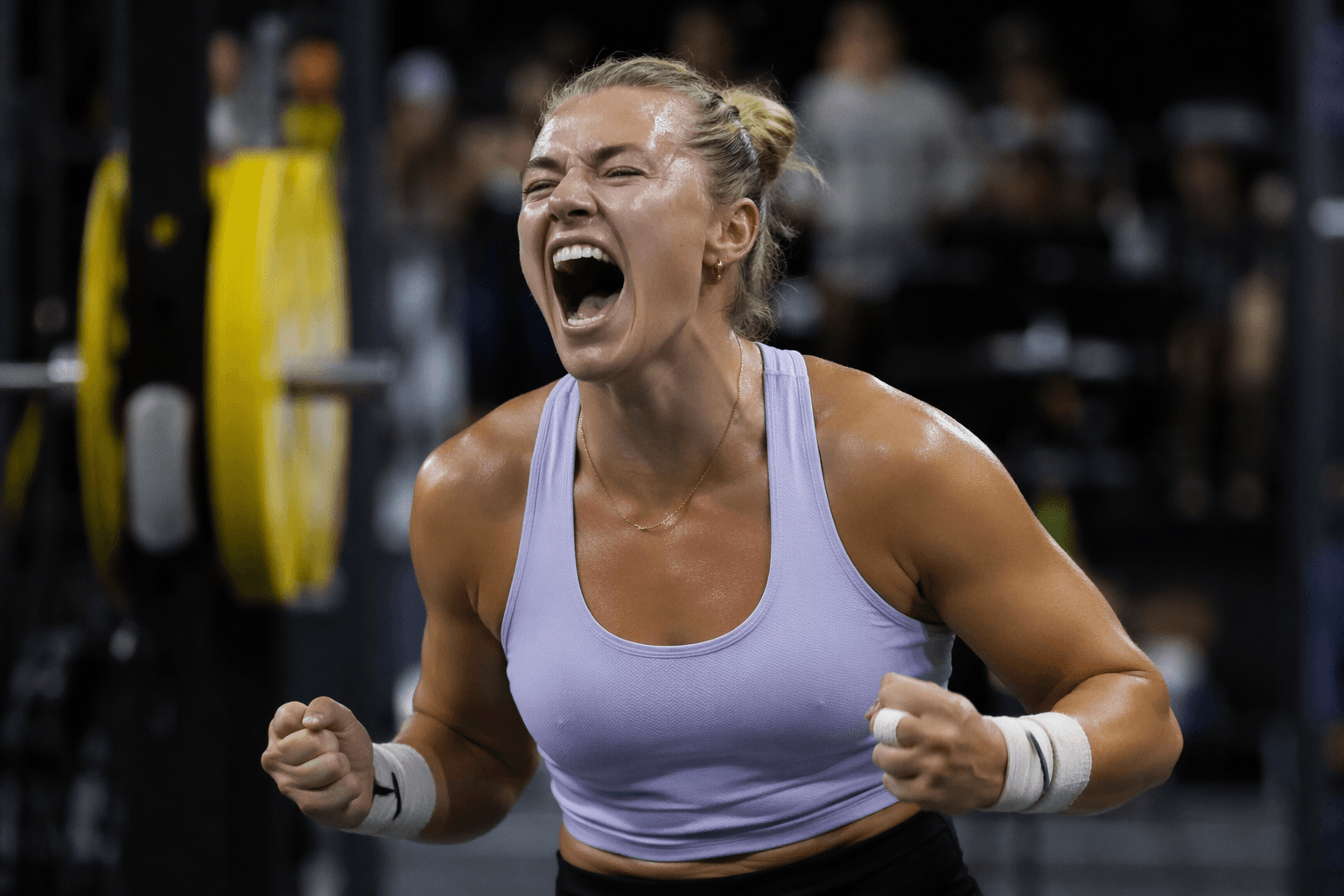
Janie Cheverie arrives in CrossFit with something most rookies do not have: a full collegiate tennis resume that already demanded composure, repetition, and one-on-one pressure. The interview framing is simple, but it matters, because it shows she did not stumble into the sport from a casual fitness background. She found CrossFit in college, decided the switch was worth making, and now carries that decision into a Games field that rewards athletes who can stay calm when the floor gets loud.
A tennis base that actually translates
The most useful part of Cheverie’s background is not just that she played tennis, but how the sport shaped her habits. Tennis builds first-step quickness, footwork economy, and the ability to reset after every point, all of which matter in CrossFit when an athlete has to move efficiently from one station to the next without bleeding time. That kind of movement economy is especially valuable in competitions where transitions are part of the score sheet, because wasted steps and bad setup positions show up quickly on the leaderboard.
Her St. Mary’s University tennis roster makes the background concrete. It lists her as a freshman from Calgary, Alberta, and notes a first season that went 1-0 in singles and 3-1 in doubles. That record does not scream superstardom, but it does confirm that she comes into CrossFit with legitimate collegiate-sport experience, not just gym-floor enthusiasm. The roster also tags her as an ITA Scholar-Athlete and places her on the Lone Star Spring Commissioner’s Honor Roll, a detail that fits the profile of an athlete who already understands structure, training load, and the discipline that sits behind competition.
Why solo pressure is the real crossover
Cheverie’s advantage is less about racket skills and more about what tennis teaches under stress. In singles, every mistake is immediate and every response is visible, which is closer to CrossFit than many team sports are. A rookie who has already dealt with match play, emotional resets, and the rhythm of one point after another has a better chance of surviving the mental drag of a Games day, where one bad rep cannot be hidden behind a teammate.
That is why her interview lands as more than a standard rookie check-in. It is about how she found CrossFit in college and made the switch, but the subtext is bigger: she had already built a competitive identity before she ever became a CrossFit athlete. Her official CrossFit Games profile places her in Canada, lists her as 23 years old, and puts her in North America West, which gives the story a sharper edge. She is not a mystery entry, she is a young athlete with a defined background and a clear competitive home.
The leaderboard says she belongs in the conversation
Cheverie’s semifinal result sharpened the picture even more. On the 2026 women’s semifinal leaderboard snapshot, she finished sixth with 72 points, trailing Alexis Raptis, who led with 37, and Erica Folo, who stood second with 51. Alex Gazan, Arielle Loewen, and Matilde Garnes also sat ahead of her, which is the sort of company that tells you the rookie was not sneaking through a soft bracket.
That matters because the 2026 CrossFit Semifinals were the final qualifying stage for the 2026 CrossFit Games, and the top athletes earned invitations to San Jose, California, in July 2026. In a field built to separate very good athletes from true Games-caliber ones, sixth place in a deep semifinal does not read like a novelty appearance. It reads like a legitimate step into a harder tier, the kind of result that makes a rookie worth tracking before the floor ever opens in San Jose.
What crosses over, and what still does not
The tennis-to-CrossFit conversion gives Cheverie a real ceiling in event styles that reward rhythm, clean movement, and composure under repeated effort. She should be dangerous in formats that let her settle into pacing, find efficient footwork, and avoid the kind of messy station changes that punish indecision. If a test leans on movement precision, controlled breathing, and the ability to recover mentally between efforts, her tennis habits have a chance to show up in the score.
But CrossFit still exposes the gaps that tennis cannot cover. Heavy barbell work, awkward implements, and long mixed-modal events can erase the benefits of court-speed footwork if the athlete has to grind through positions her previous sport never required. Rookies also tend to get caught when programming strips away rhythm and forces them into a series of uncomfortable, unrelated tasks, because the best field athletes know how to keep shape even when the workout stops feeling like their favorite kind of fitness.
That is where programming style becomes the real test of her competitive ceiling. Cheverie looks built to handle events that reward repeatable movement and calm transitions, the kind of work where a few clean seconds can compound across the day. She is more vulnerable in tests that are all brute force, especially when the workout stacks heavy loading with no room to regroup or asks for sustained output in an ugly, low-rhythm format. CrossFit is not one sport in practice; it is a collection of very different tests, and athletes like Cheverie thrive when the test rewards timing and efficiency instead of pure survival.
Why her rookie class matters in 2026
The broader 2026 Games picture makes her rise more interesting. The final field was set at 30 men and 30 women, and seven women were slated to make rookie debuts. That is a lot of new blood for one competition, and it raises the stakes for every first-timer who arrives with a genuine sporting pedigree. In a class that large, the rookies who already know how to compete alone are the ones most likely to break through early.
Cheverie’s story fits that mold because it is built on a real sport, a real collegiate track, and a semifinal result strong enough to justify the attention. The tennis background does not guarantee success in CrossFit, but it does explain why she can walk onto the floor with more than beginner instincts. If the 2026 Games reward movement efficiency, poise, and quick tactical adjustments, she becomes dangerous fast. If they turn into a slog of heavy, awkward, and unforgiving tests, the rookie label will matter again, only this time as a warning for everyone else on the floor.
This article was produced by Prism’s automated news system from verified source data, official records, and press releases, then run through automated quality and moderation checks before publishing. The system is built and supervised by the people who set the standards it runs under. Read our full AI policy.
Did this article answer your question?