Disc golf’s senior divisions keep champions competing for decades
Bobby Jones sank the putt that won MP65 at the 2024 Tim Selinske U.S. Masters Championships, a snapshot of how senior divisions keep disc golf champions winning deep into age-based brackets.
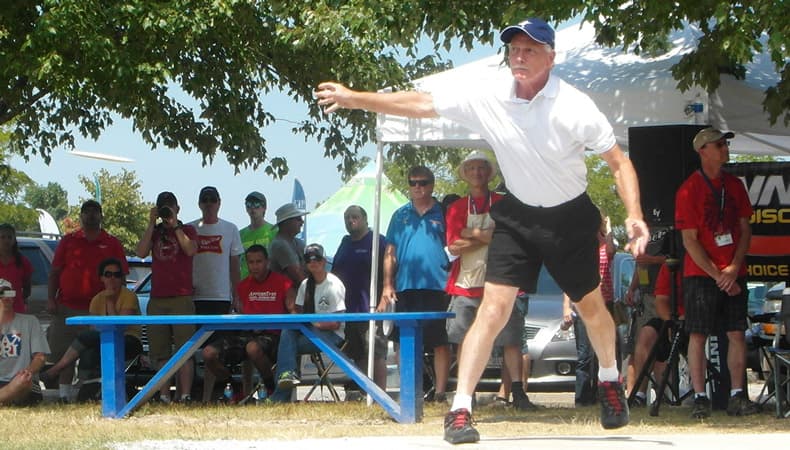
Bobby Jones needed one last putt at the 2024 Tim Selinske U.S. Masters Championships to win MP65, and that single stroke captures why disc golf’s senior divisions matter so much. The PDGA’s age-based structure keeps pressure real, titles meaningful, and elite careers alive well past the point where most sports force a hard exit. For newer fans, the story is not about slowing down. It is about how Masters, Grandmasters, Sr. Grandmasters and MP65 players keep finding ways to win.
Why the senior ladder is so competitive
The PDGA Senior Committee was created to promote disc golf among Masters, meaning 40-plus players, and older competitors. In PDGA language, these are the players who have reached “the golden moment where we can shoot our own age,” a phrase that neatly explains why senior divisions feel less like a consolation bracket and more like a distinct competitive lane.
That lane is now institutional, not informal. When the PDGA announced a new Senior Committee and appointed Don Dillon as chairman, Dillon wrote that the renewed interest in senior disc golf could open “a whole new arena of activity” for the growing numbers of senior citizens from the baby-boomer era. The committee exists because the player base exists, and because older players have proven they want structured competition that still rewards precision, nerve and smart decision-making.
The numbers show a real expansion
Senior disc golf was once a niche within a niche. PDGA senior material says there were only 35 senior PDGA members in 2000, and they made up just 3% of total membership. By 2013, that number had climbed to about 3,500 senior members. That growth changed the sport’s internal economy: more players meant more sanctioned events, more meaningful divisions and more reason for the PDGA to treat senior play as a core part of its competitive ecosystem.
The same growth also helps explain why the PDGA has pushed for disc golf’s return to the National Senior Games. That platform places disc golf alongside other established older-athlete competitions and gives senior players a national stage that reaches beyond club circuits. It is a clear signal that senior disc golf is now part of broader sports participation, not just a private corner of one organization.
Johnny Sias shows how long a great career can last
Few examples make the case better than Johnny Sias. The PDGA identifies him as a three-time world champion, listing him as the 1986 Open world champion, the 2012 Grandmasters champion and the 2013 Sr. Grandmasters champion. Bill Griffith’s PDGA feature, “A Disc Golf Senior Movement,” centered Sias as proof that a champion can remain relevant across eras, divisions and physical stages of life.
Sias matters because his record shows what senior divisions preserve: not nostalgia, but competitiveness. A player does not need to leave elite play once the touring-open years pass. Instead, the sport gives him peers in the right age bracket and a new arena where experience still travels. That is one reason disc golf’s senior story feels so sustainable. Players can age into more suitable divisions without stepping away from serious tournament golf.
What changes in tournament play after 40
Older contenders do not win by trying to play like younger ones. They win by making fewer bad decisions, keeping their scoring floor steady and trusting controlled shot selection over unnecessary heroics. Disc golf rewards that profile better than many sports do, because course management, touch and putting confidence remain valuable even as raw power fades.
Bobby Jones’ MP65 victory at the 2024 Tim Selinske U.S. Masters Championships is a good example of that pressure profile. He won the division on the strength of a final putt, the kind of finish that highlights composure and repeatable mechanics rather than distance alone. Senior divisions amplify those skills because the fields are built around peers who understand the same physical and strategic tradeoffs.
PDGA’s current senior coverage reflects that structure all the way down the ladder. It references divisions such as Masters, Grandmasters, Sr. Grandmasters and even MP65 in the Global Masters Series. That range matters because it keeps competition calibrated as players age, instead of funneling everyone into one broad older-age category. The result is a system where players can remain realistic title threats for years, and often decades.
A weekly competition model, not a fading afterthought
Senior disc golf is also organized as a live competitive circuit. The PDGA Global Masters Series has standings that update weekly, with leaderboards refreshed Tuesdays at 12 pm ET. That timing matters because it turns senior play into an ongoing, trackable competition rather than a once-a-year spotlight. Every update gives the division fresh relevance and keeps players following results across tournaments around the globe.
This is why the PDGA’s senior commentary pages matter too. “The Evolution of Disc Golf, a Senior Disc Golf Commentary” frames the sport’s development through the lens of older players, showing that senior competition is not a sideline to the game’s growth. It is part of how disc golf has matured as a sport with depth, structure and room for champions to keep adding titles long after their first world crown.
That depth is the real story. Senior divisions do not ask champions to stop competing. They give them a better-fitting stage, and disc golf is stronger because of it.
This article was produced by Prism’s automated news system from verified source data, official records, and press releases, then run through automated quality and moderation checks before publishing. The system is built and supervised by the people who set the standards it runs under. Read our full AI policy.
Did this article answer your question?