How disc golf baskets evolved from prototypes to the modern standard
Disc golf’s modern drama starts at the basket: Headrick’s prototypes led from Oak Grove poles to the chain-and-basket target that made putting decisive.
Late summer 1975, poles began appearing at Oak Grove Park, now Hahamongna Watershed Park in Los Angeles County near Pasadena. The modern basket did not arrive fully formed. It grew out of those early poles and experimental catchers, which had to stop a gliding disc, reward accuracy, and give the score a clear finish.
From Oak Grove poles to the first catchers
Those chest-height targets marked the earliest formal attempt to give Frisbee golf a fixed scoring endpoint, and they show how quickly the game needed something more reliable than an open landing area on the ground.
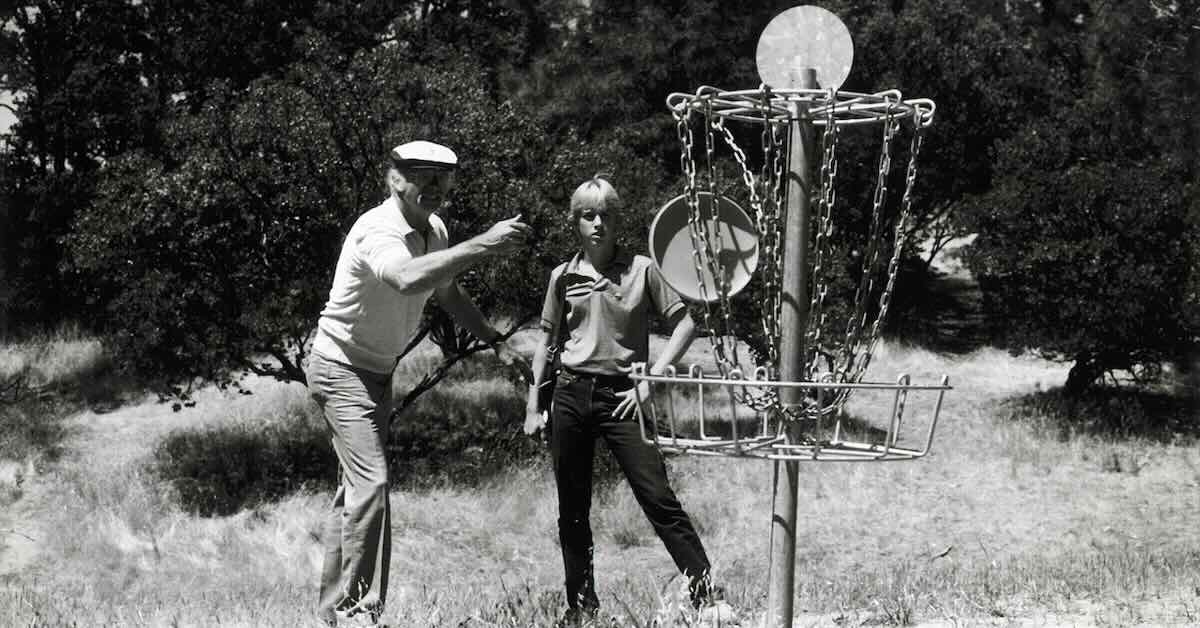
A famous 1976 Oak Grove photo captures that transition in motion: Steady Ed Headrick and his son Ken with a “Friz-Hole-Pole,” one of the early catching devices that never became the long-term standard. The 1976 photo shows the target still being invented in public, as the sport tested equipment that could turn a flying disc into a score without leaving every made putt open to chance.
The patent that turned an idea into a standard
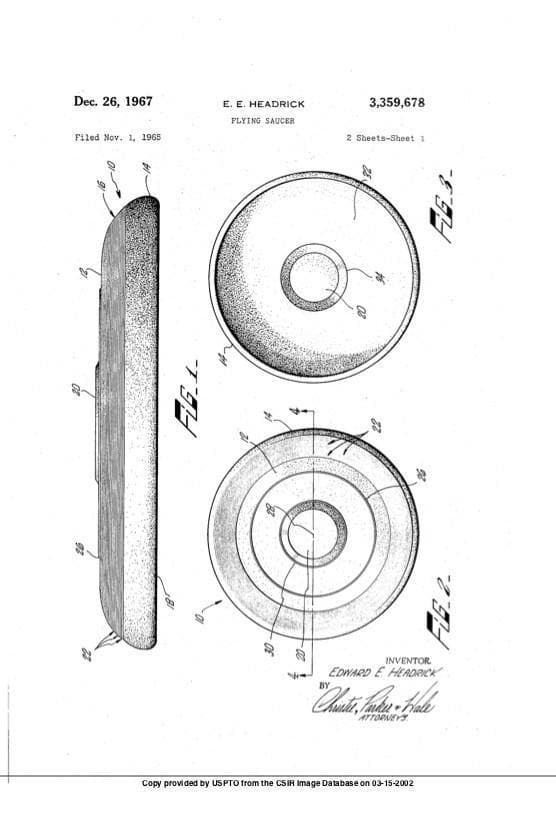
The formal leap came with Headrick’s “Flying disc entrapment device,” listed by Google Patents as U.S. Patent US4039189A, with a priority and filing date of April 19, 1976. With that filing, the target moved from improvisation toward a protected, reproducible design. The invention that followed, known as the Disc Pole Hole, became the first formal disc golf target and paired chains with an upward-opening basket.
That combination solved the core problem the early poles could not. The basket gave the disc a place to land, while the chains slowed and trapped the flight before it could ricochet away. That improved catch consistency: a disc can hit center pole, clip chains, or die softly into the tray.
Why chains changed putting strategy
The modern basket altered strategy the moment players realized that not all putts are treated equally. A target that catches cleanly rewards line control and pace control, because the best putts are not just aimed at the right spot, they are delivered with the right speed. A target that kicks, spits out, or drops the disc adds randomness, which can change how players attack the green and how much risk they are willing to take from longer putts.
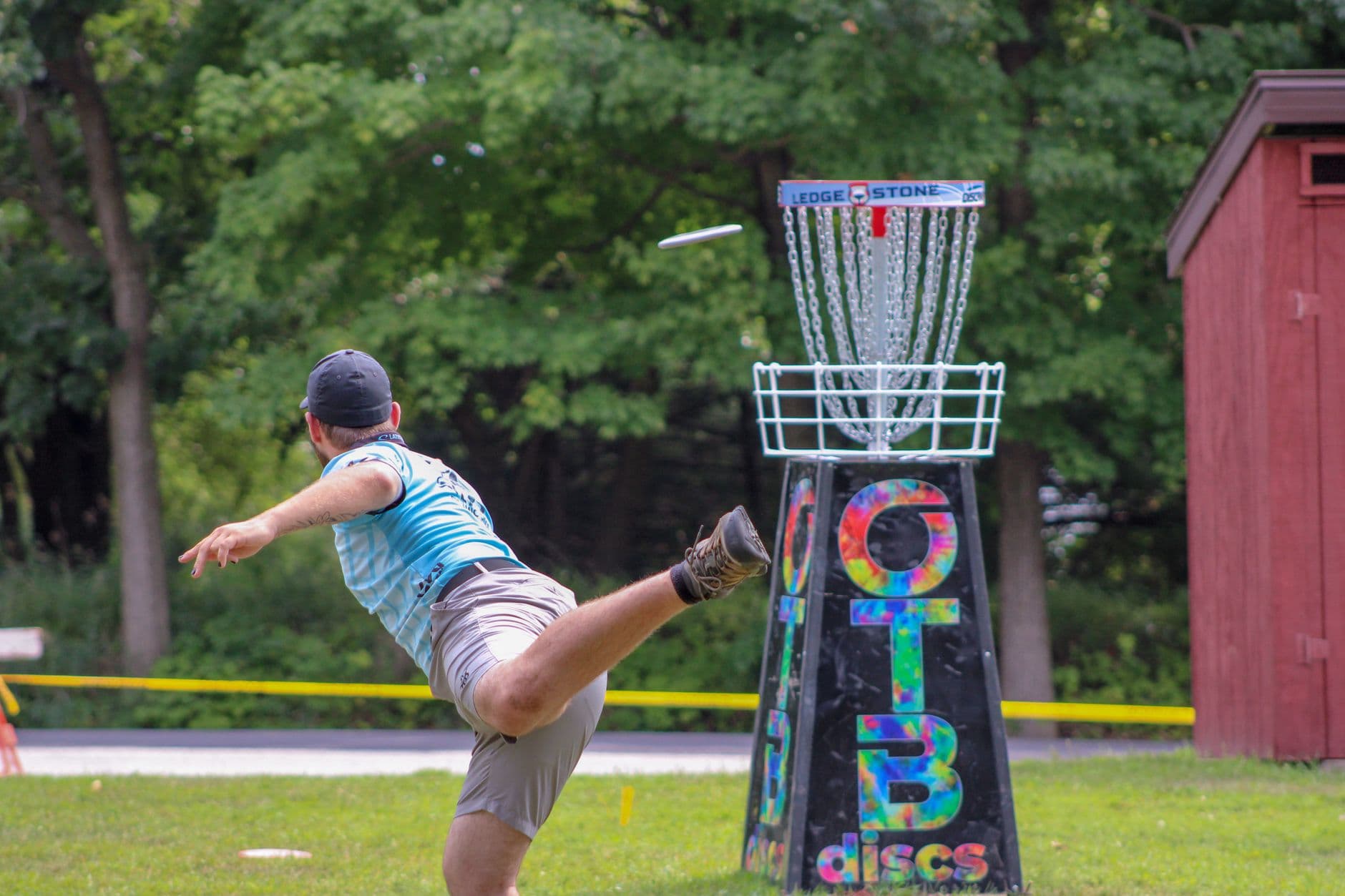
Putting practice matters more because the basket exposes every flaw in angle and speed, and course designers can build around that pressure by shaping greens that punish a hesitant release or reward a confident run. It turns the final throw into the sport’s make-or-break spectacle, where a clean catch can save a stroke and a spit-out can erase an otherwise perfect drive.
Headrick’s reach helped spread the standard
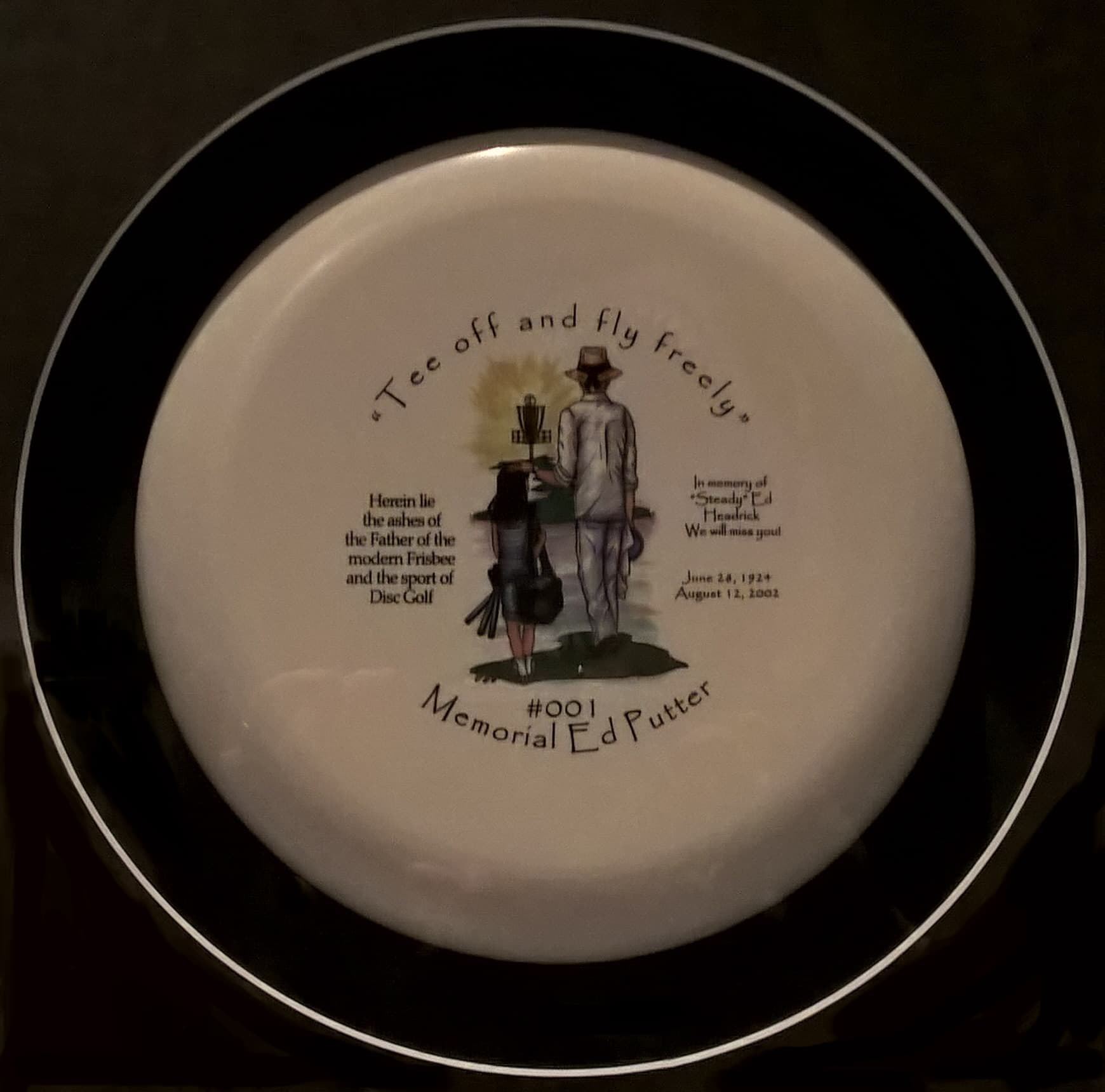
Headrick also had organizational reach. A 1976 DGA marketing brochure lists him as having served as executive vice president and general manager at Wham-O, founded the International Frisbee Association with over 75,000 members, and helped create the World Frisbee Championships at the Rose Bowl. That background gave him the organizational reach to push equipment from a local experiment to a sport-wide standard.
Standardized catching systems made organized competition possible, because once players could throw at the same kind of target everywhere, course construction, tournament play, and scoring all became more coherent. The basket helped create a shared language for competition. It let tournaments compare rounds across courses and gave every player the same final test, whether the hole sat in Pasadena, California, or anywhere else the sport spread.
Why modern baskets define the moments fans remember
The reason chains still matter so much is that they translate a technical action into a dramatic one. A clean putt produces an immediate, audible conclusion that spectators can see from the fairway and recognize on video. That is why the shot that lingers on social feeds is so often the putt that hangs on the front of the cage, drops through the links, or barely stays in after contact. The modern basket creates a visible scoring endpoint from a distance, making disc golf’s biggest moments easy to watch and judge.
Players talk about catch rates, spit-outs, and putter confidence because the basket is doing constant work in the background, deciding whether a near-perfect throw becomes a birdie or a stressful tap-in. In disc golf’s signature tension, the decisive shot is not the drive that travels 400 feet but the final release that must survive the chains.
This article was produced by Prism’s automated news system from verified source data, official records, and press releases, then run through automated quality and moderation checks before publishing. The system is built and supervised by the people who set the standards it runs under. Read our full AI policy.
Did this article answer your question?