Ice Bowl tradition turns winter disc golf into charity event
Snow, frozen tees and numb hands are the point: Ice Bowl events turn winter misery into food drives, and 2026 already lists 191 stops.
Disc golf’s Ice Bowl works because it asks players to do the hardest thing the sport offers in the harshest season, then turns that discomfort into a public good. The PDGA’s history page frames it as more than a winter tournament, and the modern Ice Bowl network backs that up with a 2026 events count of 191, proof that this is no novelty act.
The cold is the point
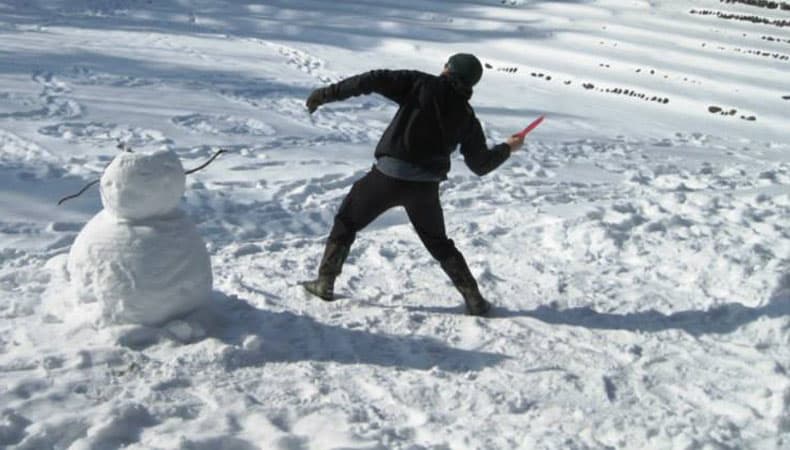
An Ice Bowl is built around the kind of round most players would avoid if it were just for ratings. Snow on the fairway, wind on the tee, frozen ground underfoot and hands that stop cooperating after a few throws are not side effects here, they are the selling point. The event’s identity comes from the mix of tough conditions, good humor and charity-driven participation, which is why the name now means a winter disc golf gathering as much as it means a weather report.
That is a very disc golf way to do charity. Players already expect to spend winter rounds on public courses, often with layered clothing, hand warmers, traction aids and plastic discs that can survive the cold better than most equipment in outdoor sports. The Ice Bowl turns that built-in resilience into a ritual, and the memory of finishing a round through slush or on icy tee pads sticks with people long after the scores are forgotten.
Why the format fits disc golf so well
Standard sanctioned tournaments are built around divisions, ratings and prizes. Ice Bowls shift the center of gravity toward local giving, with food drives and similar charitable support baked into the event itself. That changes the mood immediately: the day is still competitive, but the more visible target is the donation pile, not the payout sheet.
Disc golf is unusually suited to that model because it is low-cost to play, outdoors by design and commonly anchored in public parks. That keeps the barrier to entry low for both players and organizers, so a local club can run an Ice Bowl without the heavy infrastructure many other sports need for a fundraiser. The Ice Bowl Foundation’s 2026 event listings reinforce that local focus by naming recipient partners directly, including Regina Food Bank, Guardian Angels Food Pantry, East Texas Food Bank, Glade Valley Food Bank and The Mid Mo Samaritan Center.
The structure around the event has also become more formal. The Ice Bowl Foundation identifies itself as a 501(c)(3) not-for-profit organization, with headquarters at 13407 W 130th Street in Overland Park, Kansas. Its current site keeps 2026 events, 2026 event results, historical results, all-time totals by event and an Ice Bowl map in one place, which gives the tradition the feel of an organized charitable network instead of a one-off winter gathering.
The receipts are real, not symbolic
The most persuasive part of the Ice Bowl story is the countable impact. These events do not just collect goodwill, they collect food, dry goods and cash for specific local charities, and the totals are high enough to make the cold feel earned.
- The Second Annual Sugar Hollow Ice Bowl in Pittsford, Vermont, on 01/18/2025, had 62 people who played and helped, 3 inches of snow on the ground, 29 degrees during play and an $8,046 donation total for the Pittsford Food Shelf.
- BWCC Ice Bowl 2025 in Lewisberry, Pennsylvania, on 02/22/2025, drew 84 people who played and helped, played in 28 degrees, raised $2,805 and added 50 pounds of food and dry goods for The York County Food Bank.
- Mulligan’s Madness - A Calvert Road Ice Bowl in College Park, Maryland, involved 75 people who played and helped, produced a $1,170 donation total and delivered 250 pounds of food and dry goods to the College Park Community Food Bank.
A few 2025 results show the range:
Those numbers matter because they show the event’s range. One stop brings in more than $8,000, another adds a cash total plus 50 pounds of goods, and another turns a local winter round into 250 pounds of supplies for a neighborhood food bank. The point is not that every Ice Bowl looks the same; it is that the format is flexible enough to fit Pittsford, Lewisberry and College Park without losing its core mission.
Why the tradition keeps coming back
The Ice Bowl survives because it has three ingredients that hold up year after year: winter suffering, local-club camaraderie and a clear give-back mission. Players show up knowing the weather will be miserable, the round will be memorable and the charity piece will be specific, not ceremonial. That combination is why a winter disc golf event can feel more communal than a summer tournament with better conditions.
The Foundation’s current infrastructure makes that continuity easy to see. Historical results, all-time totals by event and the map all point to the same thing: this is no longer just a scattered string of cold-weather fundraisers. With 191 events listed for 2026 and named charity partners spread across places like Regina, Saskatchewan; Albuquerque, New Mexico; Tyler, Texas; Frederick, Maryland; Jefferson City, Missouri; Alpha, Michigan; Del Valle, Texas; and Eureka, California, the Ice Bowl now functions as a recurring charitable circuit with a winter identity of its own.
That is the Ice Bowl’s durable formula: cold weather that players remember, clubs that turn out to host, and food shelves, pantries and food banks that receive something tangible when the round is over.
This article was produced by Prism’s automated news system from verified source data, official records, and press releases, then run through automated quality and moderation checks before publishing. The system is built and supervised by the people who set the standards it runs under. Read our full AI policy.
Did this article answer your question?