Steady Ed Headrick helped turn disc golf into a real sport
Disc golf’s jump from park game to real sport came when Steady Ed Headrick built the target, founded the PDGA, and gave players a common rulebook.
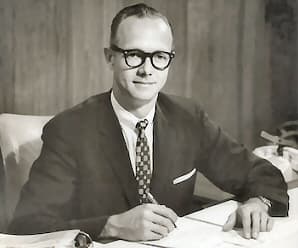
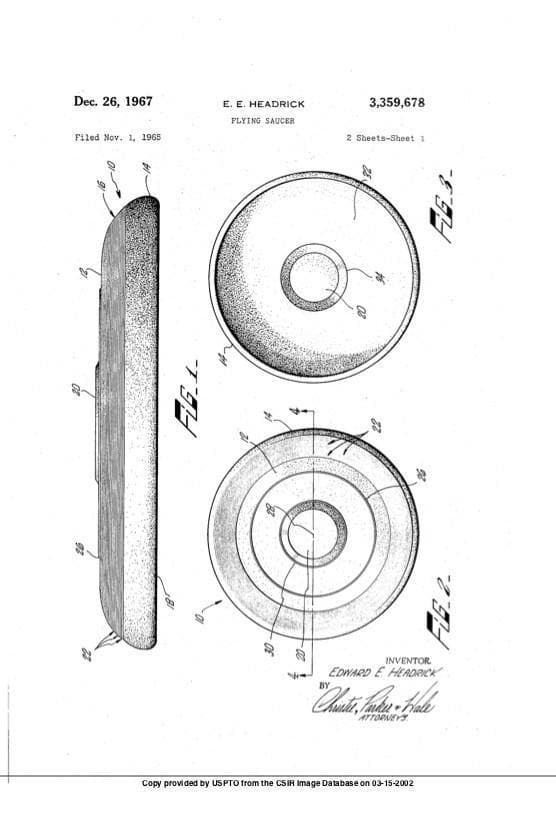
Steady Ed Headrick did more than popularize disc golf. He helped turn it into a game with a tee, a target, a lie, an order of play, and a clear finish to each hole, which is the difference between a backyard pastime and a sport players can take across cities, states, and countries. That shift still shapes every round, from who throws first on the fairway to how a group handles penalties, out-of-bounds shots, and a hole that has actually been completed.
Before the rules, there was already a game
Disc golf’s roots run deeper than most casual players realize. One history record places the earliest recorded version in 1926 in Bladworth, Saskatchewan, Canada, where people played with tin lids. That kind of informal play mattered, but it still left the sport without a shared language for competition, equipment, or course design.
The first official disc golf tournament came much later, when the World Flying Disc Federation says Brookside Park in Pasadena, California, hosted an event in 1969 during an “All Comers Meet.” Jay Shelton won the golf event, which shows that organized competition already existed before the modern rulebook took hold. What the sport still lacked was a durable system that could make the same round recognizable anywhere.
Headrick’s bigger contribution was structure
Steady Ed Headrick founded the Professional Disc Golf Association in 1976, and that step gave the sport a central body dedicated to standardized rules and tournament structure. PDGA records also show Headrick wearing player number 001, a neat marker of how closely his identity was tied to the sport’s early formal era. He was not just an evangelist for flying discs; he was building the framework that let disc golf operate like a real competition.
That framework mattered because disc golf depends on small details that have to be settled the same way every time. Who throws first? What counts as a completed hole? When does a missed putt become a penalty stroke? Without shared answers, local rounds remain local. With them, players can move from one course to another and still know exactly how the game is supposed to work.
The basket changed everything on the course
Headrick’s equipment innovation was as important as his organizational one. He introduced the original Disc Pole Hole in 1975, giving the game a target that could catch a disc reliably and define the end of a hole in a way that a tree, mailbox, or improvised marker never could. A UDisc history image from 1976 shows Headrick and his son Ken at Oak Grove Park in California with an early experimental target called the “Friz-Hole-Pole,” a reminder that the sport’s most familiar object came through testing and iteration.
That detail is easy to miss if you only watch modern tournaments, where baskets look permanent and obvious. They were not always obvious, and that is the point. Once the target became standardized, course designers could build layouts around the same finishing condition, tournament directors could judge holes consistently, and players could measure success in the same way from one event to the next.
Rules are what make a round portable
The PDGA’s rules history materials and its Rules School teaching resources show how much of disc golf’s growth came from codifying the basics. The organization teaches order of play, which is one of the simplest questions in the sport and one of the most important when a group wants to avoid confusion. The same system also helps settle disputes about lies, relief, penalties, and whether a throw has actually finished the hole.
That standardization is what makes sanctioned play possible. A local club round can survive on friendliness and memory, but a tournament needs written rules that tournament directors, players, and officials can apply the same way every time. Once that existed, disc golf could move from parks and informal circles into leagues, sanctioned events, and a competitive calendar with a shared language.
- Order of play tells groups who throws first and how the rotation continues.
- A completed hole has to be defined clearly, so a tap-in, putt, or basket drop counts the same way everywhere.
- Penalties and out-of-bounds calls need consistency, because one course’s casual rule can become another’s tournament dispute.
- Rules education matters for beginners and veterans alike, because the game keeps expanding into new clubs, formats, and regions.
Early competition and later competition tell the same story
The sport’s early tournament history and Headrick’s later competitive record show how fast disc golf moved once structure was in place. PDGA season records list Headrick’s 1979 results, including a first-place finish at the IFA North America Series in Irvine, California, on March 3 and 4, 1979. That kind of result matters not because it was a one-off, but because it sits inside a growing competitive system that could track seasons, placements, and standings.
By then, disc golf was no longer just a novelty with flying discs. It had tournaments with named events, recognized players, and results that could be recorded and compared. That is what separates a game with occasional organized play from a sport with a competitive backbone.
Headrick’s legacy still shows up in how the sport talks about itself
Headrick died on August 12, 2002, but the way disc golf remembers him says as much about the sport as his inventions do. DGA Disc Golf and the PDGA have marked anniversaries tied to his death and to the installation of early disc pole holes, keeping his name attached to the sport’s founding machinery. The tributes are not just nostalgia; they are reminders that disc golf still runs on the ideas he helped normalize.
That is why his legacy feels practical rather than symbolic. Every time a player steps to a lie, checks the order, plays by a standard rule, and finishes a hole on a basket rather than an improvised target, the modern game is doing what Headrick helped make possible. Disc golf grew into a real sport when it learned how to define itself, and that definition still governs the round every time the first disc leaves the tee.
This article was produced by Prism’s automated news system from verified source data, official records, and press releases, then run through automated quality and moderation checks before publishing. The system is built and supervised by the people who set the standards it runs under. Read our full AI policy.
Did this article answer your question?