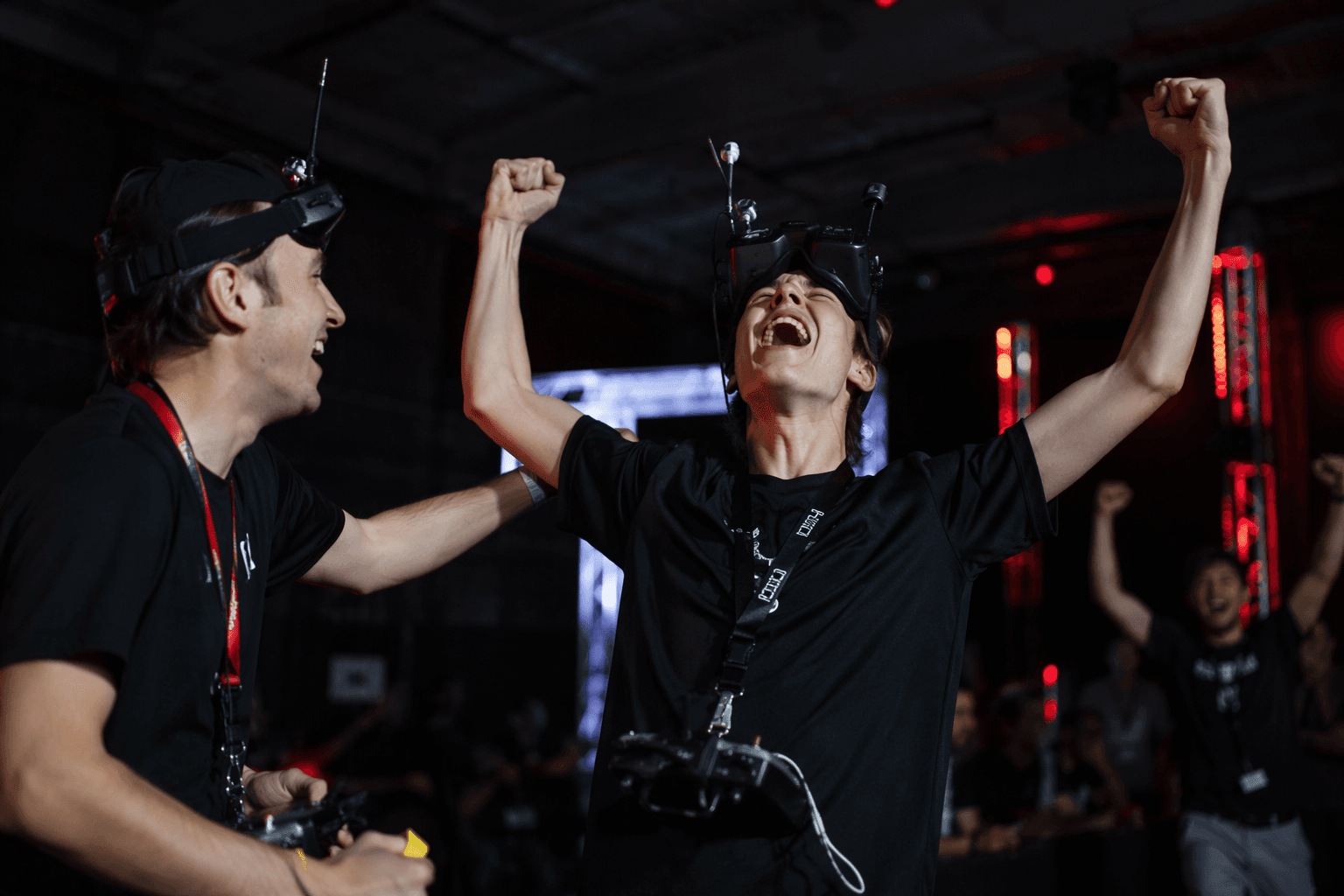
4500 Drones Form Futuristic FPV Race Track in Shenzhen
4,500 drones built the world's first illuminated aerial racecourse above Shenzhen's Universiade Center, pitting mainland, Hong Kong, and Macao pilots against gravity gates and S-curves.
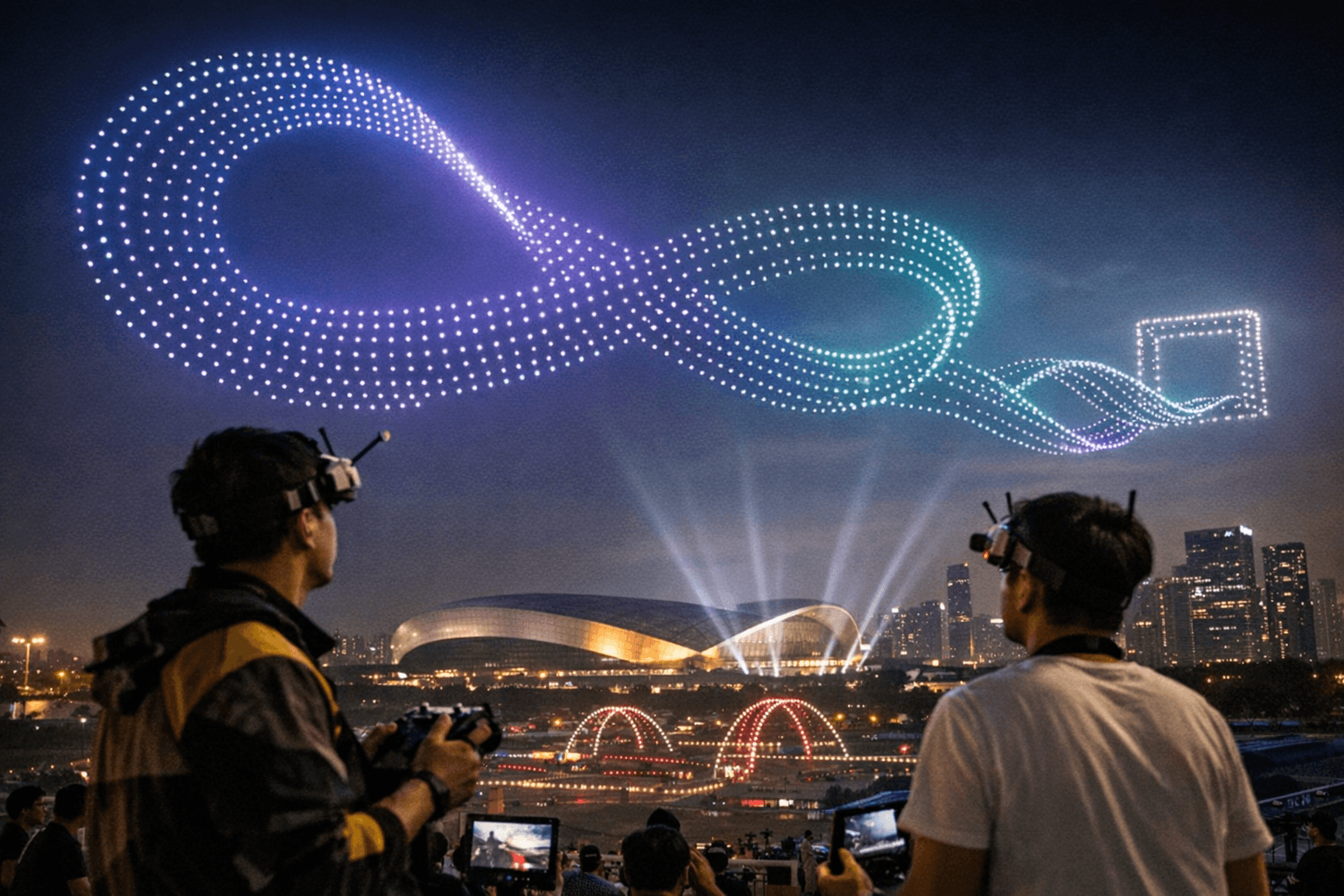
Racing drones have long navigated courses defined by fixed gates and foam barriers. At the Shenzhen Universiade Center on March 27, the 2026 Longgang Sky Crossing FPV Drone Challenge rewrote that formula entirely, using 4,500 drones to create what organizers called the world's first illuminated aerial racecourse.
The 4,500-strong formation lit up the night sky, constructing a dynamic three-dimensional light track that formed gravity gates, triple gates, aerial corridors, and S-curves in motion. No physical pylons, no ground-level infrastructure: the entire course existed as luminous geometry suspended above the arena, reshaped in real time by the swarm itself.
Top FPV pilots from mainland China, Hong Kong, and Macao flew the illuminated circuit, the Greater Bay Area's competitive talent converging on Longgang for what became the region's most ambitious FPV showcase. Organizers framed the event as a spectacular "Aerial F1" experience blending technology, speed, and innovation. The comparison holds: Formula 1 demands precision through fixed barriers, while the Sky Crossing format demanded it through light, requiring pilots to read drone-formed architecture at race pace.
The Shenzhen Universiade Center has form as a landmark drone venue. In September 2024, performances at the same stadium broke two Guinness World Records, including the record for the largest image formed by a light source when 7,998 drones flew simultaneously, followed the next day by 8,100 drones setting the record for the largest number of drones flying at once. The March 27 event repurposed that same large-scale swarm infrastructure for competitive racing rather than pure display, redirecting spectacle technology toward sport.
The Longgang Universiade Sports Center also hosted the first World Drone Championship held in China, in November 2018, making the district one of the sport's most consequential venues across nearly a decade of FPV development. The Sky Crossing format represents a significant evolution from that earlier era: rather than staging racing inside a fixed arena with illuminated gates, the 2026 event made the gate architecture itself airborne, dynamic, and visible from anywhere in the stadium bowl.
Drone racing has emerged as a cutting-edge sport often grouped with esports and robot combat, with racing drones capable of reaching speeds up to 230 km/h and accelerating from a standstill to 100 km/h in under one second. At those velocities, a course that reconfigures in light rather than foam demands a different kind of spatial reading from pilots, one where the track itself is as technically demanding to interpret as it is to fly. Whether Longgang's Sky Crossing format becomes a blueprint for the next generation of FPV competition or remains a singular spectacle, it demonstrated on March 27 that the ceiling for what a drone race can look like is nowhere near fixed.
This article was produced by Prism’s automated news system from verified source data, official records, and press releases, then run through automated quality and moderation checks before publishing. The system is built and supervised by the people who set the standards it runs under. Read our full AI policy.
Did this article answer your question?