Airbus Bird of Prey Demo Targets the Massed Drone Swarm Problem
Airbus' Bird of Prey autonomously killed a kamikaze drone with a sub-2kg missile last week. Its autonomous kill chain is already reshaping the airspace FPV racers compete in.
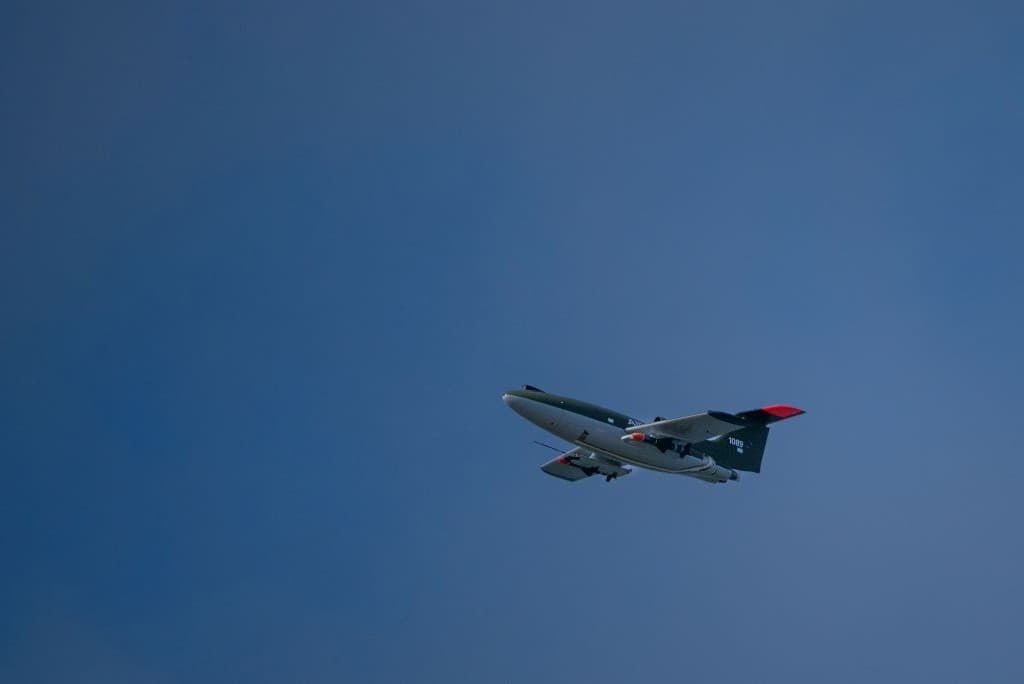
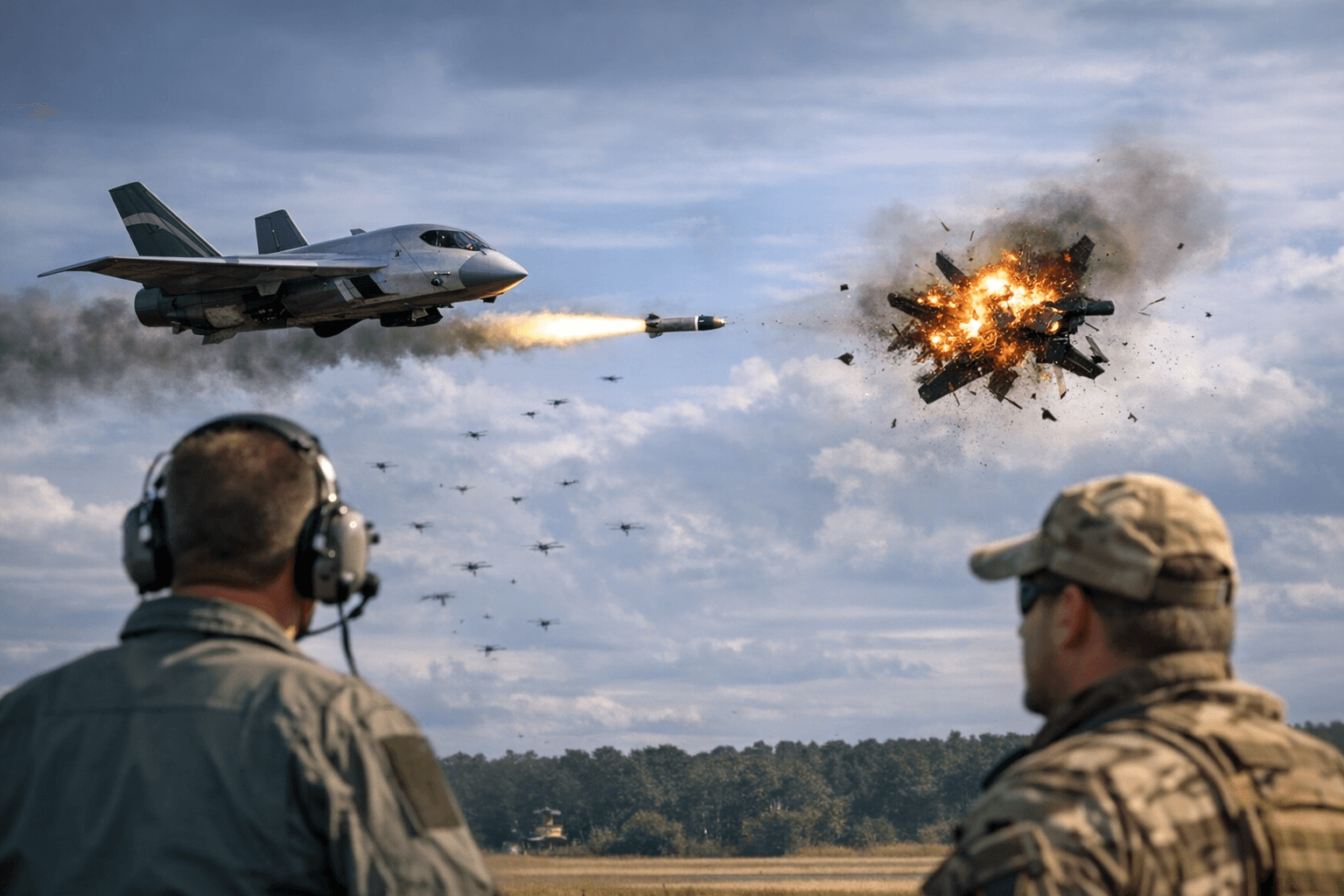
The economics of killing a drone with another drone just changed. On March 30, Airbus Defence and Space successfully completed the first demonstration flight of its Bird of Prey uncrewed interceptor at a military training area in northern Germany, deploying a Mark I air-to-air missile developed by Estonian defense tech startup Frankenburg Technologies against a medium-sized one-way attack drone. The system did not just fire and hope. It autonomously searched, detected, classified, and engaged its target, completing a full kill chain from identification to intercept without a human hand on a trigger.
Nine months. That is how long the Bird of Prey program ran from inception to first flight, a compression of development timelines that would be remarkable in any procurement context. The platform is built on a modified Do-DT25 target drone measuring 3.1 meters long with a 2.5-meter wingspan and a maximum takeoff weight of 160 kilograms. The prototype carried four Mark I missiles; the operational version is spec'd for eight. Each missile runs high-subsonic, fire-and-forget, weighs under two kilograms, measures 65 centimeters in length, and carries a fragmentation warhead with a 1.5-kilometer engagement envelope. Frankenburg Technologies describes the combination as delivering an "order-of-magnitude reduction in cost per intercept."
That framing cuts to the bone of a debate that has shadowed force-protection doctrine since Ukraine turned cheap kamikaze drones into a strategic weapon. Conventional surface-to-air interceptors cost orders of magnitude more per shot than the threats they destroy, and their magazines run thin quickly against swarm attacks. A reusable interceptor drone carrying eight guided missiles, designed to run autonomously, changes that math in ways that theater-level planners have been chasing for years. Mike Schoelhorn, CEO of Airbus Defence and Space, was direct about the urgency: "Against the current geopolitical and military backdrop, defending against kamikaze drones is a tactical priority that urgently needs to be tackled."
Bird of Prey integrates into NATO's architecture through Airbus' Integrated Battle Management System, fusing data from multiple sensors and tactical links to handle target identification before committing to a kinetic engagement. That final step matters more than it might appear. Target classification before commitment is the central variable separating hard-kill autonomous systems like this from broadband RF jamming, and both approaches are scaling fast toward deployment at public venues. For the FPV racing community, the proliferation of either creates real operational friction.
Here is the false-positive problem in concrete terms: a competition-spec 5-inch quad at 150-180 km/h, running a low-altitude race course, projects the same general threat profile parameters that Bird of Prey is designed to hunt. It is small, fast, low-altitude, and depending on the communication stack, can appear briefly autonomous to RF monitoring systems during a signal dropout or in a failsafe state. The kinetic solution is obviously off the table in any civilian airspace context. But soft-kill RF jamming is not a clean alternative near a crowded event venue. Broadband suppressors disrupt command links without distinguishing between a hostile one-way attack drone and an ExpressLRS-linked racing quad. A pilot flying at 170 km/h who loses control link coherence is now a ballistic object, and frequency-hopping protocols offer partial resistance, not immunity, against aggressive broadband countermeasures. A race director who discovers mid-event that a nearby security deployment has activated RF mitigation has exactly zero good options.
This is the collateral damage that does not appear in press releases. Airbus and Frankenburg are solving a legitimate and urgent problem, and Kusti Salm, CEO of Frankenburg Technologies, described the Mark I as part of "the first integration of a new class of low-cost, mass-manufacturable interceptor missiles onto a drone, creating a new cost curve for air defence." The procurement wave behind that ambition is real and accelerating. Additional live-warhead test flights are already scheduled across the remainder of 2026, and Bird of Prey's design intent is explicit integration into layered air defense at critical infrastructure sites, precisely the kind of dense public venues where organized FPV competitions have historically operated.
What changes for racing is not the technology itself but the operational context wrapping the airspace around it. Event permits and venue safety plans that currently center on pilot registration and flight envelope boundaries will face new scrutiny as local authorities calibrate posture toward any uncontrolled low-altitude UAS operation near population centers. Insurance underwriters who are already pricing counter-UAS incidents into policy language will track Bird of Prey's progression toward operational deployment and adjust accordingly. The question is not whether regulatory tightening arrives but how fast it moves relative to the hardware.
The longer-term question, from a sport-development standpoint, is whether the counter-UAS build-out creates demand for features that eventually migrate downstream into racing infrastructure. Remote ID compliance is already the baseline discriminator that allows sensor fusion systems to distinguish a registered racer from an untracked threat. Pilots flying without compliant transponders on the presumption that enforcement is lax are pricing themselves out of the venues where organized racing can still function as detection infrastructure scales up. The gap between "they will never know" and "they already know" is closing at a rate the FPV community's regulatory conversation has not yet fully absorbed.
Geo-fencing and dedicated safe-air corridors represent the architectural solution to the airspace conflict, but they require race organizers to engage proactively with venue operators and local authorities rather than waiting for restrictions to land after an incident. The sensor fusion stacks being developed alongside systems like Bird of Prey create a direct pathway for compliant racing events to demonstrate verifiable airspace discipline in real time, with transponder output, coordinated RF channel assignments, and event-side monitoring providing the kind of documented accountability that local authorities need to approve permits with confidence. That is a credentialing opportunity, not merely a compliance burden.
Bird of Prey went from project start to a working autonomous kill chain in nine months, arriving at a 1.5-kilometer engagement envelope with missiles lighter than a loaded water bottle. The FPV racing community's window to help define what compliant civilian airspace operation looks like inside counter-UAS deployment zones is narrowing at a comparable pace. Racing at 180 km/h through a geo-fenced corridor with verified transponder output and coordinated RF channels is a solvable engineering and logistics problem. Treating autonomous-intercept proliferation as someone else's concern until a venue permit gets denied is the kind of strategic delay that tends to look obvious in hindsight.
This article was produced by Prism’s automated news system from verified source data, official records, and press releases, then run through automated quality and moderation checks before publishing. The system is built and supervised by the people who set the standards it runs under. Read our full AI policy.
Did this article answer your question?