DroneShield Opens Amsterdam HQ to Capture Europe's $1.2 Billion Counter-Drone Pipeline
DroneShield's $1.2 billion European counter-drone pipeline now has an Amsterdam address, and every FPV pilot racing in the EU is about to feel it.
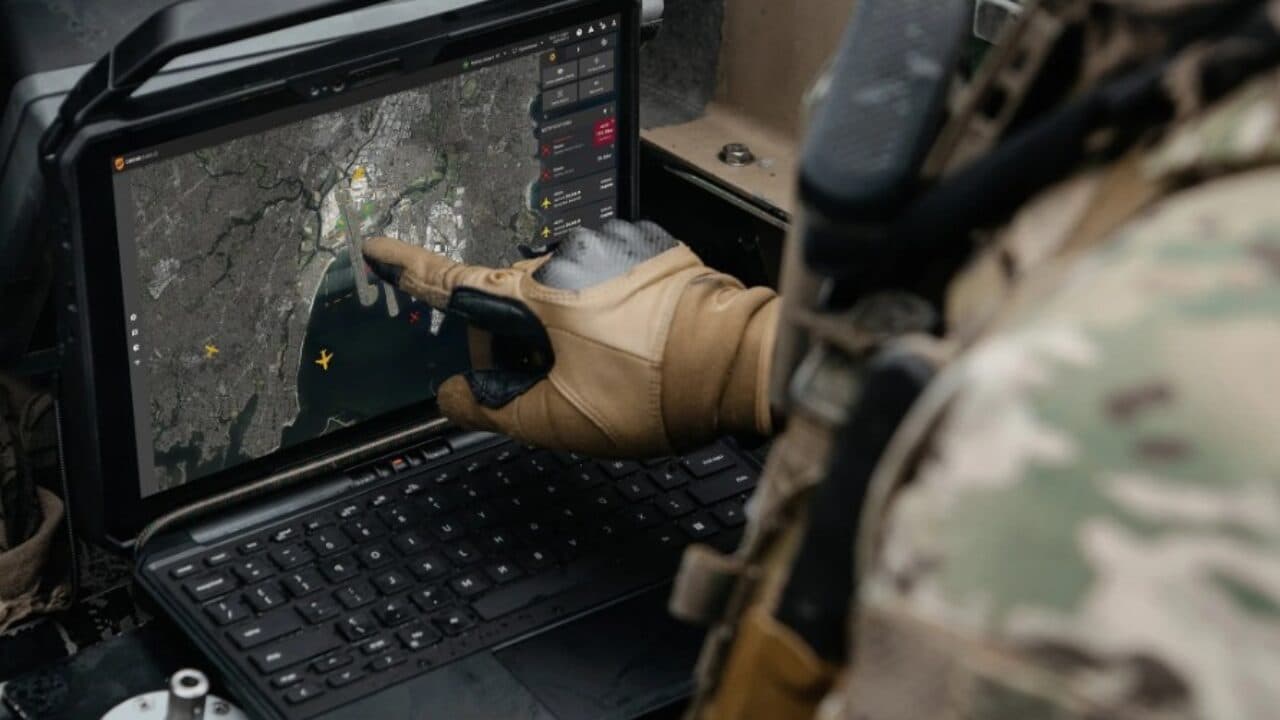
The number that should reframe every flight plan filed in Europe this year is $1.2 billion. That is the value DroneShield attached to its European counter-drone pipeline as of February 2026, a figure that crystallized into physical form on March 30 when the Australia-based electronic warfare firm officially opened its European Headquarters in Amsterdam, Netherlands.
For drone racing organizers preparing MultiGP or DRL-style events across the continent, the move is not a distant defense procurement story. It is a signal that the counter-UAS industry, flush with military and government contracts, has now established a permanent, well-staffed operational center within EASA's regulatory heartland and close enough to Brussels to influence the policy environment that governs every FPV pilot flying under an EU national aviation authority.
Louis Gamarra, promoted to Chief Commercial Officer on January 6 and named to lead the Amsterdam operation, framed the move in terms that reach well beyond military procurement. "DroneShield's investment in Benelux marks a major milestone that strengthens our ability to support frontline users, procurement agencies and industry partners across Europe," Gamarra said. "With increasing demand for counter-drone solutions across the region, our new European headquarters will allow us to deliver faster, more localised support to our EU partners."
That faster, more localized support matters to racing because counter-UAS hardware does not distinguish between a threat drone and a 250-gram racing quad by intent alone. Detection sweeps run by systems like DroneShield's DroneSentry fixed installation platform identify radio-frequency signatures, not motivations. When a stadium or municipality contracts a counter-UAS vendor to secure a high-profile event, every aircraft transmitting in the operational envelope gets flagged, logged, and traced to an operator registration number.
Europe was DroneShield's best-performing market in 2025, generating $98 million in revenue and representing 45 percent of the company's total global income. A counter-UAS firm that earns nearly half its global revenue from European clients is not a startup testing the waters; it is an embedded industry participant with procurement relationships at defense ministries, national police agencies, and critical infrastructure operators who also control the stadiums and public venues where racing events take place. The opening drew Dutch State Secretary for Defence Derk Boswijk and Australian Ambassador to the Netherlands Dr. Greg French, a diplomatic endorsement that underscores how directly the Amsterdam HQ ties into NATO procurement priorities.
The office aligns with the EU's ReArm Europe Plan and Readiness 2030 initiative, which seeks to boost military spending, strengthen industrial sovereignty, and accelerate support for Ukraine. For racing organizations, the side effect is that venue operators increasingly face contractual and insurer-driven pressure to demonstrate airspace control protocols at any event involving unmanned systems, regardless of whether those systems are competitive racing quads or anything else.
Remote ID is the first compliance layer that catches traveling pilots off guard. As of January 1, 2024, Remote ID became mandatory for applicable drones throughout EASA jurisdictions. A racing pilot who flies a custom-built FPV quad without a valid class marking or an EASA-approved waiver is not just technically non-compliant; under the RF scrutiny a DroneShield-equipped venue sweep creates, that aircraft becomes an anomaly on the detection screen. Municipalities granting temporary airspace for racing events increasingly require organizers to submit a complete list of participating aircraft, with registration numbers, before airspace approval is granted.
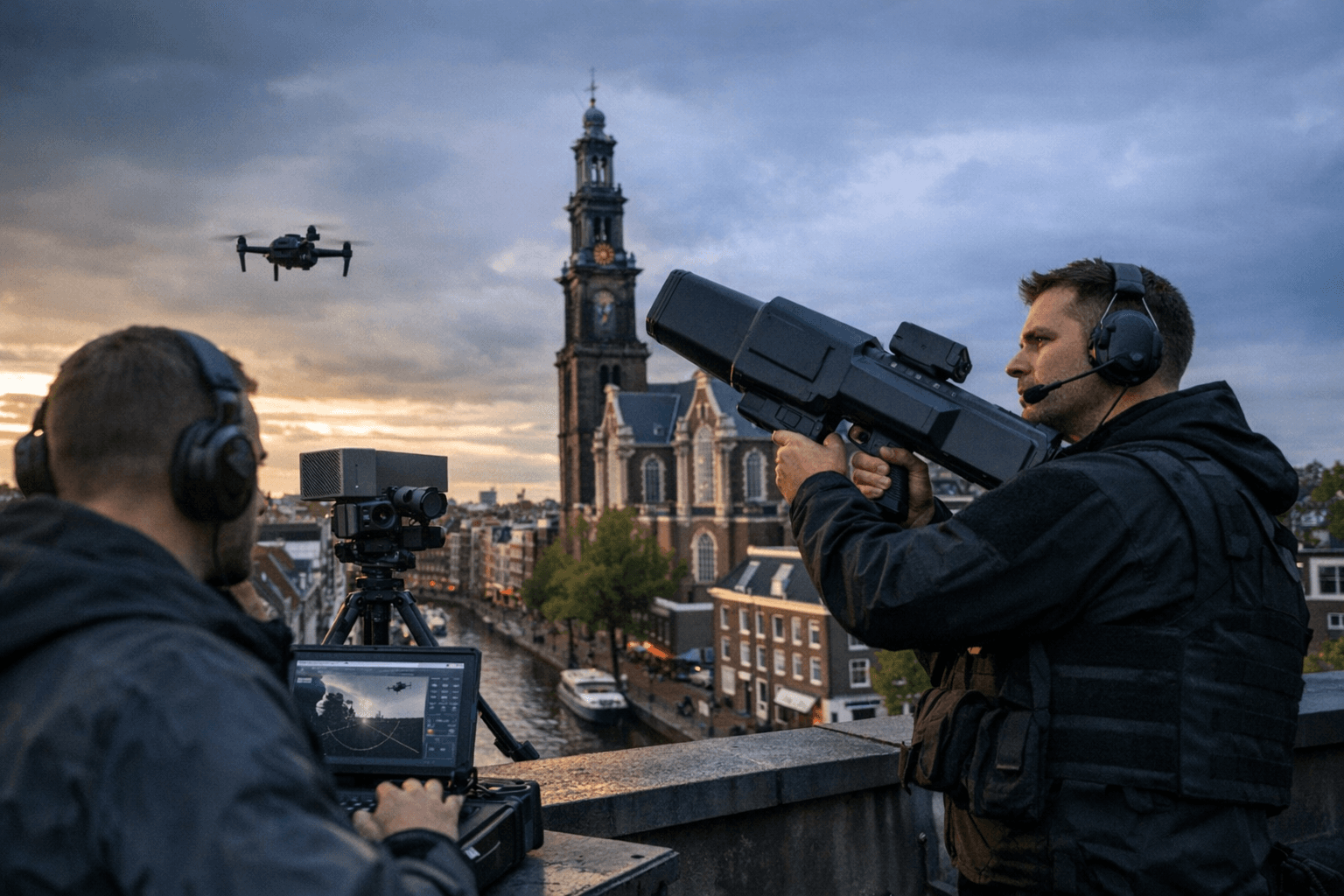
Video transmitter power and spectrum use represent the second pressure point. The 5.8 GHz band that dominates FPV racing conflicts with frequency ranges monitored by counter-UAS passive radar systems, and high-wattage VTX output, the kind pilots push to 1000mW chasing clean signal through steel grandstands, generates exactly the RF signature that detection systems are calibrated to flag and localize. European spectrum regulation through national frequency authorities already sets VTX power ceilings lower than those permitted in the United States, and DroneShield's permanent regional presence makes it more likely that those limits get enforced through real-time detection during events rather than after-the-fact compliance reviews.
Venue approval processes are also shifting. Stadiums that contract counter-UAS vendors for event security are beginning to embed UAS detection protocols into event permits. Organizers who cannot document that every aircraft on course is Remote ID compliant, operates within licensed spectrum limits, and has pre-submitted RF signatures on file with the security contractor face permit denials that no last-minute waiver resolves on race day. Insurance riders tied to drone operations at public events, already a friction point for racing chapters in several EU countries, are growing more specific about counter-UAS compatibility requirements in their policy language.
What this means for teams traveling to EU races is that preparation can no longer stop at aircraft technical inspection and pilot licensing. The RF environment at any major venue is now actively managed. Confirm that your aircraft holds valid EU operator registration linked to your national aviation authority. Verify that your VTX operates within the licensed power and frequency parameters for the specific member state you are racing in. Contact the event organizer ahead of your arrival to confirm that a pre-authorized aircraft RF profile has been submitted to any security provider contracted for the venue. Organizers need to open that dialogue with venue security contractors well before the 30-day permit window, specifically asking whether counter-UAS detection runs during event hours and what the procedure is for clearing registered FPV traffic from the detection log.
The expansion builds on DroneShield's recently established European manufacturing footprint for sovereign counter-UAS capability, and that manufacturing push reshapes the component supply chain over the medium term. As EU procurement cycles prioritize locally sourced electronic warfare hardware, certification and export compliance frameworks will tighten around RF-capable small-UAS components, including the same low-latency video processing chipsets and wideband RF transceivers that define performance margins in racing hardware. Suppliers serving both the defense pipeline and the racing aftermarket will need dual-use certification strategies, and availability for configurations that sit outside those frameworks is likely to narrow as DroneShield and its competitors drive procurement standards deeper into the regulatory code.
The sharpest irony embedded in the Amsterdam expansion is this: the same wave of RF engineering talent and capital investment being absorbed by the counter-drone industry is the talent base that would otherwise be pushing FPV performance forward. The $1.2 billion European pipeline is defense money, but its underlying technology is built on the same physics that makes a racing quad fast, precise, and difficult to intercept on a tight technical course. For the FPV community, March 30 was not a defense industry milestone happening somewhere else. It was the moment the compliance clock for European racing started running in real time.
This article was produced by Prism’s automated news system from verified source data, official records, and press releases, then run through automated quality and moderation checks before publishing. The system is built and supervised by the people who set the standards it runs under. Read our full AI policy.
Did this article answer your question?