Australia widens FPV drone training as attack systems go mainstream
Australia’s Army is turning FPV into a formal combat skill, training troops at Puckapunyal to build, modify and fly attack drones for wider unit use.
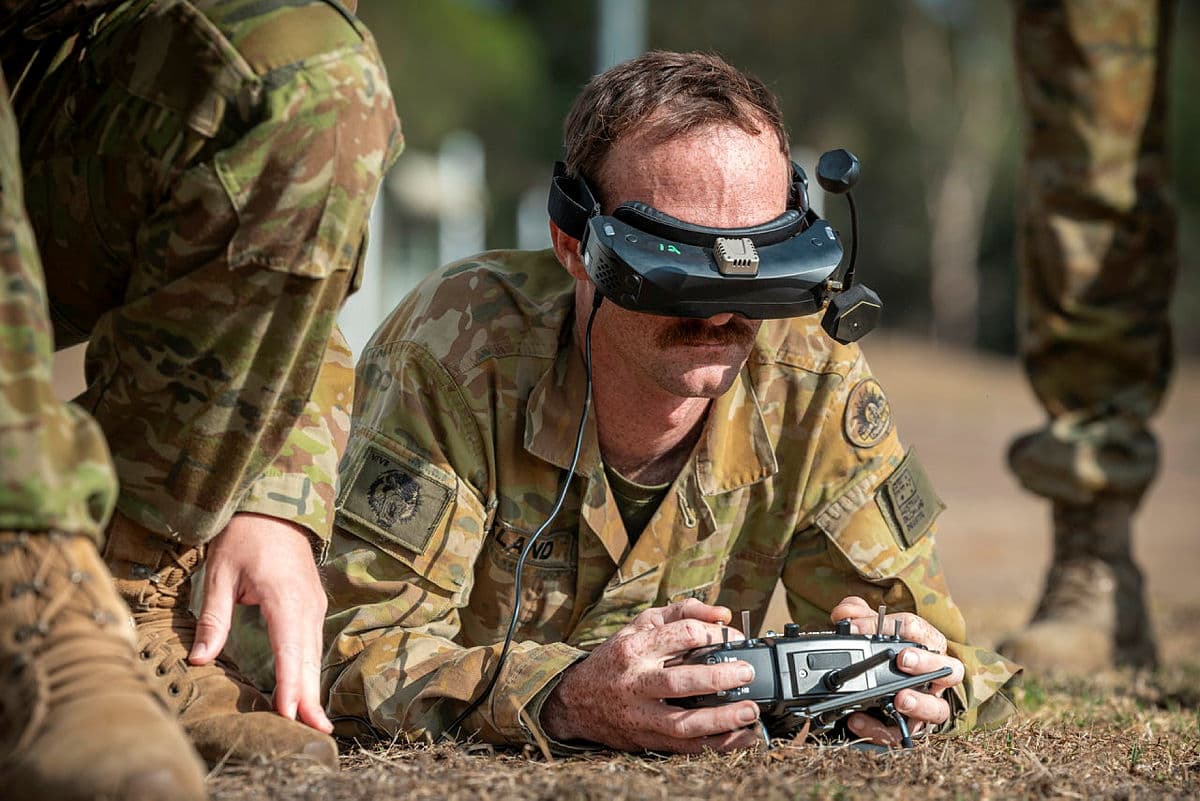
The Australian Army is building FPV operators the way it builds any other combat specialty, with a named course, a set training site and instructors drawn from inside the force. At Puckapunyal Military Area in Victoria, personnel from combat and combat support units went through the “Modify and Operate Attack Drones (FPV)” course, learning to build, modify and fly drones meant to destroy enemy assets.
That matters because the Army is not treating FPV as a one-off experiment. The new course follows “Employ Multi-Role Drones,” which focused more on stabilized reconnaissance systems and payload-carrying platforms. This version is more direct and more hands-on, and it sits inside a broader suite of small uncrewed air systems training. The goal is not just to produce a few specialists, but to send the capability back to home units and into combined-arms exercises, where it can be folded into normal battlefield practice.
The instructor makeup tells the same story. Most of the trainers came from 2RAR, a sign that the Army is deliberately building institutional expertise instead of outsourcing drone knowledge to a narrow niche. Captain Andrew Dunn-Lobban, identified as a senior instructor, said that arrangement showed how far the Army had already come in building drone capability. The message is clear: FPV is moving from improvisation to doctrine, and the people teaching it are now part of the system.
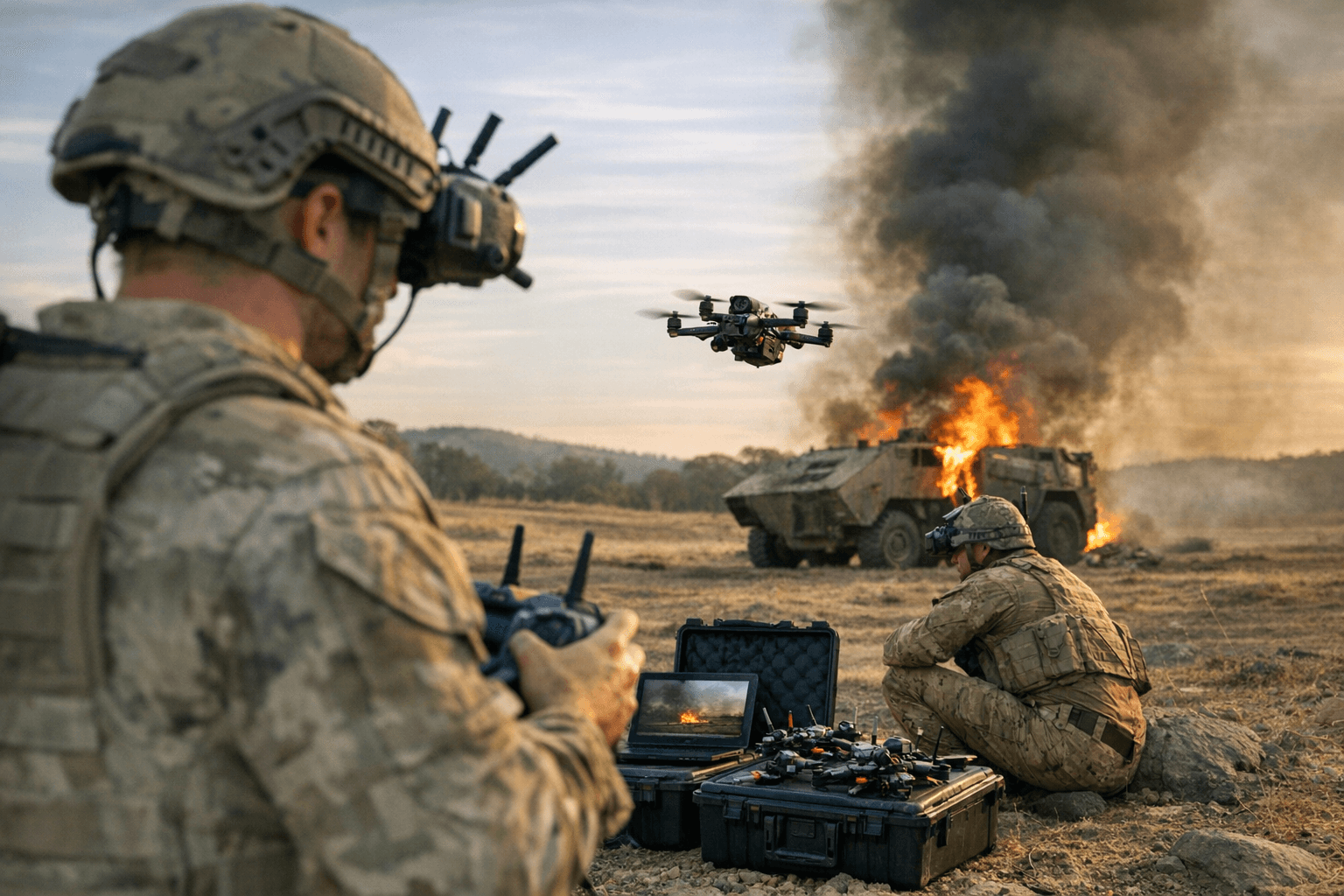
The Army’s own framing places the course inside the wider small uncrewed air systems continuum, which is the real institutional shift here. FPV goggles and first-person-view flight are not being treated as exotic add-ons. They are becoming the training pipeline for a frontline skill set, one that rewards the same reflexes, throttle control and spatial reading that make FPV racing fast in the first place. In military terms, that skill is being translated into a repeatable method.
Australia’s lessons are also being pulled directly from Ukraine. Some instructors had recently returned from Operation Kudu, the Australian Defence Force contribution to the UK-led Operation Interflex mission, where they trained with Ukrainian drone specialists. Operation Kudu began in January 2023, and Australian reporting says about 70 ADF instructors took part in two five-month rotations that helped train more than 1,200 Ukrainian recruits in basic infantry tactics. The Australian War Memorial later centered a 2026 exhibition on Australia’s role in that effort, underscoring how quickly battlefield drone lessons have been absorbed into Army training.
This article was produced by Prism’s automated news system from verified source data, official records, and press releases, then run through automated quality and moderation checks before publishing. The system is built and supervised by the people who set the standards it runs under. Read our full AI policy.
Did this article answer your question?