Marines hit unmanned vessel with FPV drone in Pacific test
Marines launched an FPV drone from a boat and destroyed a homemade unmanned vessel in the Pacific, a first that pushed the tactic from land to open water.
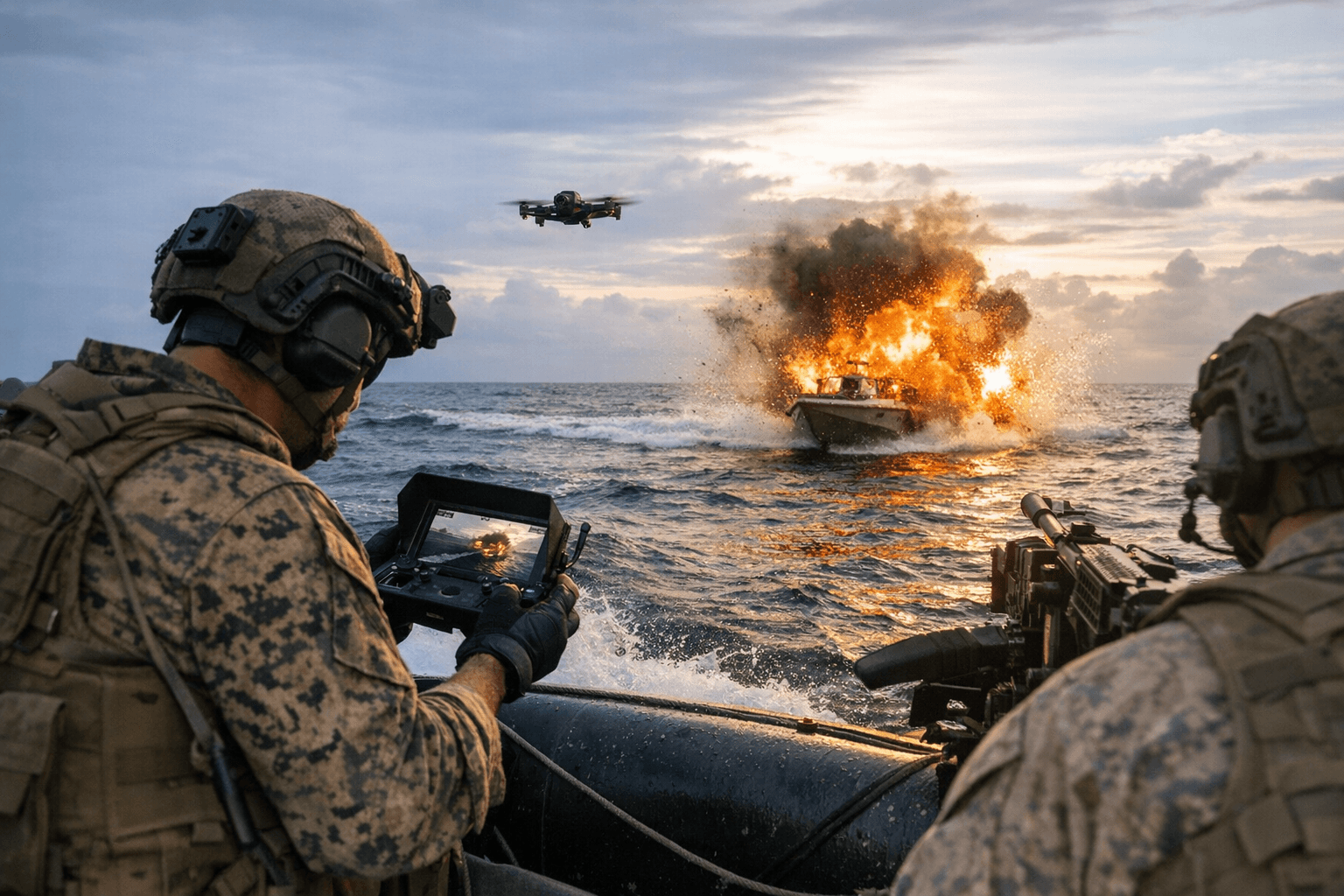
A small FPV drone lifted off from a moving boat in the Pacific and struck an unmanned surface vessel built by Marines in Okinawa, a first that pushed a fast, low-cost strike tactic into a new maritime fight. The Marine Corps said it was the first live-fire drone strike against a maritime surface vessel from a naval surface craft.
The test took place in March near Naval Base White Beach in Okinawa, Japan, and was publicly released on April 1. What made it more than a simple demo was the chain behind it: Marines assigned to III Expeditionary Operations Training Group designed and built the target vessel themselves, then used it as the object of the strike while operating at sea with Naval Special Warfare personnel. The Corps also said Marines demonstrated they could launch attack drones from their own self-built unmanned surface vessels.
That matters for FPV doctrine because open water changes nearly every variable the pilot usually counts on. A launch from a boat has to stay stable as the deck moves. Video and control links have to hold over water. The target is not fixed ground equipment but a moving hull that can drift, bob, or alter angle under the sea state. In that environment, target acquisition and pilot workload become part of the weapon system itself, not just the drone. The Corps is treating that problem as the next step in mission design, where speed, precision and adaptability matter as much as the airframe.
The service has been building toward that point for months. In November 2025, the training group’s Unmanned Systems Branch was already developing FPV drones that could be piloted remotely or programmed for autonomous flight, after Marines had practiced inert strikes on multiple targets before live ordnance was added. The branch also used additive manufacturing to create custom adapters, including modifications that let drones carry M67 fragmentation grenades. Maj. Brant Wayson said the Marines were trained in about 30 days for range operations and that the goal was to build “an arsenal of innovators” who could fabricate and deploy aerial, surface and ground systems tailored to battlefield needs.
The Corps says the new robotics push is meant to increase sensing and firepower in defense of the fleet, and to let units build capability quickly using local economies during conflict. It also says the strike showed closer integration between special operations forces and conventional Marines, a sign that FPV tactics are moving beyond the training ground and into the maritime missions they may shape next.
This article was produced by Prism’s automated news system from verified source data, official records, and press releases, then run through automated quality and moderation checks before publishing. The system is built and supervised by the people who set the standards it runs under. Read our full AI policy.
Did this article answer your question?