U.S. and Russia test close-range rifle rounds to counter drones
U.S. and Russian troops are now testing rifle rounds built to shred FPV-style drones inside 100 meters, exposing the small kill window racing-like quads create.
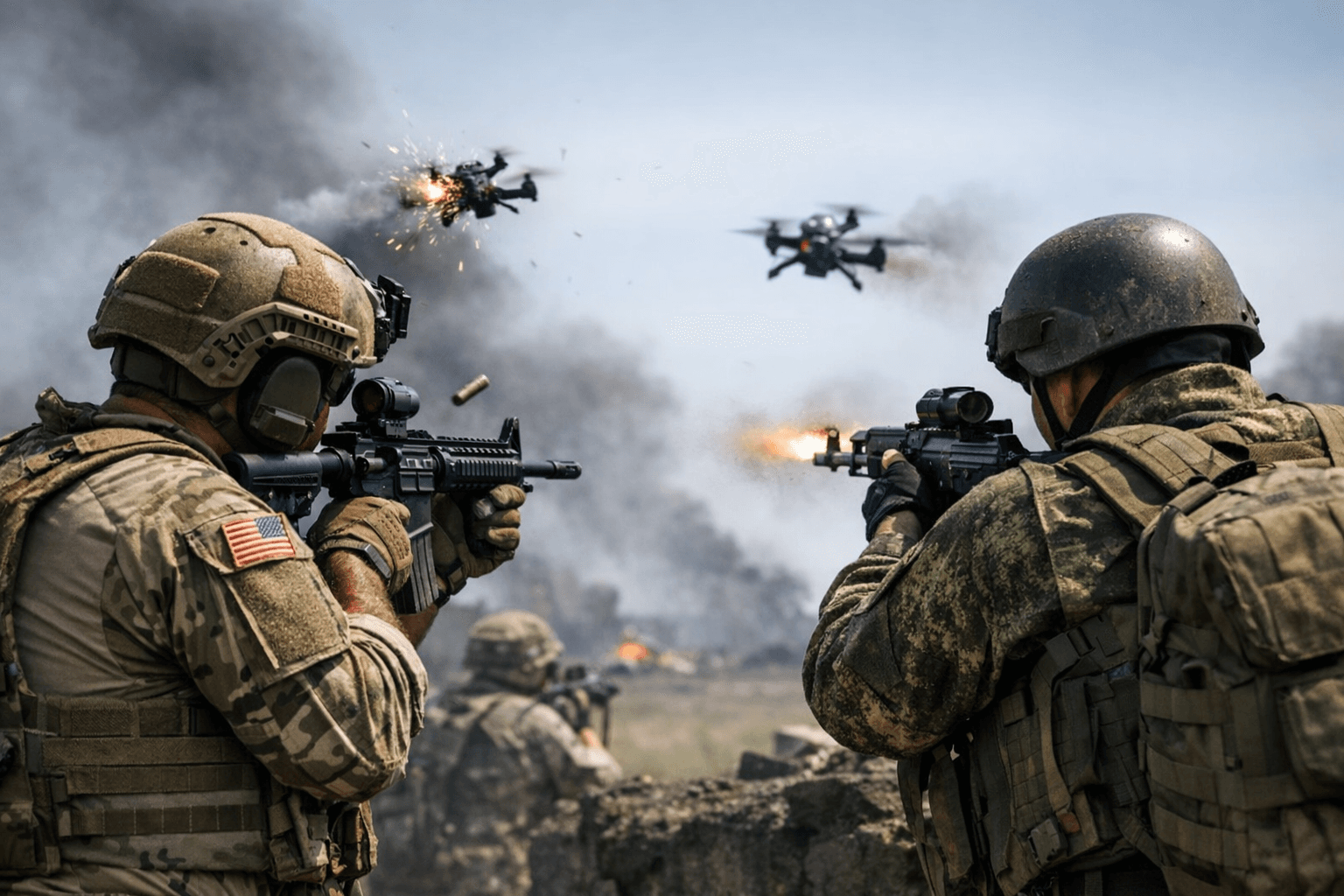
The newest counter-drone fight is taking place in the same close-range airspace where FPV quads live and die: inside roughly 100 meters, fast, low, and hard to track. At Oak Grove Training Center in North Carolina, soldiers from the XVIII Airborne Corps Signal Detachment trained on April 9 with the U.S. Army’s 5.56mm L-variant Drone Round, a cartridge DVIDS described as optimized for close-range engagements and built to defeat small unmanned aerial systems by volume of fire and projectiles.
That matters because the problem is no longer just spotting a drone. Small FPV aircraft, the kind that borrow their DNA from racing builds, are cheap, nimble and difficult to catch with larger air-defense systems. The Army’s framing makes the vulnerability plain: the Drone Round is meant to serve as the final defensive layer in a multi-tiered system, a last-ditch kinetic answer when jamming, guns or bigger air-defense tools are unavailable or too slow to react. Staff Sgt. Dwayne Oxley and Pfc. Ajryan Scales were among the soldiers who trained with it, turning theory into handling, recoil control and target engagement.
Russia is making the same calculation from the other side of the battlefield. TASS reported that Kalashnikov Concern tested 5.45mm multi-bullet cartridges against a fast-moving, maneuvering FPV-type UAV using an AK-12. The test included both hovering and moving targets at preset speed and altitude, and Russian reporting said the separated projectile segments damaged drone batteries, electronic boards, engines and power components, forcing emergency crashes.
The tactical lesson is bigger than one round or one rifle. Kinetic defeat is brutally simple: put enough projectiles into the drone’s flight path and it comes apart. Jamming, by contrast, tries to break the link between pilot and aircraft, but it depends on electronic effects and can be less useful when the drone is too close, the signal is protected, or the engagement happens too fast. That is why close-range ammunition is gaining attention. It gives infantry a direct answer against small, low-flying targets that can slip past heavier systems.
The market is starting to reflect that shift. Soldier Systems Daily reported Freedom Munitions has developed counter-drone ammunition in 5.56mm NATO and 7.62mm NATO, with the smaller round using five projectiles out to 100 meters and the larger using eight projectiles out to 50 meters. For FPV racing fans, the overlap is unmistakable: the same speed, visibility limits and aggressive line changes that make a quad thrilling in the air are exactly what now make it dangerous on a battlefield, and exactly what rifle designers are trying to beat.
This article was produced by Prism’s automated news system from verified source data, official records, and press releases, then run through automated quality and moderation checks before publishing. The system is built and supervised by the people who set the standards it runs under. Read our full AI policy.
Did this article answer your question?