Beginner FPV racing bundles, the easiest way to start flying
A starter FPV bundle can save you about $850 and a lot of setup pain before lap one. The right kit also decides how fast you recover from crashes.
The cheapest credible way into FPV racing
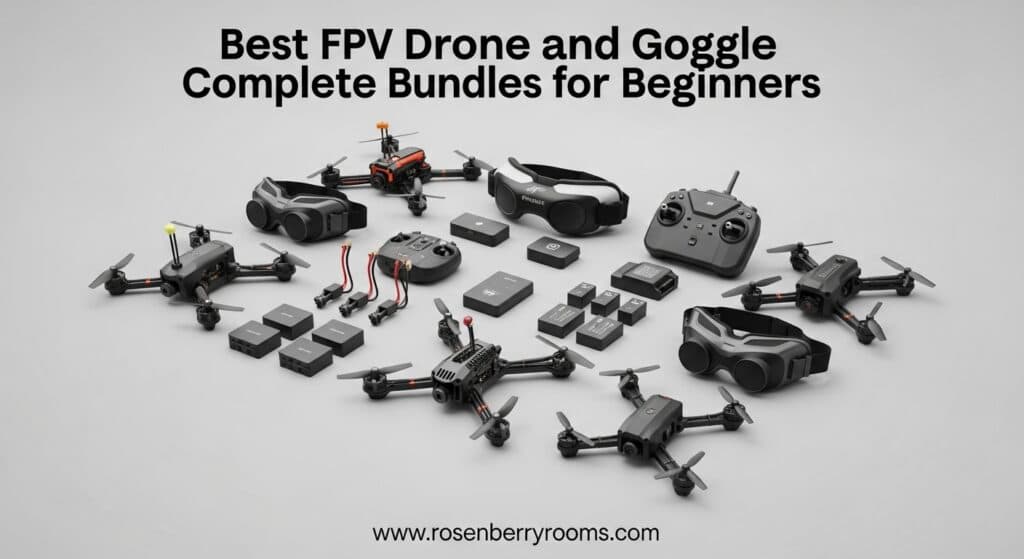
The tested field runs from about $150 to $1,000, a spread of roughly $850, and that gap is the real story. After more than 200 hours comparing ready-to-fly kits, the answer is not that the most expensive setup is automatically best. It is that a complete bundle is usually the fastest way to get from boxed-up curiosity to a drone you can actually fly, crash, fix, and bring back the next day.
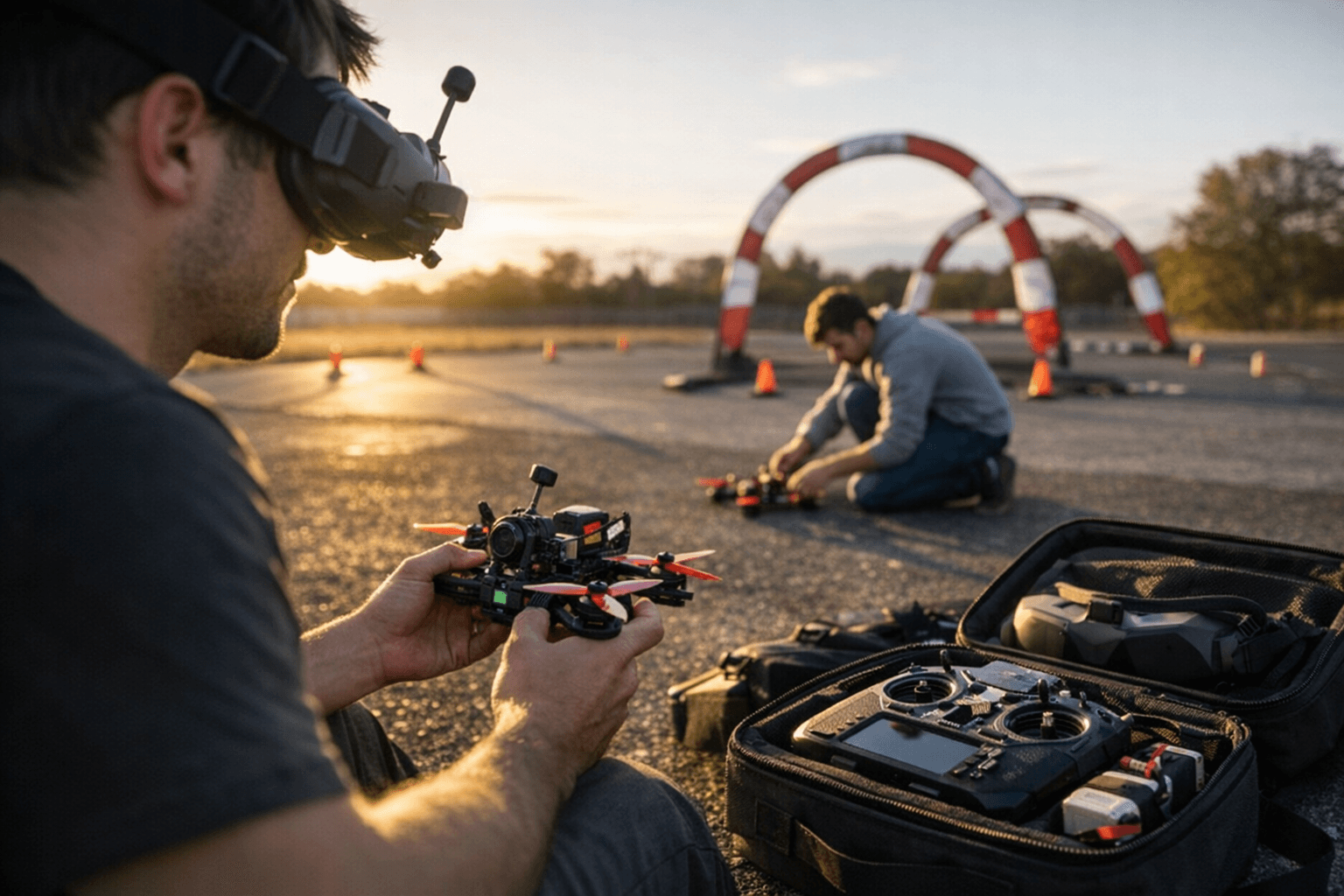
That matters in FPV because the first hurdle is not raw speed, it is friction. You need goggles that make the flight readable, a radio controller that feels natural in your hands, batteries that fit the system, and a frame that can survive the hits that come with learning. A piecemeal build can be sharper later on, but at the start it often turns into a scavenger hunt for compatible parts, firmware, and chargers before you ever reach a gate.
What actually changes lap times and crash survivability
The beginner trap is obsessing over brand names and video hype when the real performance edge lives in a few unglamorous specs. Video latency affects how quickly your corrections show up in the air, radio link reliability decides whether your inputs stay clean, and the battery ecosystem determines how much time you spend flying instead of waiting. Repairability is the quiet winner too, because every minute spent swapping parts is a minute you are not building stick discipline.
- Video latency: lower and more consistent latency helps you place the quad with confidence when the course gets tight. DJI’s O4 low-latency transmission on Goggles 3 is the kind of spec that matters because it reduces the lag between your thumbs and what you see.
- Radio link reliability: a controller that connects cleanly and stays locked matters more than flashy extras. If the link feels unstable, your lines get messy fast.
- Battery ecosystem: more batteries means more reps, and more reps are how beginners start shaving seconds. The DJI Avata 2 Fly More Combo includes three batteries, which is not a luxury number, it is practice volume.
- Repairability and crash recovery: turtle mode, self-protection landing, and propeller guards all cut downtime after mistakes. That matters because new pilots do not lose races on one perfect lap, they lose them on the hours spent sitting idle after a crash.
The contrarian take is simple: beginners worry too much about cinematic footage and not enough about whether a quad can survive bad inputs. A setup that is easy to relaunch after a mistake will improve faster than a prettier rig that leaves you bench-bound after every tap into a wall.
The budget path that gets you flying fastest
The BETAFPV Cetus Lite FPV Kit is the clearest entry point if you want the lowest-cost way in without getting buried in gear decisions. BETAFPV says the kit includes auxiliary altitude hold, self-protection emergency landing, simulator support, and a durable PA12 frame. The company also positions it as an introductory kit and a safe miniature toy for children, which tells you exactly where it sits in the learning curve.
That combination is useful because it lowers the number of moving parts on day one. Altitude hold takes some pressure off throttle management, simulator support lets you build reflexes before you risk real hardware, and the PA12 frame gives the kit a better shot at surviving rough first flights. It is not the fastest route to racing pace, but it is a credible route to stick discipline.
The value pick that bridges trainer and racer
The BETAFPV Cetus Pro FPV Kit is the stronger answer when you want a bundle that feels like a real step toward racing instead of a toy first and a drone second. BETAFPV says it comes with a brushless quadcopter, a LiteRadio 2 SE transmitter, and VR02 FPV goggles, and that it includes three flight modes, turtle mode, altitude hold, and self-protection features that can emergency-land on low battery or loss of control. The company also says a strong collision can trigger automatic disarm and that turtle mode can flip the quad upright after a crash.
That is the kind of kit that teaches recovery as much as flight. Brushless motors matter because they give you a more serious, durable power setup than the cheapest toy-tier options, while turtle mode saves time and frustration when you plant the quad upside down. For a new racer, those are not gimmicks, they are fewer resets between mistakes, which means more actual laps.
The premium starter that removes the most friction
The DJI Avata 2 Fly More Combo is the cleanest all-in-one experience if your goal is to reduce setup headaches and maximize flying time. DJI says the Avata 2 works with DJI Goggles 3 and DJI RC Motion 3, and the goggles offer up to 3 hours of operating time, Real View PiP, and O4 low-latency transmission. The bundle also brings 4K/60fps video, a 155-degree field of view, propeller guards, and three batteries.
That is a very different value proposition from the budget kits. The Avata 2 is not the cheapest doorway into racing, but it is the most polished ecosystem in this group, and polish matters when you want your first sessions to feel smooth instead of fiddly. Propeller guards make the early crashes less punishing, three batteries keep you in the air longer, and the motion controller can flatten the learning curve for pilots who want to focus on flight feel before diving deeper into classic stick control.
Where simulator time and race readiness meet
The smartest thing about these bundles is not the box contents, it is the progression they create. The Cetus Lite and Cetus Pro both lean on simulator support or forgiving flight features, which helps you build the muscle memory that later translates to gates, split-S turns, and clean throttle management. The Avata 2 adds longer practice windows and lower-friction operation, which matters if your goal is to stack reps quickly and avoid the downtime that kills momentum.
That is why bundled kits make sense as a first racing investment. A piecemeal build can absolutely be the better long-term play once you know exactly what you like, but that only happens after enough flight time to understand your preferences. Before that, the cheapest credible path is the one that gets you in the air with the fewest compatibility problems and the least wasted weekend.
Why this is more than a hobby aisle
The regulatory side is part of the equation too. The Federal Aviation Administration says recreational flyers must register drones over 0.55 pounds, follow recreational rules, and comply with Remote ID requirements for drones that are required to be registered or are registered. The FAA also says Remote ID helps the agency, law enforcement, and other federal agencies locate the control station when a drone appears to be flying unsafely or somewhere it is not allowed to fly.
The FAA explicitly includes drone racers among the UAS groups it serves, which is a reminder that FPV racing sits inside a regulated airspace system, not outside it. And the scale of the sport is real: MultiGP describes itself as the world’s largest drone racing league and FPV community, with more than 30,000 registered pilots and 500 active chapters worldwide. That is why the beginner bundle decision matters so much. The right starter kit is not just a way to fly around the living room, it is the most efficient bridge from first power-on to a lane that looks a lot more like racing.
This article was produced by Prism’s automated news system from verified source data, official records, and press releases, then run through automated quality and moderation checks before publishing. The system is built and supervised by the people who set the standards it runs under. Read our full AI policy.
Did this article answer your question?