Collegiate drone racing builds the sport's fastest pipeline to pros
Collegiate FPV is becoming the sport’s cleanest route to pro speed, because schools are turning rookies into race-ready pilots with structure, repetition, and support.
Collegiate FPV is now the sport’s talent factory
Collegiate drone racing is becoming the fastest route from hobby flying to serious competition because it compresses the messy, expensive learning curve of FPV into a system that rewards repetition, teamwork, and pressure. That matters in a sport where one loose connector, one bad launch, or one split-second line choice can erase a perfect lap. The college model is not just producing pilots, it is producing race-ready operators who understand setup, troubleshooting, and consistency as much as raw speed.
The strongest version of that model looks less like a casual club and more like a training academy. A student can start in simulators, move into indoor whoop tracks, then step up to outdoor freestyle or class-race setups, learning along the way how battery chemistry, prop selection, VTX power, frame durability, latency, and video breakup all affect the clock. That progression is why collegiate FPV keeps outpacing the lone-builder path: it replaces trial-and-error with a ladder of increasingly difficult reps.
What colleges actually provide
The best programs give pilots much more than goggles and quads. They build in simulator time, repair support, standardized gear, sponsorship access, and real event exposure, which lets racers spend more time flying and less time rebuilding from scratch. Teams also teach soldering, radio setup, antenna management, firmware updates, heat strategy, and race-day troubleshooting, the exact skills that separate a fast flyer from a dependable one.
That support structure changes the way pilots develop under pressure. When a school has pit crew roles, data and log analysis, and dedicated repair leads, the athletes can treat competition like a professional operation rather than a solo project. It also creates continuity from season to season, so each new rookie inherits a system instead of starting over.
Why repeat competition produces faster pilots
Drone racing punishes hesitation, and collegiate teams solve that by giving pilots repeated race reps before they ever reach a major championship. Schools can host scrimmages, regional qualifiers, and invitationals, which means a student learns how to handle lane pressure, launch cleanly, recover from contact, and reset mentally after a crash. That matters because the sport does not only reward top speed; it rewards the pilot who can repeat speed under stress.
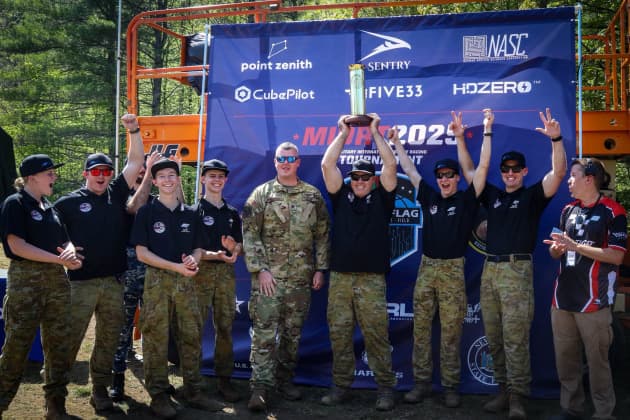
MultiGP’s collegiate structure shows how seriously the sport is taking that idea. The league says it is the largest professional drone racing league in the world, with more than 30,000 registered pilots and 500 active chapters worldwide, and its 2025-2026 Collegiate Drone Racing Association series scores teams using the top three pilot scores from each school. The team fee covering unlimited pilots lowers the barrier to participation, while the schools list, which includes Purdue, Virginia Tech, Oregon State University, the University of Alabama, Duke University, the University of Central Florida, Boston University, and the U.S. Air Force Academy, shows how broad the talent pool has become.
The precedent goes back to Purdue University, which hosted the first ever Collegiate Drone Racing Championship. That inaugural event drew 48 collegiate drone racing pilots from 26 colleges and universities, a strong sign that the current pipeline grew out of formal competition, not just club culture. Collegiate FPV was organized early, and that structure is still shaping who gets better, faster.
Why the sport looks more legitimate from campus
Collegiate FPV gives the sport something every emerging discipline needs: recognizable storylines. Rookies chase veterans, teams build rivalries, and comeback arcs become as important as lap times because a season creates narrative, not just a result sheet. That helps drone racing look more credible to sponsors, schools, and media, especially when the competition format is consistent and repeatable.
It also helps the sport connect to bigger industries. Universities often frame drone racing in educational terms because the skills translate into aviation, robotics, inspection, and engineering careers. In practice, the racing team becomes a hands-on technical lab, and that dual identity makes it easier for schools to justify investment while giving students a path to jobs beyond the track.
The University of California, Berkeley’s UAV FPV team is a good example of that crossover. The team says its quadcopters can fly up to 100 mph, and it travels to Purdue for the Collegiate Drone Racing National Championship each year. That is not just a club showing up for fun; it is a traveling performance program with speed, standards, and national comparison built in.
What grassroots racers and local clubs can copy now
Not every club can match university funding, but plenty of the collegiate model is portable. The University of Washington Husky Flying Club’s proposal is a useful blueprint because it asked for 10 racing and practice drones, tools and equipment, and obstacle gates. Those three pieces, shared machines, maintenance gear, and a dedicated practice course, are enough to raise the quality of a local program without turning it into a full varsity operation.
The most realistic pieces to copy are:
- Simulator time first: make sims part of every practice night so new pilots arrive with stick memory before they risk hardware.
- Standardized gear: keep a common frame or parts kit so repairs stay fast and the learning curve stays focused.
- Repair roles: assign one pilot or mentor to lead maintenance so crashes do not end the night.
- Timed scrimmages: run repeat heats instead of casual flying so pilots learn start pressure and recovery.
- Basic data review: log battery behavior, crash causes, and setup changes so improvement is measurable.
- Exposure events: bring in nearby schools, local sponsors, or regional race organizers to make the club visible outside its own circle.
That formula is what gives colleges their edge. They create a repeatable environment, then layer competition on top until speed becomes a habit.
The bigger ladder beneath college FPV
College is not the first stop in the talent pipeline anymore, and that is part of why the sport feels sturdier. MultiGP’s broader scholastic ecosystem, including STEM Alliance programming, and the work of youth-focused systems such as Drone Legends and the Unified Scholastic Drone Racing Association, show that drone racing is building a ladder from early exposure to collegiate competition. By the time a pilot reaches campus, the sport has often already become a serious skill path.
That broader ladder matters socially and culturally because it changes who gets access to the sport. A student who discovers FPV through a school program is not just joining a hobby, they are entering a technical and competitive ecosystem with visible pathways. In a sport defined by speed, that may be the most important edge of all: the ability to turn raw interest into repeatable performance, season after season.
This article was produced by Prism’s automated news system from verified source data, official records, and press releases, then run through automated quality and moderation checks before publishing. The system is built and supervised by the people who set the standards it runs under. Read our full AI policy.
Did this article answer your question?