FAI explains how venue design shapes drone racing performance
FAI's venue rules show drone racing is won as much by the course as the craft: RF noise, sightlines, and 3D geometry can alter crashes, overtakes, and podiums.
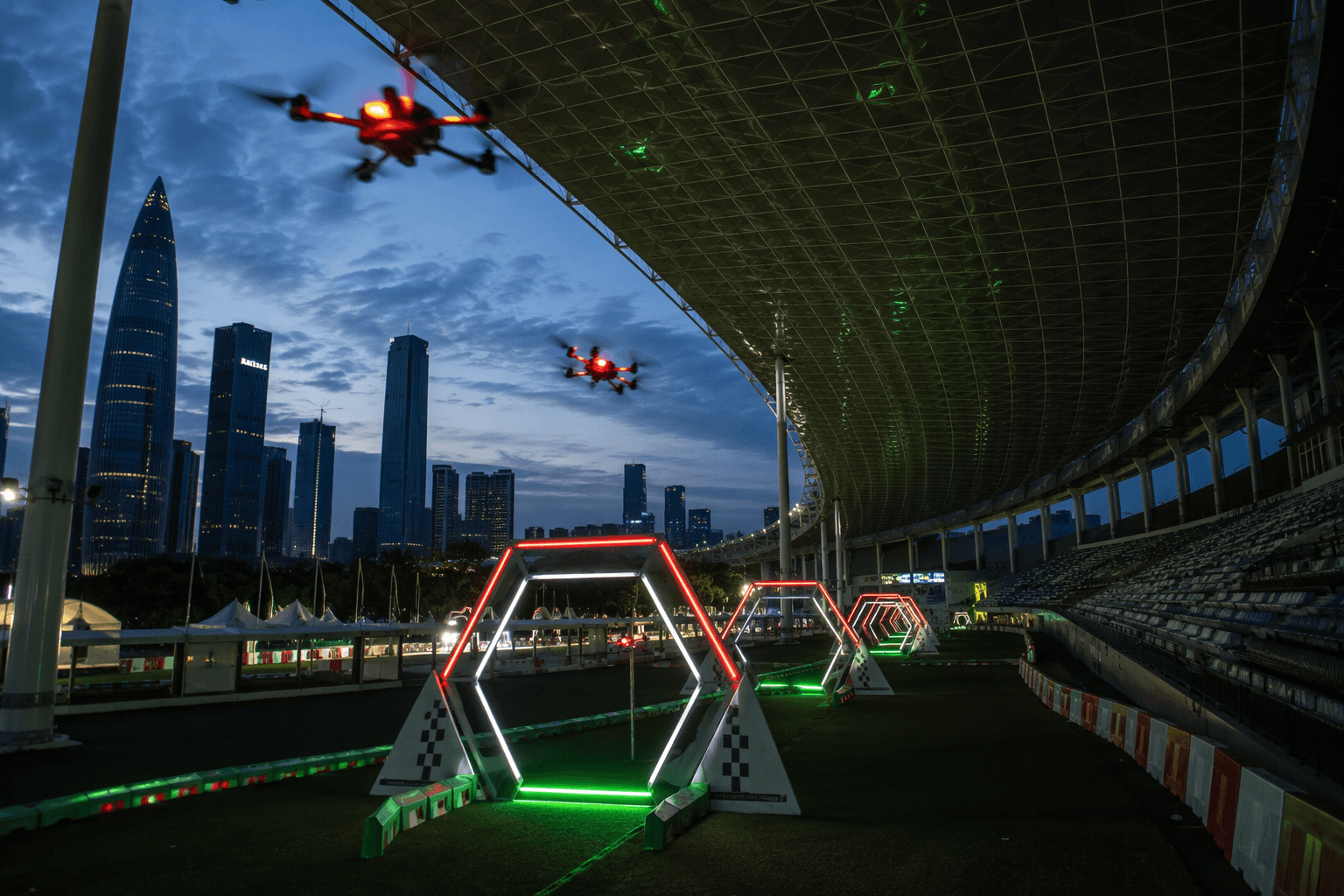
FAI deems a football stadium a suitable field of play for drone racing when the geometry and wireless environment are right. The track is three-dimensional space, and any interruption in the signal can trigger a crash.
Why the venue is part of the race
On June 27, 2018, FAI defined a good drone-racing venue by the track itself as three-dimensional space. FPV racing is not a flat sprint; pilots thread gates, turns, and elevation changes while reacting in real time at high speed. The venue is a performance variable that affects how aggressively a pilot can push lap after lap.
The format is flexible enough to happen indoors or outdoors, which is one reason venue selection has become a technical decision rather than a logistical one. Indoor arenas offer controlled conditions, while open sports venues can deliver room for safety zones and clearer sightlines. In both cases, organizers are trying to shape a course that rewards precision without turning every corner into a risk of contact or signal loss.
The wireless environment can change the outcome
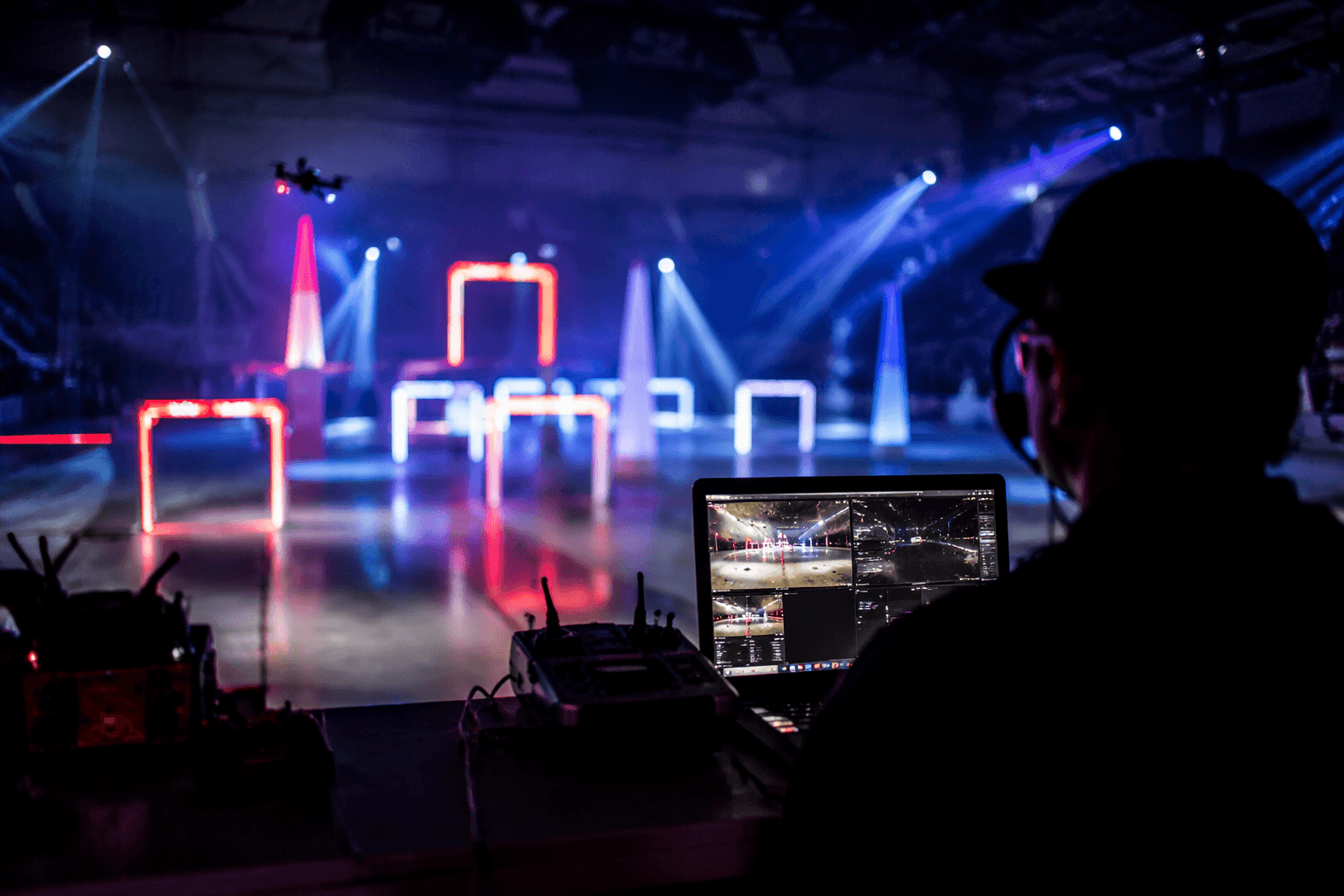
Drone racing depends on live video feeds from onboard cameras and radio control links, so the venue’s electronic signature is part of the competitive equation. Heavy Wi-Fi use, crowded wireless networks, and other signal sources can degrade performance or create unpredictable interference. A site is judged not only by its size or appearance, but by how cleanly it can support the race-day RF environment.
Because the pilot is responding in real time at high speed, any interruption in the signal could cause a crash. Venue engineering has direct sporting consequences. A cleaner wireless environment preserves lap consistency, reduces the chance of a sudden loss of control, and keeps the race from being decided by interference instead of line choice or throttle discipline.
Course flow, centerline measurement, and fairness
FAI also formalizes how the course itself is measured. Circuit length is taken along the centerline of the track, which means the race is defined by the intended racing line, not by the outer edge of a gate or obstacle. That detail matters for fairness because it fixes the reference point for layout design and helps ensure that one pilot is not advantaged by a looser interpretation of distance.
The sport’s current rules are collected in FAI Sporting Code Section 4, Volume F9 Drone Sport, which took effect on January 1, 2024. When organizers place gates too tightly, stack turns too abruptly, or compress vertical features without room for recovery, they increase the odds of collisions and force pilots into conservative lines that suppress overtaking.
Stadiums are not just convenient, they are strategic
Stadiums and sports venues can accommodate large structures, safe margins, and the kind of visual clarity that makes the action readable for both live spectators and broadcast crews. They also let organizers place obstacles in a way that preserves the race line while still demanding fast directional changes.
That visual clarity is crucial because drone racing is usually watched through first-person-view goggles, a phrase that appeared in The New Yorker in February 2018. The pilot experiences a narrow, immersive tunnel of motion, while everyone else needs a course that reads instantly from outside.
What major events show about modern venue design
The first FAI World Drone Racing Championships ran from November 1 to 4, 2018 at Shenzhen Universiade Center Stadium in Shenzhen, China. The track was 650 meters long, divided into three vertical layers, with a six-meter vertical height difference. It was also shaped like a Chinese knot and covered with LED lights, a design built to test elite pilots.
That pattern continued in later championship sites. The 2023 FAI World Drone Racing Championships ran from October 6 to 9 in the stadium of the Namwon Sports Town complex in Jeollabuk-do, and a 2024 FAI highlight video identifies the 2024 championship as Hangzhou, China. FAI also announced that the drone racing competition at The World Games 2025 would be held August 14 to 16, 2025 at the secondary stadium at Dong'an Lake Sports Park in Chengdu.
The broader business of building a better race
The Drone Racing League races on custom-designed 3D courses in iconic locations. That approach turns venue engineering into part of the entertainment package, because the location helps define the identity of the race while the layout determines how hard it is to fly cleanly. In that model, course design sets pace, opens passing chances, and punishes mistakes.
This article was produced by Prism’s automated news system from verified source data, official records, and press releases, then run through automated quality and moderation checks before publishing. The system is built and supervised by the people who set the standards it runs under. Read our full AI policy.
Did this article answer your question?