FAI revives Shenzhen drone racing track for legacy World Cup
FAI is sending pilots back to Shenzhen's 2018 championship course for a three-lap Legacy World Cup run, tying today's faster e-drone racing to the sport's first world title.
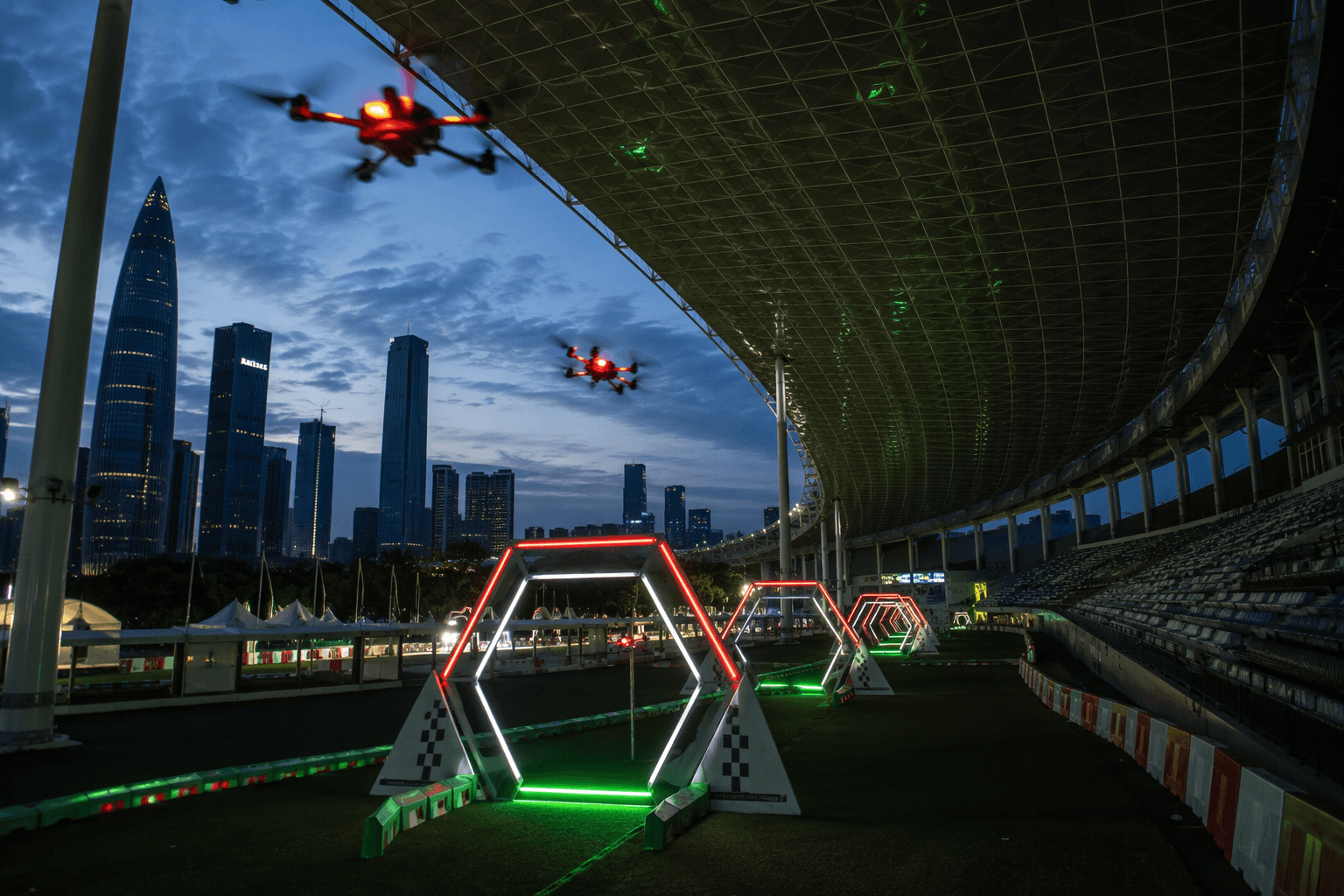
FAI has brought back the Shenzhen track that crowned the sport’s first world champion, turning the original 2018 course into the stage for its Legacy e-Drone Racing World Cup. Each race is set to run three laps on the same layout used for the 1st FAI World Drone Racing Championship in Shenzhen, China, a move that gives the modern e-sport-style series a direct link to drone racing’s defining breakthrough.
That return matters because Shenzhen was not just another stop on the calendar. The first FAI World Drone Racing Championship ran there from November 1 to 4, 2018, with 128 pilots from 34 countries and a field that included 44 juniors and 13 women. Rudi Browning of Australia, then 15, won the title and became the first FAI World Drone Racing Champion, with reports at the time putting his prize at US$24,000.
The 2018 championship also established the kind of benchmark performances that still shape the sport’s memory. FAI and CGTN said Switzerland’s Timothy Trowbridge set a world record title with an average speed of 114.2382 km/h over two runs of the 100m track. Wanraya Wannapong of Thailand took the women’s title, Oscar Nilsson of Sweden won the juniors title, and Australia’s team finished ahead of Sweden and South Korea. FAI’s opening-day highlights placed the action at Shenzhen Universiade Center-Stadium, where the event’s pace and scale signaled that drone racing had already moved well beyond exhibition flying.
The track itself remains the story. CGTN described the Shenzhen course as 600 meters long, shaped like a Chinese knot, and the world’s first 3D multi-layer drone racing track. That design should matter even more now than it did in 2018, because today’s faster quads, sharper tuning windows and more aggressive pilot styles leave less room for hesitation. On a three-lap course with vertical layers and tight geometry, the edge may go to veterans who know the course rhythm, to builds that accelerate cleanly out of the turns, and to pilots who can keep throttle discipline when the line opens and closes in a heartbeat.
FAI launched the E-Drone Racing World Cup as a new esports-style challenge in 2024, and its 2025 coverage says the best-placed pilots in the ranking will be awarded the title of 2025 E-Drone Racing World Cup champion. Bringing Shenzhen back into that system turns the legacy course into more than a tribute. It is a measuring stick for how much the sport has changed, and how much of the old racecraft still survives when the gates light up again.
This article was produced by Prism’s automated news system from verified source data, official records, and press releases, then run through automated quality and moderation checks before publishing. The system is built and supervised by the people who set the standards it runs under. Read our full AI policy.
Did this article answer your question?