Fort Hood test links autonomous sensors, effectors in drone defense trial
Fort Hood’s Golden Shield test chained a sensor, a Harpe micro-missile and a FireAnt ground drone into one anti-drone loop.
Fort Hood became the Army’s latest proving ground for machine-speed air defense as the 1st Cavalry Division closed a three-day Golden Shield live-fire test that linked autonomous sensing, tracking and defeat systems in one chain. The exercise ran from April 7 to April 9, 2026, and DVIDS said it was the first phase of the division’s counter-drone work to bring autonomous effectors into the mix for an armored formation.
The key milestone was not just firing at a target, but how the kill chain worked. DVIDS said the division recorded its first complete end-to-end engagement in which an autonomous sensor identified and classified a threat before effectors were brought into the chain. That matters because small drones can appear low, fast and with little warning, forcing defenders to compress detection and response into seconds rather than minutes.
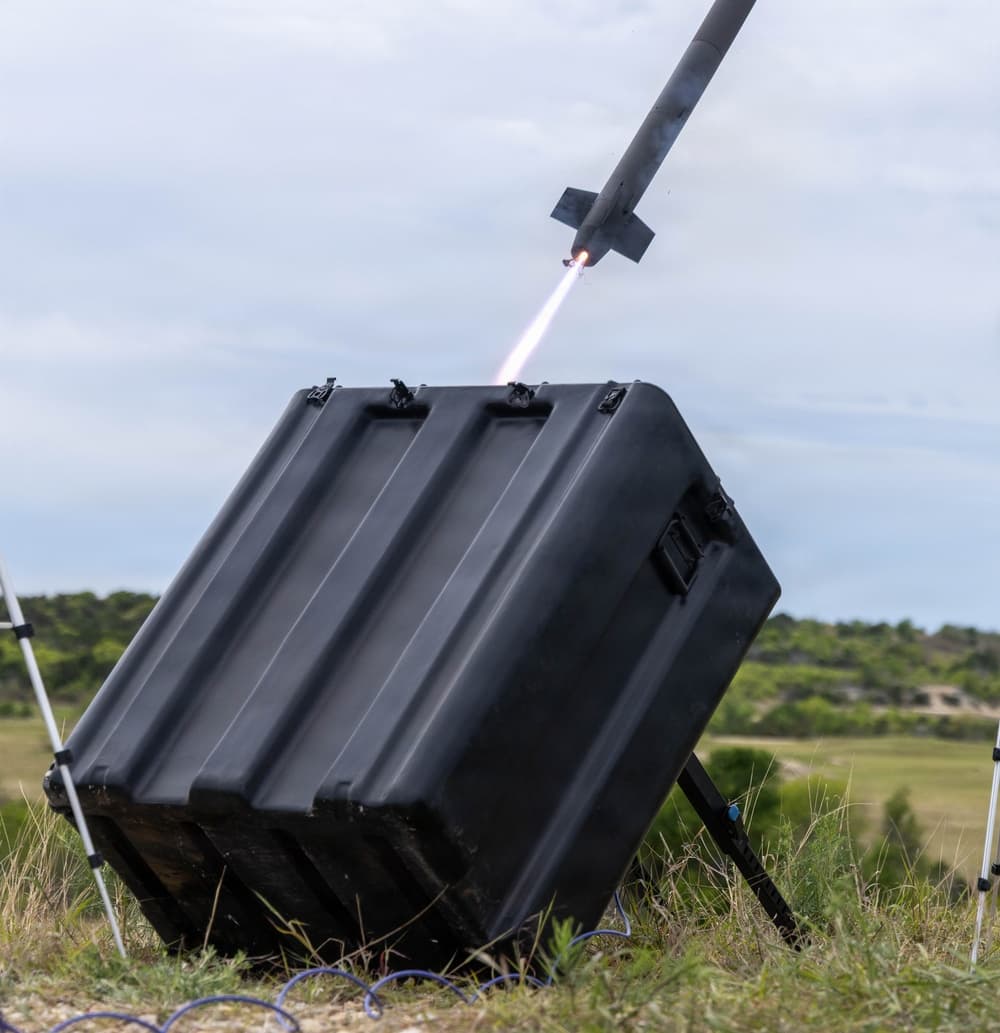
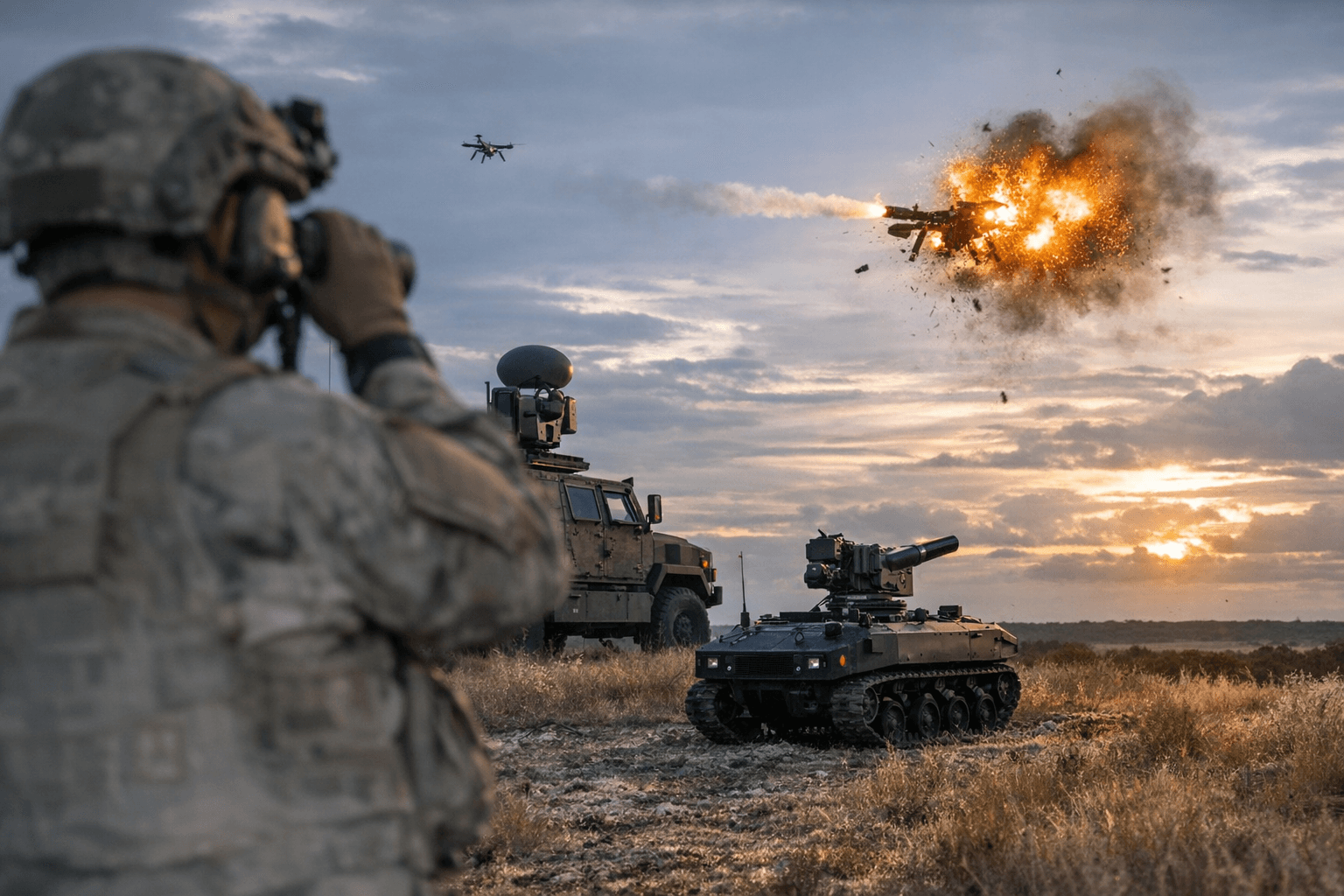
Images from the exercise show what that layered concept looked like in practice. One caption identified a Perseus Defense Harpe Missile System rocket test-fired on April 7. Another showed a Swarmbiotics FireAnt V4 autonomous ground drone scanning terrain during Project Golden Shield on April 9. Together, those systems point to a broader architecture: find the threat, track it, classify it and then choose the right effector, whether that is electronic attack or a kinetic interceptor.
The Golden Shield test also fit into the division’s larger Pegasus Charge modernization effort. DVIDS described the exercise as part of the 1st Cavalry Division’s counter-drone experimentation, building on work the unit and industry partners carried out during Exercise Condor Rebirth at Fort Hood from March 23 to 27, 2026, when integrated sensor and battle-tracking systems were tested. The division has been pushing the same problem from multiple angles, including counter-small unmanned aerial systems training in Poland in May 2024.
Fort Hood itself adds another layer to the story. The installation was established in 1942 to train troops for mounted warfare during World War II, yet it is now being used to rehearse how armored formations survive in an era defined by cheap drones and FPV-style attacks. The 1st Cavalry Division, headquartered there, returned to Fort Hood in 1971 after Vietnam and marked its centennial in 2021.
Golden Shield is not a finished shield yet, but this test showed where the Army is headed: away from a single jammer or gun and toward a layered defensive loop that can keep pace with drones that move faster than human reaction time.
This article was produced by Prism’s automated news system from verified source data, official records, and press releases, then run through automated quality and moderation checks before publishing. The system is built and supervised by the people who set the standards it runs under. Read our full AI policy.
Did this article answer your question?