GICHD solid-state batteries push AI drone endurance to four hours
GICHD’s solid-state prototypes hit about 450 Wh/kg and kept an AI drone flying 240 minutes. In a sport decided by 9.405-second laps, that endurance does not automatically buy speed.
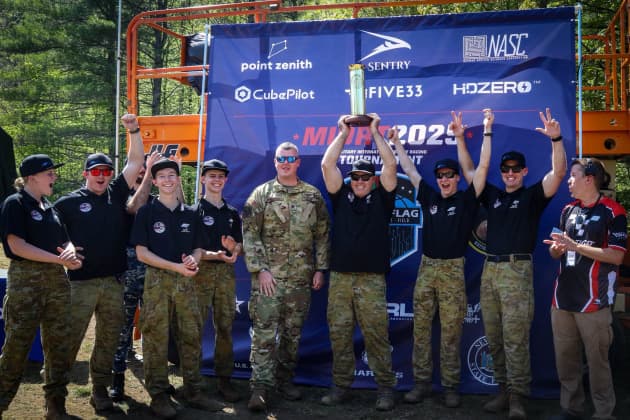
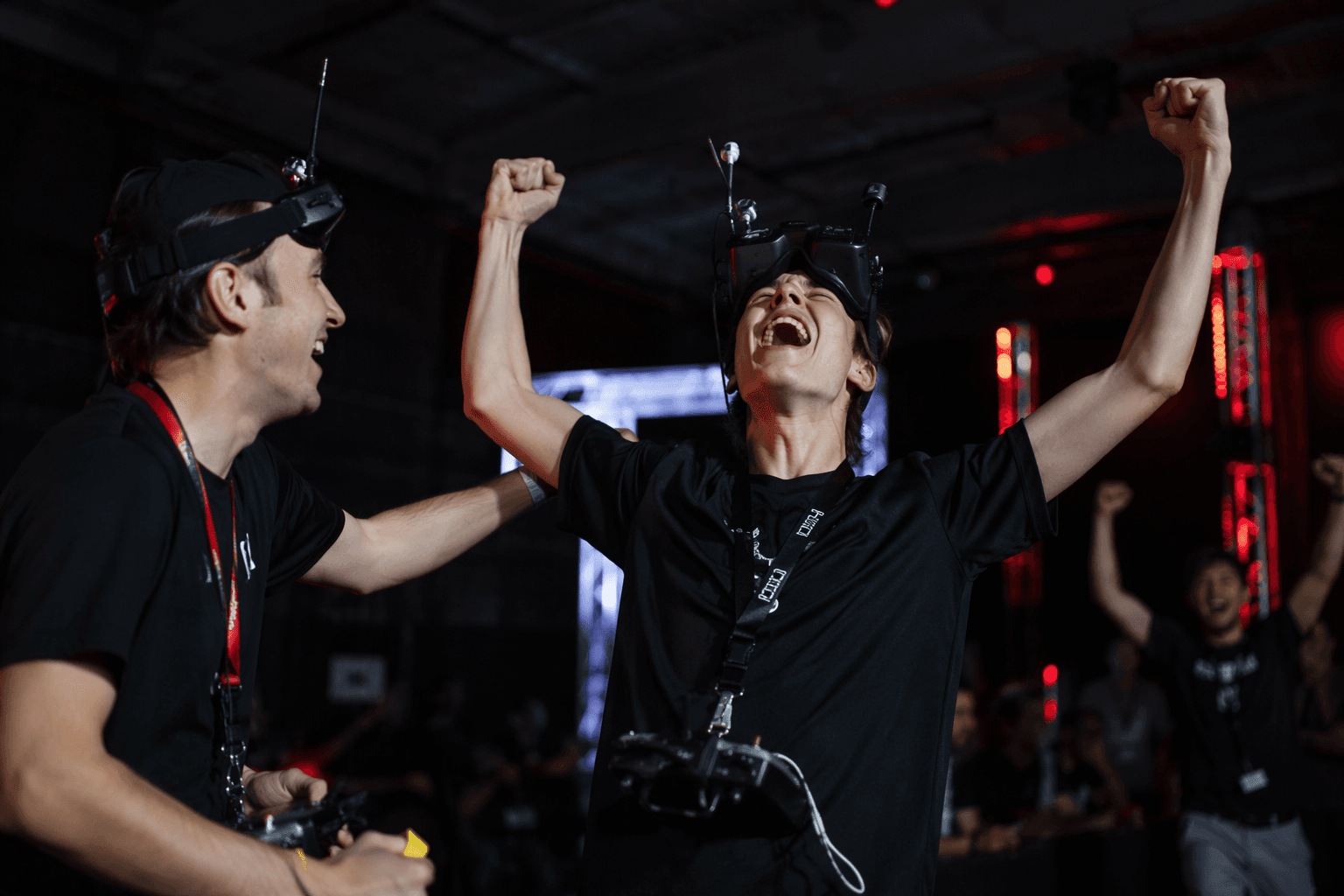
Raiden Racing didn’t beat Cyclone Racing 22-9 at the DCL Falcon Cup Finals by carrying more battery. They won by staying fast when the power demand spikes: clean launches, hard punches out of gates, and zero hesitation when the quad is pulling big current. The weekend’s benchmark tells the story. Vicent Mayans ripped the fastest lap at 9.405 seconds, and Yuki Hashimoto posted the fastest pilot time in the finals at 0:55.843. In racing, that is not an energy problem. It’s a power problem.
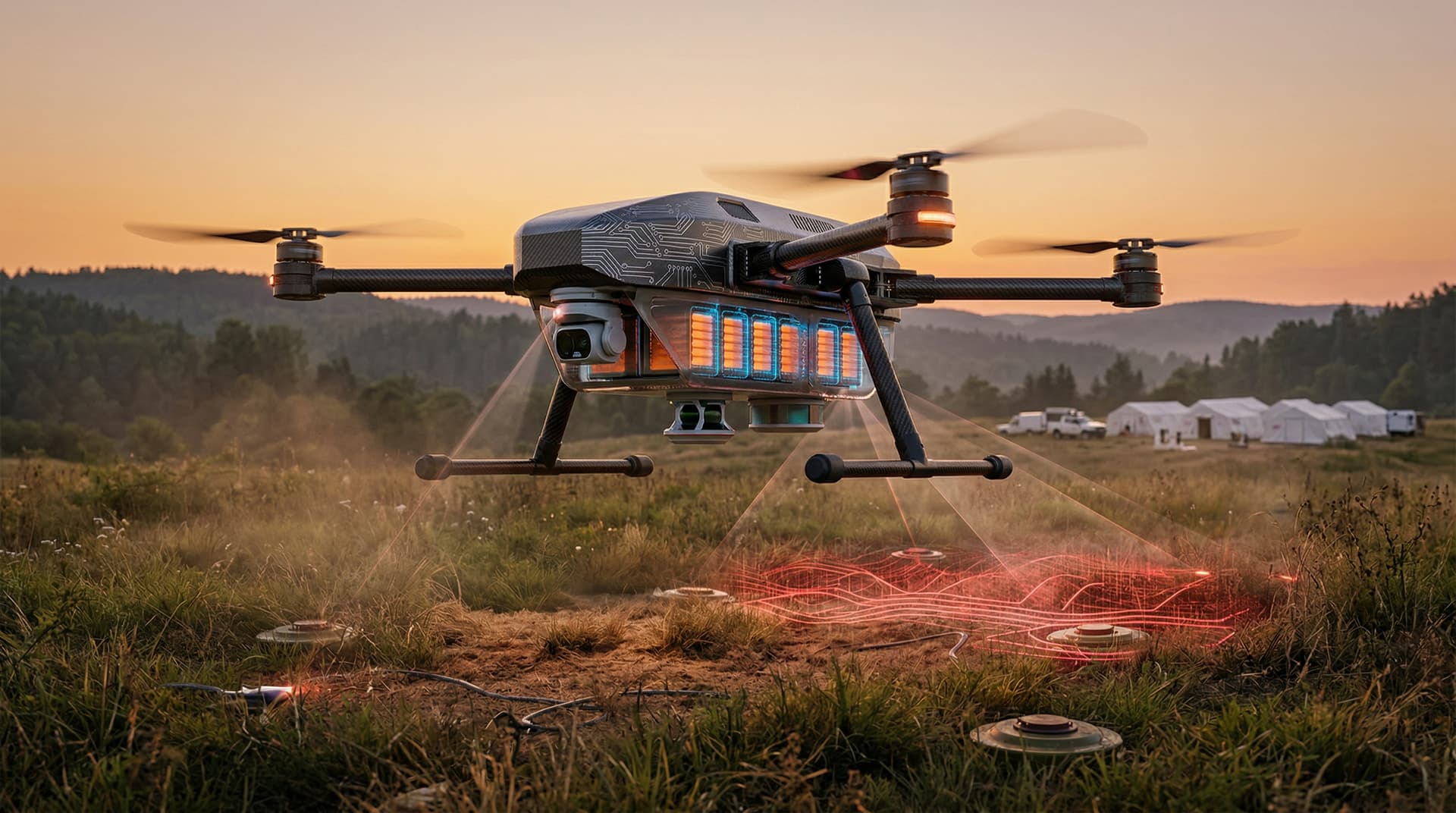
That’s why the four-hour headline coming out of Switzerland lands with a thud for anyone who actually watches race voltage. On April 11, 2026, a Geneva International Centre for Humanitarian Demining (GICHD) led effort reported successful integration of high-energy-density solid-state battery prototypes into small AI-equipped drones, pushing endurance flights up to 240 minutes in testing. The project’s target is autonomous mine-detection: 1.2-meter-wingspan platforms cruising near 50 km/h with geophysical sensors and onboard machine-learning inference for anomaly detection. Lab reports cited in the coverage put the prototype cells near 450 Wh/kg, about 1,150 Wh/L, with 1,500 full cycles retained and vibration resilience aimed at unmanned operations, with EPFL validation mentioned and QuantumScape tied in through a prior prototype supply partnership.
Here’s the gap racers need to internalize. Four hours is 240 minutes. Typical race packs are built to survive 3 to 6 minutes of brutality, not 240 minutes of cruising. Even if you benchmark off that Falcon Cup reference run, 240 minutes is roughly 258 repeats of a 55.843-second finals pace. Endurance is a different sport.
The battery metrics that decide races aren’t just Wh/kg. They’re C-rate, voltage sag under load, thermal limits, and weight. A high-energy cell can look gorgeous on a lab sheet and still feel dead on the sticks if its internal resistance is high enough to sag voltage the moment a pilot asks for a 100-plus amp punch. Sag costs RPM, RPM costs throttle authority, and throttle authority is time you never get back once you miss a split-S line.
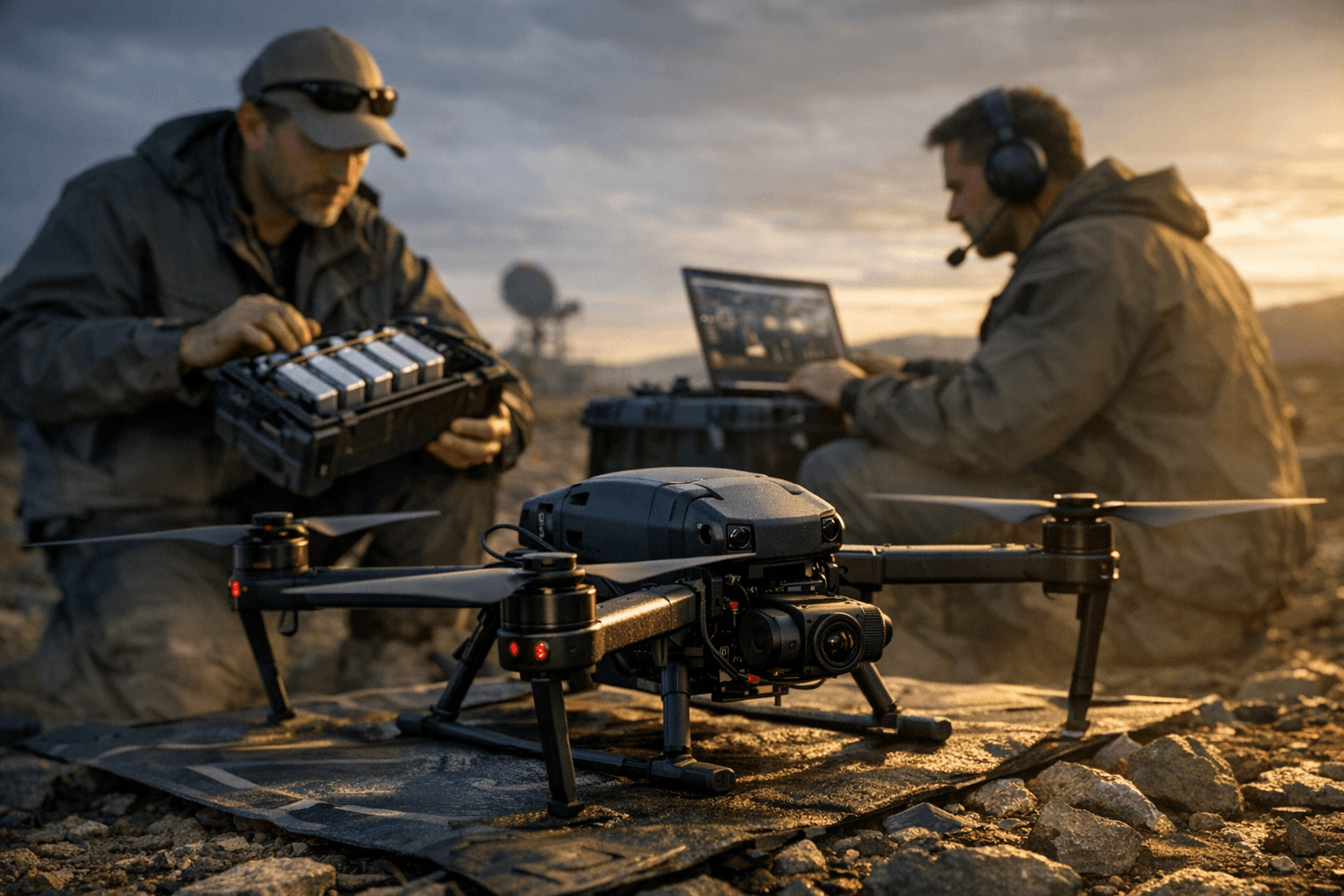
Solid-state also doesn’t get a free pass on heat. Safer chemistry can reduce fire risk, especially in high-vibration or crash-heavy environments, but racers care about whether the pack can repeatedly dump power without cooking itself or throttling performance. Until solid-state designs prove they can deliver high peak current with low impedance, at race-relevant voltages, the “four hours” crowd is basically arguing xG in a sport decided by sprint speed.
The earliest trickle-down benefits are still real, just smaller: safer charging and crash resilience, longer cycle life that reduces pack turnover, and possibly slightly lighter packs at the same usable energy if packaging and discharge performance cooperate. For true race adoption, the next milestone is not 240 minutes; it’s race-grade power delivery with minimal sag, repeatable thermal behavior in heat-after-heat formats, and manufacturing that can scale beyond specialized sulfide solid-electrolyte lines.
GICHD’s mine-action lane is the right proving ground for endurance, and it’s not new for the sector: its 2019 Mine Action Technology Workshop in Basel drew 165 participants from 49 countries across 85 organizations, and Humanity & Inclusion later described real-life Chad work using infrared-equipped drones in clearance operations, with Emmanuel Sauvage calling it “a small revolution.” Racing will borrow what it can, but lap time will keep telling the truth: endurance breakthroughs are exciting; power breakthroughs win finals.
This article was produced by Prism’s automated news system from verified source data, official records, and press releases, then run through automated quality and moderation checks before publishing. The system is built and supervised by the people who set the standards it runs under. Read our full AI policy.
Did this article answer your question?