How to break into drone racing, from freestyle to competition
The real leap in FPV isn't speed, it's finishing cleanly. Here's the gear, simulator work and budget that separate first-timers from DNFs.
Why freestyle skill is not enough
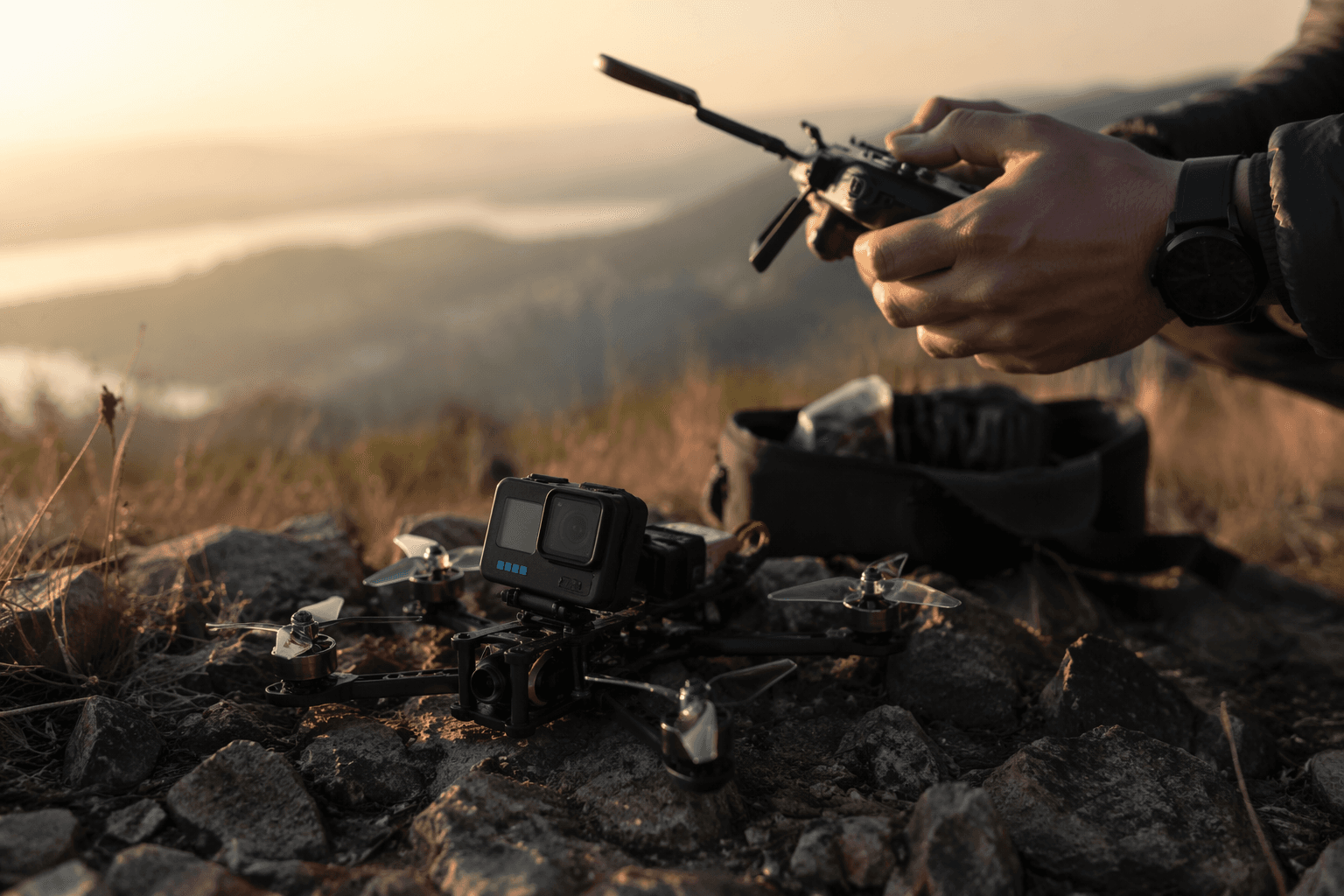
The first trap in drone racing is thinking freestyle control translates cleanly to a gate race. It does not. A freestyle quad is built for smooth flow and camera-friendly movement, while a race quad is tuned for gates, pure speed and aggressive acceleration, which means line choice, throttle discipline and recovery matter more than style.
That shift is what turns a fun hobby into a real sport. A pilot can be comfortable flipping through a park and still fall apart when the lap demands precision through every turn, every gate and every bailout. In racing, looking good is secondary. Staying clean for one full lap is the point.
What you need before your first event
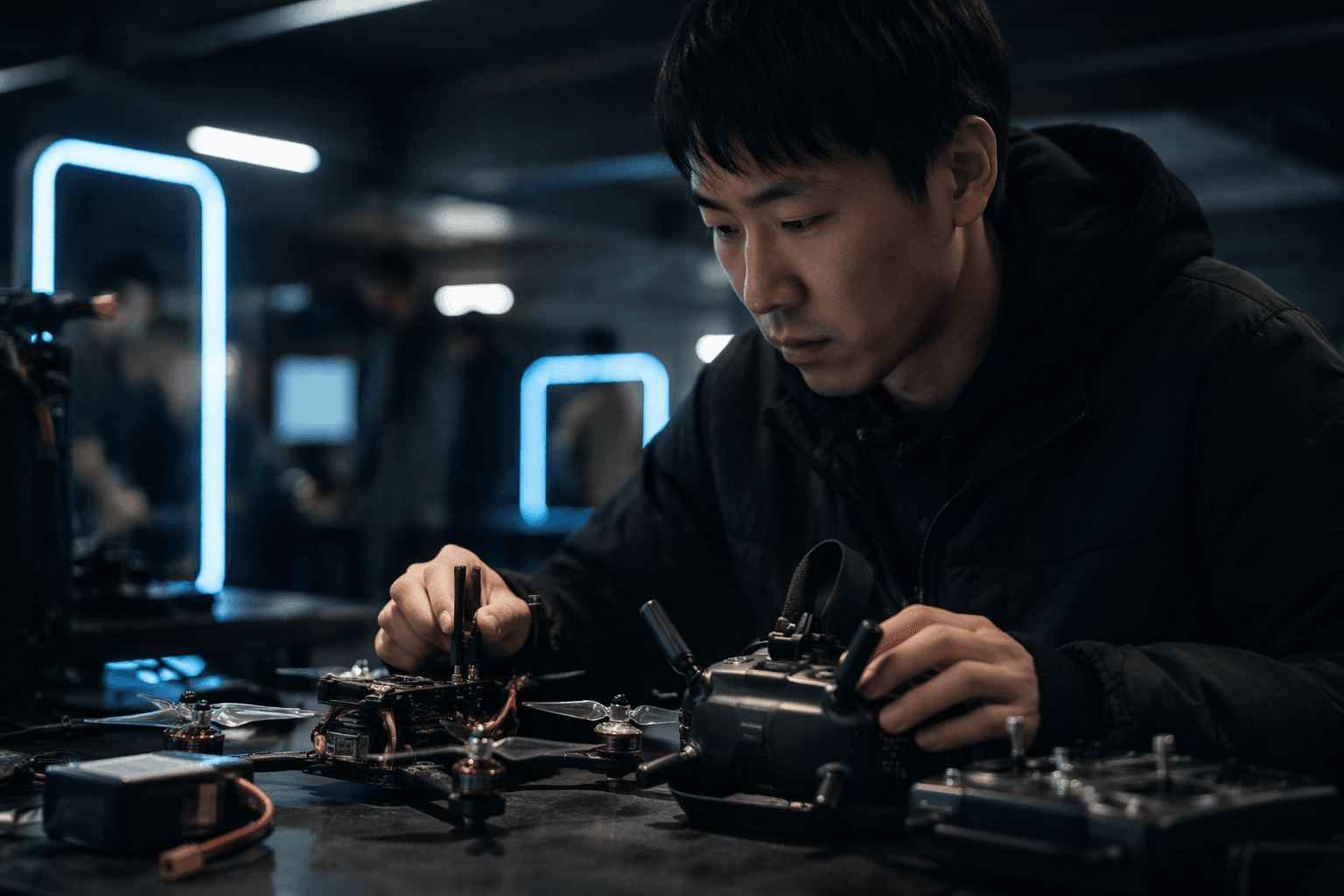
Before the first live event, the smartest move is to treat drone racing like any other equipment-heavy sport: build the full kit, not just the headline item. The hidden cost is where a lot of newcomers get blindsided, because the drone is only one piece of the setup.
At minimum, the first-event stack usually includes:
- A race-oriented quad
- A transmitter and receiver
- Goggles and video gear
- Batteries
- Spare props, antennas and other replacement parts
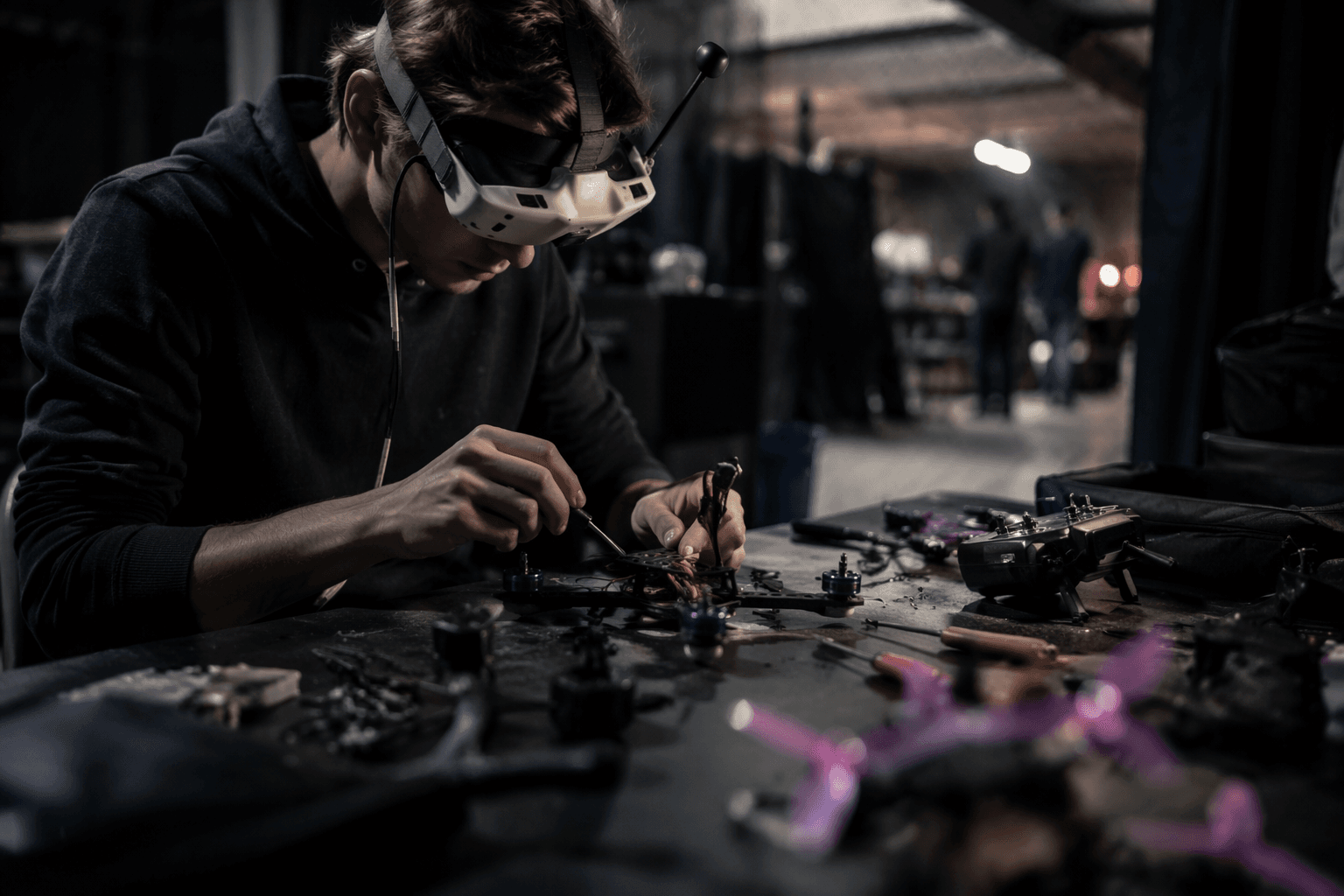
- Enough support gear to keep the quad in the air after the first crash, not just the first lap
Chris Thomas, the MultiGP founder, has put the entry cost in plain terms: goggles can run about $200 to $500, and the multirotor itself another $200 to $500, before you even add the transmitter or receiver. That is the number that catches people off guard, because the real bill is the whole ecosystem, not the frame on its own.
Simulator reps are not optional
The cleanest way into competition is not by gambling on your first live heat. It is by logging time in a simulator until the muscle memory starts to hold under pressure. That matters because race-day mistakes are often not about courage; they are about poor line discipline and bad recovery when the drone snaps off course.
A simulator gives you the one thing a freestyle field never fully teaches: repetition on race lines. You learn how fast you can enter a gate, how much throttle you can carry through a corner and how much correction you actually have before the lap is gone. The goal is not to look fast on screen. The goal is to make the same lap twice in a row.
The budget that actually makes sense
A realistic starter budget has to cover more than the obvious drone purchase. If you spend the first chunk of money on the quad and leave no room for goggles, control gear or batteries, you are not really entering racing. You are buying a problem that will show up on race day.
Using Chris Thomas’s estimate as a baseline, a newcomer can already be looking at $400 to $1,000 just between the multirotor and goggles, before transmitter, receiver and support gear enter the conversation. Once you add batteries, spares and accessories, the total climbs fast. That is why the best beginners do not budget for a single perfect build. They budget for a season of mistakes.
How the sport is organized, and why that matters
This is not a fringe scene stitched together by a few weekend meets. MultiGP says it is the largest drone racing league and FPV community in the world, with more than 30,000 registered pilots and 500 active chapters worldwide. That scale matters because it gives new racers a real entry path, not just one-off events that disappear after the hype fades.
Drone racing also has formal international structure. The Fédération Aéronautique Internationale’s 2026 sporting code lists F9U as the official drone racing class, and the FAI says its Drone Racing World Cup concerns the F9U class. In other words, this is a rules-based sport with a recognized ladder, not just a fast hobby with props on it.
The history shows how quickly that ladder formed. The first widely cited official U.S. multirotor race was held on April 30, 2015, in Santa Cruz, California, at the DATA X Conference. By February 2016, the Drone Racing League was publicly premiering its first race of the season, “Level 1: Miami Lights,” which is a pretty good marker for how fast the sport moved from experiment to spectacle.
The mistakes that cause DNFs
Most first-timers do not lose races because they are slow. They lose because they are messy. The common DNF pattern is simple: they carry freestyle habits into a race, overcook the line, miss a gate, panic on the correction and spend the rest of the lap trying to recover ground that is already gone.
Another costly mistake is arriving under-prepared for the scene itself. Local racing groups have their own rules, and the FAA makes it clear that recreational flyers need to know which regulations apply before they fly. That means taking the time to understand the rules, complete the required TRUST step and check airspace before you show up, because a race weekend is not the place to discover you skipped the basics.
There is also the gear trap. New pilots often buy for raw speed and forget the boring parts that actually keep a race alive: antennas, prop spares, battery planning and video reliability. Competitive FPV punishes that kind of optimism immediately.
A smart first-season roadmap
The best first season is not about winning everything. It is about finishing laps, learning event rhythm and building the habit of clean flying under pressure. Start with simulator time, then move to a race-oriented quad, then learn the local rules before your first live event. That order is what keeps the sport from turning into expensive frustration.
From there, the job is to shrink the gap between practice and competition. MultiGP’s broad chapter network and the FAI’s F9U framework show that drone racing already has a defined path from local entry point to international class. Once the pilot understands that the sport rewards consistency more than flash, the transition becomes less mysterious and a lot more manageable.
The fast lap gets the attention. The clean lap gets you in the race.
This article was produced by Prism’s automated news system from verified source data, official records, and press releases, then run through automated quality and moderation checks before publishing. The system is built and supervised by the people who set the standards it runs under. Read our full AI policy.
Know something we missed? Have a correction or additional information?
Submit a Tip