Oscar Liang sale roundup spotlights drone upgrades for faster, safer flying
The best deals are the parts that keep you flying after a crash, with GPS and control gear doing more for lap confidence than flash. One Cinebot35 build jumps to 814g with a GoPro Hero 11.
The smartest FPV discount is not the loudest one. Oscar Liang’s June 4 sale roundup on Banggood reads like a pit wall checklist, with the useful buys clustered around one goal: fewer brownouts, cleaner video, stronger links, and less downtime after a hit. The window is short, running through June 30, 2026, so the real question is not what looks cool on sale, but what will save you laps, packs, and rebuild time.
The quad that does two jobs
The GEPRC Cinebot35 O4 Pro is the headline buy if you want one frame to cover fast chasing, freestyle, and content capture without swapping platforms. GEPRC lists it as a 3.5-inch quad with a TAKER H743 flight controller, an H60 Mini 32-bit 60A ESC, 2105.5/2450KV motors, DJI O4 Air Unit Pro support, and a dedicated action-camera mount. The company also recommends a 6S 1300 to 1550mAh battery and says the build weighs 388g, plus or minus 5g, with a tested slow-cruising flight time of 10 to 11 minutes.
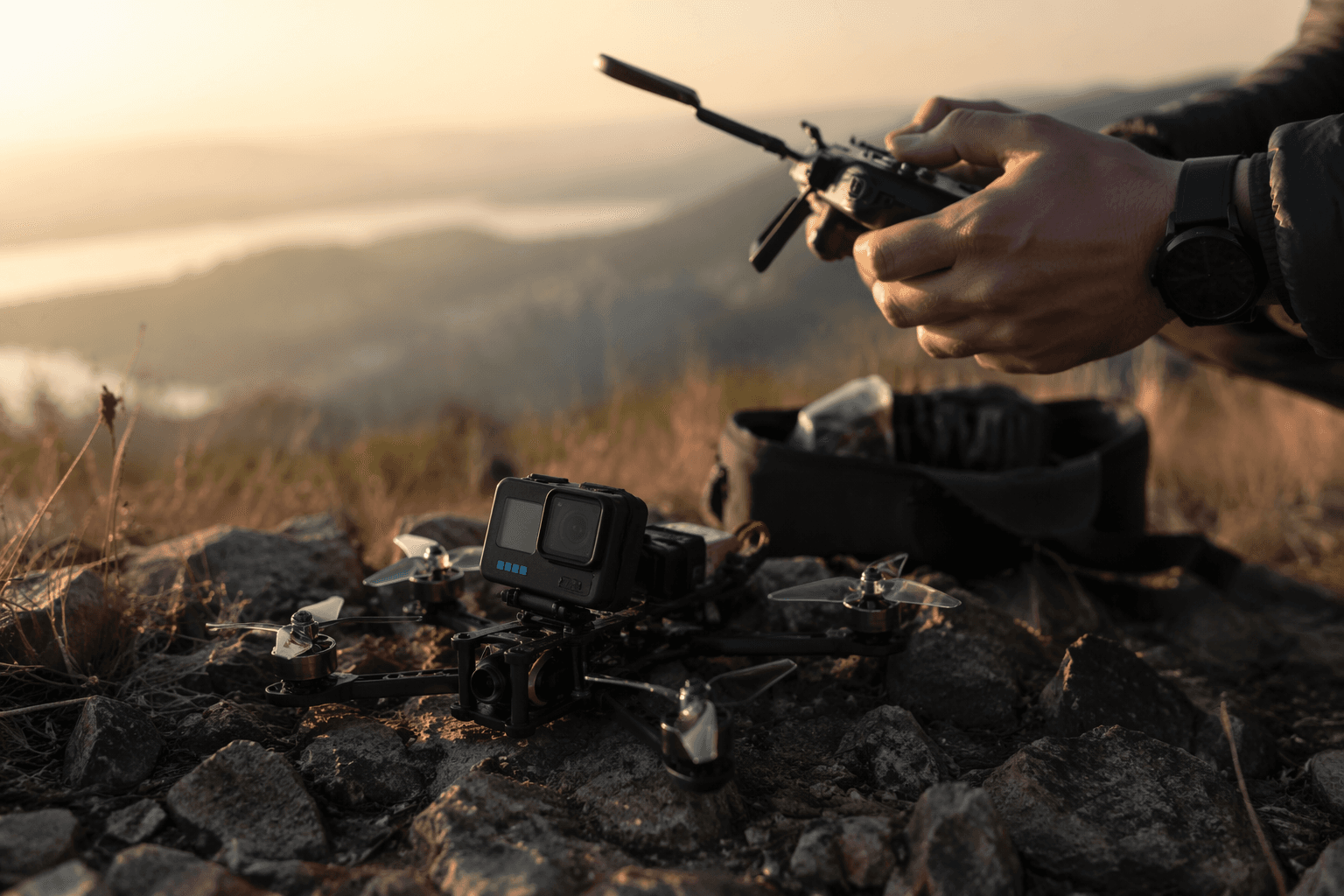
That spec sheet matters because the Cinebot35 is not just a cinewhoop that can hover. Oscar Liang’s own measurements show why it has broader appeal: 391g without a battery, 583g with a 6S 1100mAh pack, 659g with a 6S 1550mAh pack, and 814g with a GoPro Hero 11 plus a 6S 1550mAh pack. That last figure is the shareable gut-check here, a 231g jump from the 583g setup to the GoPro build, which is the difference between a compact all-rounder and a machine carrying serious camera weight.
For pilots deciding whether to buy now, the Cinebot35 makes sense if the goal is versatility. If you want a platform that can chase, freestyle, and still carry an action camera without turning into a fragile special-purpose build, this is the kind of discount that actually changes the way you fly.
Small safety parts that can save a session
The roundup’s GPS picks are easy to overlook, but they are the kind of upgrade that pays off the first time a quad drops behind trees, grass, or concrete. The HGLRC M100-5883 GPS uses a u-blox M10 chip and supports GPS, QZSS, SBAS, GLONASS, BDS, and Galileo. HGLRC lists 72 channels, a 10Hz output frequency, 3.3 to 5V input, and a weight of 7.73g, while the module manual lists a 29-second cold-start first fix and a 1-second hot-start.
GEPRC’s GEP-M10 series is also part of the sale, and GEPRC says it is built around a u-blox M10050 chip. A current retail listing puts the module at $18.99 to $25.99, which explains why this kind of upgrade sits in the sweet spot between cheap insurance and real performance value. Faster lock and stronger satellite visibility are not vanity specs here; they matter for rescue modes, recovery after a flyaway scare, and finding the quad after a crash in rough terrain.
That is where Betaflight’s GPS Rescue guide fits in. Betaflight says the feature can autonomously fly the craft home after loss of RC or video link, but it also warns that GPS Rescue is not a full return-to-home system. The point is not autopilot heroics, it is getting the quad close enough for the pilot to regain control. If you fly long lines, practice in open spaces, or push range in a way that makes recovery part of the risk, GPS is a buy-now item, not a luxury.
Radio and goggles are the practice-night multipliers
The sale also reaches into the hardware that shapes every lap, from stick feel to how long you can stay in the goggles. RadioMaster’s TX15 MAX uses an STM32 H7 chip and an LR1121 transceiver that supports 2.4GHz and 900MHz ExpressLRS. It also brings flash storage, MicroSD expansion, and a foldable antenna, all signs that it is pitched as a high-performance control option for pilots who care about link quality and flexibility.
BETAFPV’s VR04 HD goggles target the other half of the session. The company says they can run for up to 3 hours on two 2600mAh batteries, and they can also be powered by a 2 to 6S whoop battery. That matters on a race day or long practice block, when the limiting factor is often not the quad but whether your viewing setup can keep up with your pace. Longer runtime and simpler power options mean fewer interruptions and less fatigue between packs.
BETAFPV’s P1 Air Unit pushes that same practical logic on the video side. The unit delivers 1080p at 60fps live video, about 60ms latency, and more than 5km of transmission range. That combination is aimed at pilots who want cleaner, more responsive HD links without turning every session into a battery-management exercise.
If your current radio and goggles already hold up under repeated packs, this is the part of the roundup you can skip. If you are fighting weak links, short runtime, or clunky session flow, these are the upgrades that change how often you fly well, not just how much you spend.
The tiny tools and micro builds that keep you moving
Not every useful discount is a centerpiece product. The roundup also points to a propeller remover, a small tool that matters most to tiny whoop flyers who swap props constantly. It saves time, cuts frustration, and helps protect motors from damage when repeated prop changes become part of the routine. For anyone who has fought a tight prop in the field, that is the sort of inexpensive tool that earns its place immediately.
Flywoo’s Firefly line is the other reminder that not every pilot is looking for the same kind of gain. Oscar Liang’s recent review of the Firefly 20 Pro described it as a 113g micro freestyle quad, which puts it in the compact end of the spectrum for pilots who want small, nimble flying with enough bite to keep practice interesting. The Firefly name belongs in this roundup because it speaks to a different kind of value: a light build that is easier to transport, easier to crash-test, and less punishing when the session turns messy.
That is the thread running through the whole sale. The strongest buys are not the flashiest. They are the ones that help you get back in the air faster, hold a cleaner link, recover a lost quad, or carry one platform farther across freestyle, chasing, and camera work. In a market full of eye candy, the deals worth taking are the ones that make the next pack better than the last.
This article was produced by Prism’s automated news system from verified source data, official records, and press releases, then run through automated quality and moderation checks before publishing. The system is built and supervised by the people who set the standards it runs under. Read our full AI policy.
Know something we missed? Have a correction or additional information?
Submit a Tip