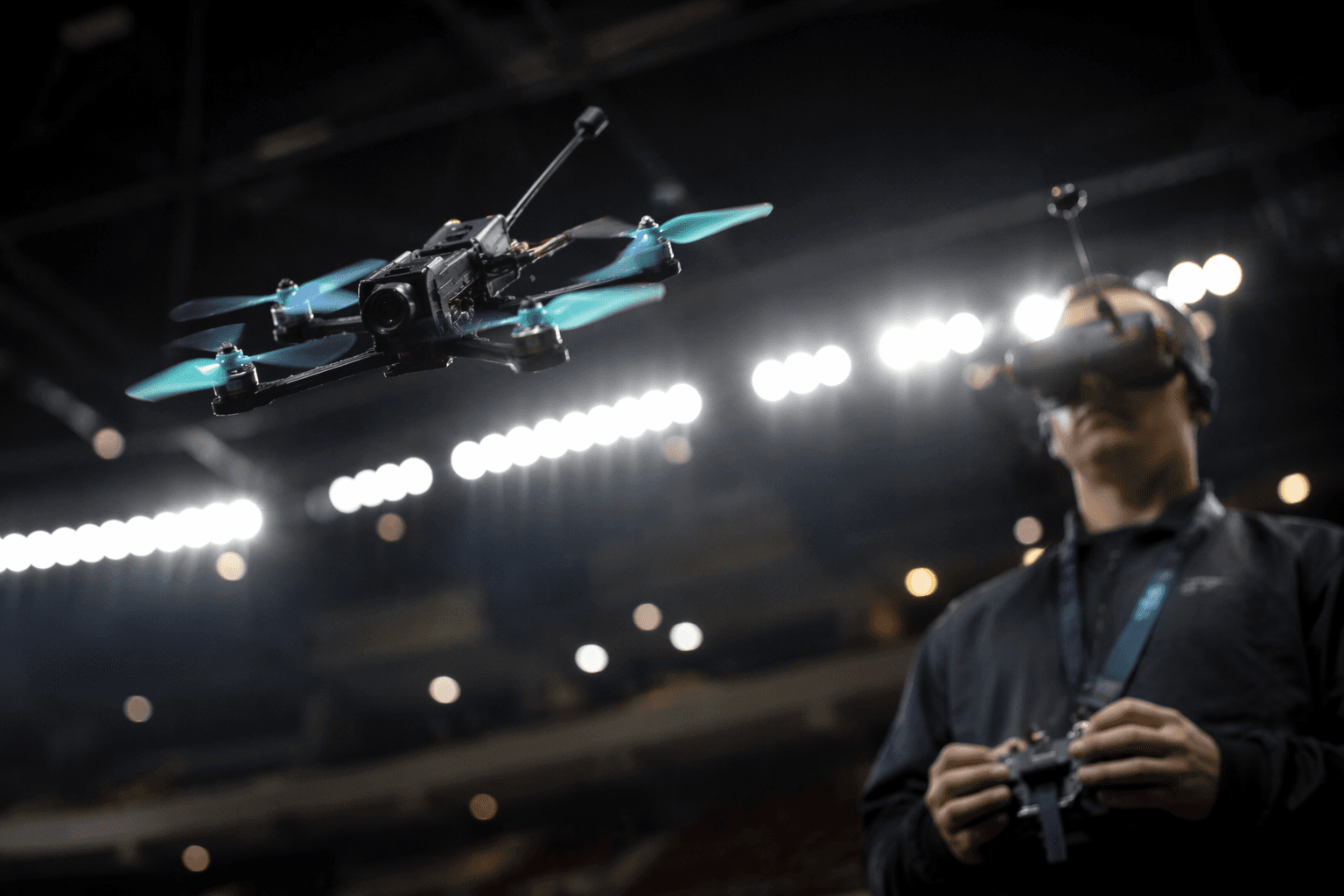
Marines build FPV drone training program from scratch at Quantico
A Quantico crew turned near-zero FPV inventory into a Corps-wide training ladder. The build looks a lot like a racing pipeline, with simulators, certifications and coach tracks.

A 50-minute July 1 podcast episode captures the Marine Corps at the moment a niche flying skill stopped being a novelty and became a program. Last fall, the service had virtually no first-person-view attack drones, but Weapons Training Battalion at Quantico is now helping build a Corps-wide FPV training system with Col. Scott Cuomo, CWO5 Steve Pearsoll, CWO3 Troy Hotaling, GySgt Jude Stewart, GySgt Justin Creasman and Sgt Timothy Brockup in the room.
From cold start to doctrine
The clearest sign that this is more than a hardware buy came in December at Twentynine Palms, where new infantry lieutenants used FPV attack drones in the culminating exercise for the Infantry Officer Course. Cuomo, the Weapons Training Battalion commander and lead on the Corps’ FPV effort, described the scene as “80 lieutenants” with their captains and gunners being told to absorb the capability before graduation, which is exactly how a new skill becomes part of a schoolhouse rather than a side project.
That shift matters because the Corps did not treat FPV as a one-off experiment. Service officials said the push began in earnest just over a year ago, that there were real concerns about how unit-level leaders would employ the drones in training, and that the answer included a small UAS manual. In other words, the problem was never just whether Marines could fly the drones. It was whether the institution could teach the skill the same way every time.
Quantico as the factory floor
Weapons Training Battalion at Quantico has become the center of gravity for that work. On Jan. 3, 2025, Training Command and the Marine Corps Warfighting Laboratory stood up the Marine Corps Attack Drone Team there, and the official mission statement is broader than familiarization or a demo range. The team is meant to develop and refine armed FPV training for Marines across the Total Force, feed lessons from modern combat back into the service, and use iterative training and competition to shape the next version of the capability.
That placement also plugs the new FPV pipeline into the Marine Corps Shooting Team’s legacy. The Corps explicitly linked MCADT to 124 years of marksmanship culture, a reminder that Quantico already had a model for turning a specialized weapons skill into institutional identity. For drone racing readers, that part will feel familiar: the talent matters, but the structure around it matters just as much, because a good pilot only becomes a repeatable program when the team has a way to teach, test and refine.
The skills ladder looks familiar to FPV teams
The real build-out arrived with Marine Corps administrative message 624/25, which launched a standardized small unmanned aircraft system training program. Training and Education Command set up six pilot courses and eight certifications, covering drone operators, payload specialists and instructors, and it tied entry to prerequisites that include simulator experience on TECOM-approved systems. It also created an exception-to-policy path for Marines who already have the background, so the Corps can move experienced people faster instead of forcing everyone through the same starting gate.
Seven organizations were designated as regional training hubs, while Weapons Training Battalion at Quantico serves as the interim central hub responsible for standardization, certification and safety. That is the part that looks most like a racing ladder: simulator first, then controlled advancement, then certification, then a path for the people ready to instruct others. The difference is that the Marine Corps is building the ladder at service scale, not club scale, which is why the words “pilot program” and “certification standards” matter more here than any single drone model.
Why the FPV racing world should care
The Corps is also widening the lane beyond the one Quantico team. In January, the Infantry Officer Course was already integrating drone familiarization, and the service was saying publicly that it wanted new infantry officers to have at least initial exposure to how FPV systems work. By late December 2025, Marines in the 22nd Marine Expeditionary Unit were training and being certified on FPV systems at Camp Santiago, Puerto Rico, with a simulated warhead on a Neros Archer drone, which shows how quickly the training concept is moving from the schoolhouse to deployable units.
For drone-racing teams and coaches, the lesson is not about military hardware. It is about how expertise scales when an organization refuses to leave it informal. The Marine Corps is taking a skill set that once lived in hobby circles, pairing it with simulator time, standardized instruction, certification tracks and a central training authority, then pushing it outward through regional hubs and instructor pipelines. That is the same playbook every serious racing program uses, only turned into doctrine, and it is why Quantico’s FPV rebuild now looks like a blueprint for how fast a new flying discipline can mature.
This article was produced by Prism’s automated news system from verified source data, official records, and press releases, then run through automated quality and moderation checks before publishing. The system is built and supervised by the people who set the standards it runs under. Read our full AI policy.
Did this article answer your question?