Rapid Response Challenge 2026 set for Munich, draws five international teams
Five teams from four European countries will test 10-inch drones near Munich, as Student AirRace turns drone racing into a mission-driven proving ground.
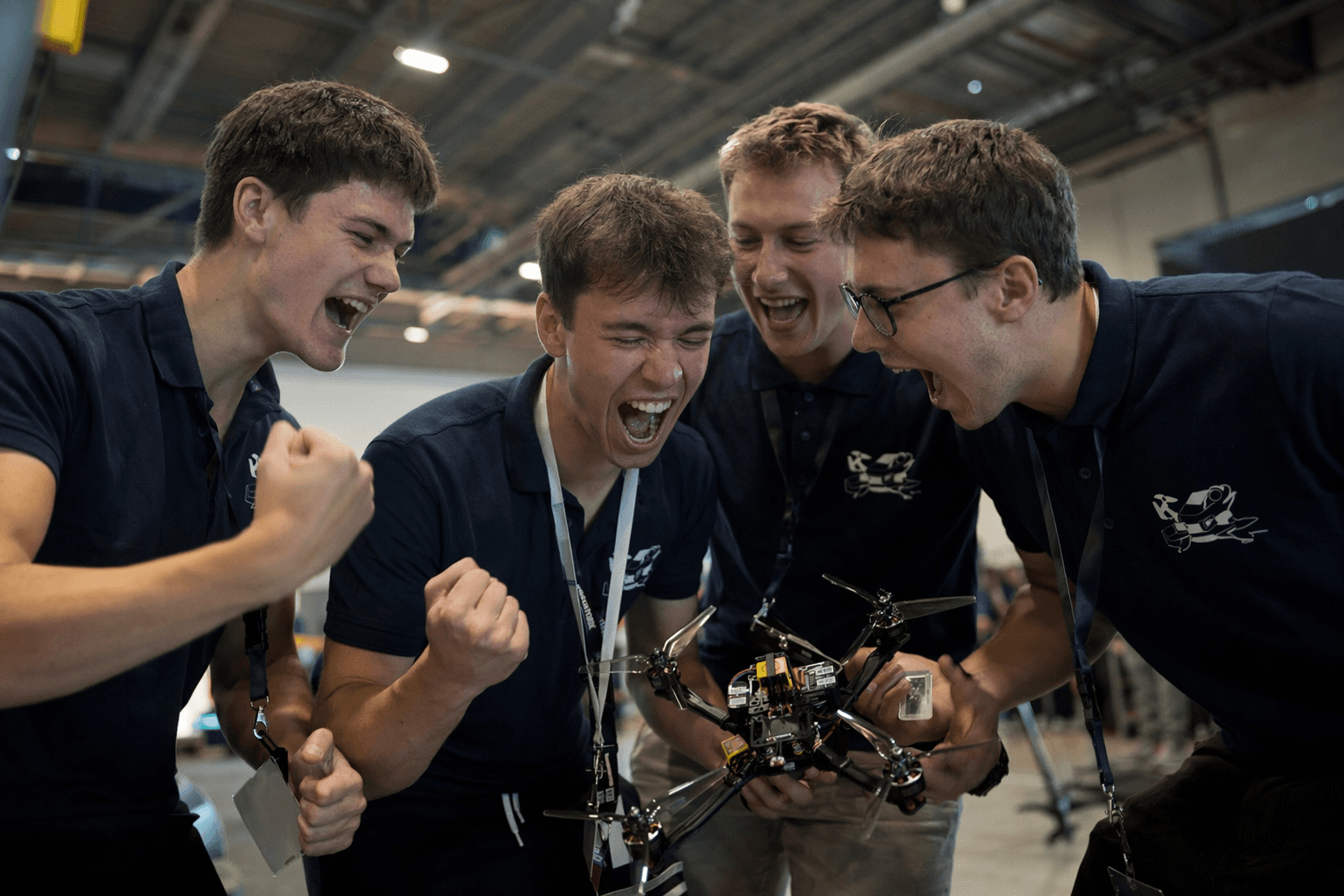
Five teams from four European countries will gather near Munich from May 20-22, giving Student AirRace’s Rapid Response Challenge 2026 its broadest international field yet and underscoring how quickly the event is becoming a proving ground for the next wave of drone-racing engineers and pilots.
The committed lineup includes BEOAVIA from Belgrade, ATLAS - UPC Space Program from Terrassa, Gadir FPV Racing from Cádiz, Avis Medica from Sofia and TUM Drone Racing Club from Munich. The competition remains non-public, and attendance requires approval, keeping the focus on team operations, technical preparation and mission execution rather than an open spectator show.
That closed setting fits the way Student AirRace has built the Spring Challenge. Teams will fly 10-inch-class drones with a maximum takeoff weight of 5 kg, and the event is built around a simulated humanitarian mission that asks them to transport a critical medical payload through a complex racecourse and deliver it with precision. Computer vision also plays a role, with teams using it to identify targets and deploy payloads, while the autonomous challenge remains optional.
The scoring tells the same story: speed matters, but it is only one piece of the result. Teams can earn up to 120 points overall, with 40 points for mission completion time, 30 for the optional autonomous challenge, 20 for the report, 10 for cost efficiency and as many as 20 more for extra challenges. For a student competition, that is a wide enough scoring spread to reward both race-day aggression and the engineering discipline behind it.

Student AirRace has described the Rapid Response Challenge as an intensive four-month development cycle, not a year-long build. That timeline forces teams to make hard choices about autonomy, airframe design, payload handling and documentation, turning the event into a test of systems integration as much as flight pace. It is also why the 2026 season has been split into two pillars, with the Rapid Response Challenge in May and an Autumn Competition planned for October.
The organization’s own growth helps explain the scale of the field. Student AirRace was founded by volunteer students from the Technical University of Munich and became officially integrated into EUROAVIA Munich in 2025, giving it a stronger institutional base as it reaches beyond Germany. The Rapid Response Challenge first ran in Munich in 2025, and applications for the next edition are set to open in June 2026, setting up a cycle that now looks less like a campus showcase and more like a structured pipeline for Europe’s student aerospace talent.
This article was produced by Prism’s automated news system from verified source data, official records, and press releases, then run through automated quality and moderation checks before publishing. The system is built and supervised by the people who set the standards it runs under. Read our full AI policy.
Did this article answer your question?