FCS spring practices reveal quarterback battles, roster turnover, playoff hopes
Spring practice is where FCS teams find out if last season’s depth chart still works, or if portal losses and young replacements have already changed the plot.
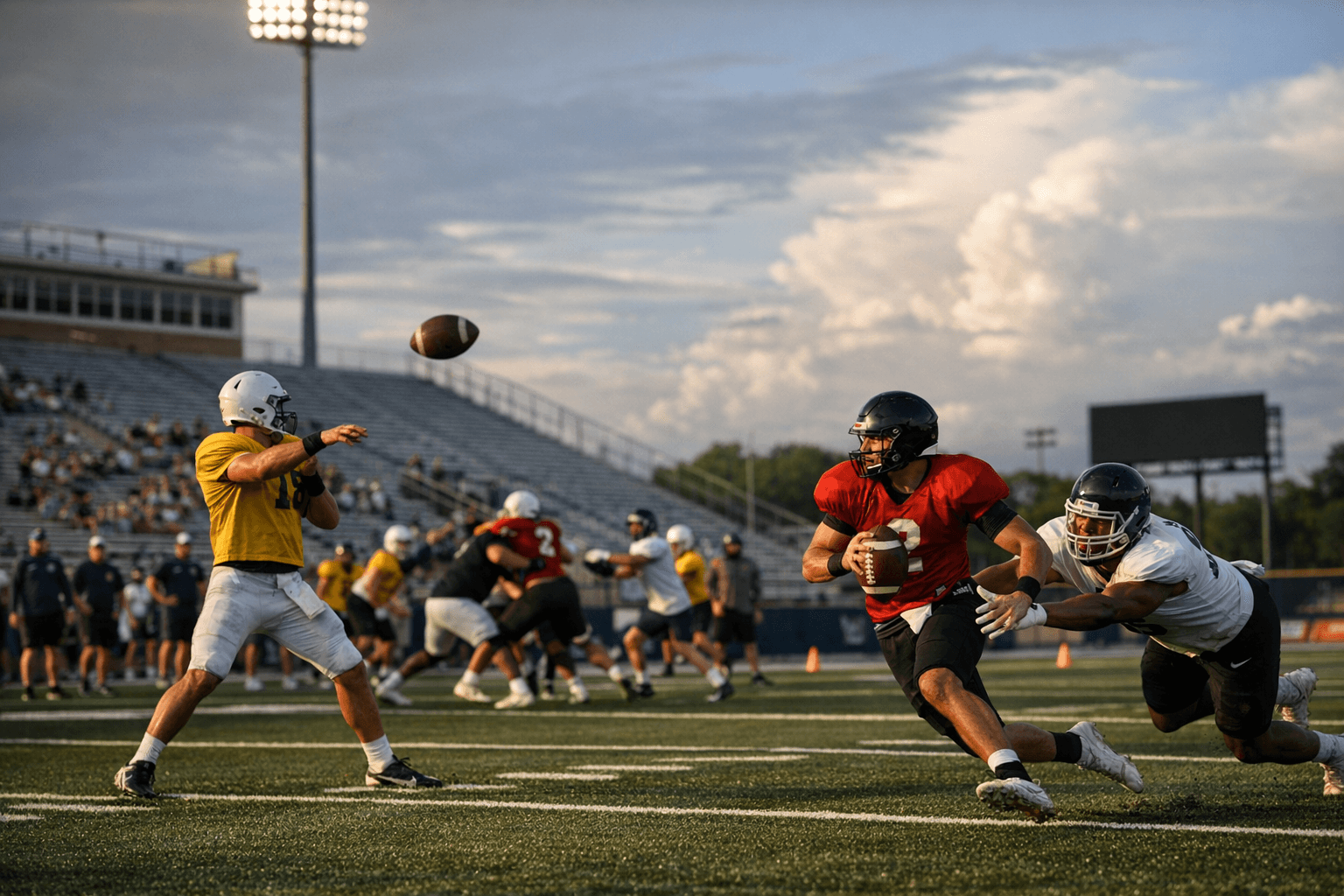
Spring practice is the first roster-truth test
In the FCS, spring practice is not a warm-up act. It is the first honest look at whether an offseason of turnover has changed a team’s identity, and that matters because the turnover never really stops. Graduation, the transfer portal, injuries, and late recruiting decisions can flip a depth chart fast, so March and April become less about polishing plays and more about finding answers.
That is why coaches treat these sessions like a diagnostic tool. They are not just asking whether the playbook is installed. They are asking who can actually execute it, who can handle pressure, and which positions have enough depth to survive a season that punishes every weakness.
Quarterback battles are the first signal
No position matters more in spring than quarterback, because the spring is often the first real chance to sort out a battle before summer optimism takes over. Coaches want to know who can command the offense, who processes quickly, and who can handle the timing of a system that may be highly customized to the roster. A quarterback who looks comfortable in April can stabilize an entire offense by September.
Spring also exposes whether a team can keep its tempo. If the starter leaves, or if a new face takes over, the offense may lose rhythm even if the talent looks similar on paper. That is especially important for playoff hopefuls, because tempo and efficiency are usually the first things to get tested when a roster turns over.
The portal and young linemen tell you what kind of team this really is
FCS programs live with constant churn, so spring practice becomes the cleanest way to measure the impact of portal departures and identify which young players are ready to step in. Coaches use these weeks to see whether transfers can absorb a system quickly, but they also need to know whether younger replacements can survive the speed and physicality of bigger roles. That is where the real roster story usually hides.
The offensive and defensive lines are a major part of that story. If young linemen are ready, the team can keep its structure intact even after losses elsewhere. If they are not, everything gets harder fast, because line play touches the quarterback, the running game, the pass rush, and the ability to control long drives.
Defense in spring is about replacement, not reassurance
Spring can be revealing for a defense trying to replace an all-conference edge rusher or a shutdown corner. Those are the kinds of losses that do not just remove production, they change how opponents attack. Coaches use spring to figure out whether the next wave of defenders can preserve the unit’s edge or whether the scheme has to bend to cover the missing pieces.
That is where hybrid defenders and multiple looks matter. Some teams use spring to experiment with bodies that can do more than one job, because flexibility can cover up a roster gap. If the front can still pressure the quarterback and the back end can still hold up in coverage, the defense has a chance to remain playoff-caliber instead of merely respectable.
Special teams can decide who keeps playing in November
Hidden yardage is not a throwaway detail in FCS football. A reliable kicker, a dangerous punt returner, or a punt unit that can consistently flip the field can swing tight games that otherwise look like coin flips. Spring practice is where coaches start figuring out whether those edges are real or just last season’s memory.
That matters because FCS seasons are often decided by one possession, one field position change, or one missed kick. A special teams group that looks organized in spring is often a strong sign that the team can handle close games in the fall. A shaky unit, by contrast, can erase all the work done by the offense and defense before October arrives.
Culture shows up before the first snap count does
Spring practice is also a culture check. FCS programs rely heavily on development, so coaches pay close attention to the attitude in March and April because it tells them how a team handles adversity before the schedule starts punishing mistakes. Accountability, consistency, and ownership are not empty slogans at this stage; they are the habits that separate a team that matures from one that drifts.
Communication is a big clue. A team that talks well, corrects mistakes quickly, and competes on every rep usually starts faster in September because the leadership structure already exists. When the energy is flat or the competition level drops, coaches know they have more than schematic problems to fix.
Spring tape also hints at the tactical shift
Fans and media use spring practice as the first glimpse of what a team wants to become on offense and defense. Some programs open up the passing game, while others lean harder into a physical rushing identity. Spring is also the time when coaches test hybrid defenders or multiple quarterback looks, not because they want to confuse people for the sake of it, but because they are searching for the best fit for this specific roster.
That experimentation matters because it shows whether a coaching staff is adapting to the personnel in front of it. A complex system only works if the players can own it, and spring is where that relationship gets tested. The best teams are usually the ones that simplify where necessary and build around what their roster can already do well.
What spring practice really tells you about a playoff team
If you want to understand an FCS program’s ceiling, spring practice gives you the first real clues. It shows whether the offense can keep its pace, whether the defense can absorb major losses, whether the young linemen are ready, and whether the special teams can steal hidden yards that decide close games. It also reveals whether the locker room has the communication and accountability to handle the grind that follows.
By the time summer arrives, the easy optimism starts hardening into expectations. Spring practice is where the truth usually gets there first.
This article was produced by Prism’s automated news system from verified source data, official records, and press releases, then run through automated quality and moderation checks before publishing. The system is built and supervised by the people who set the standards it runs under. Read our full AI policy.
Did this article answer your question?