NIL and transfers reshape FCS draft pipeline, retention remains toughest challenge
NIL and the portal are thinning the FCS veteran base, and the schools that keep elite players are separating from the ones acting like Power 4 feeders.

A thinner draft lane
The FCS went through the first two days of the 2026 NFL Draft without a selection, the first time that has happened since 1978. When the subdivision finally hit the board, the names did not arrive until the middle rounds, with Kaleb Proctor, Bryce Lance, Charles Demmings, Karon Prunty and Cole Payton landing on the current list. A year after 15 FCS players were selected, that kind of delay is the loudest possible warning sign that the top of the FCS draft board is getting squeezed.
NIL has turned retention into the real battle
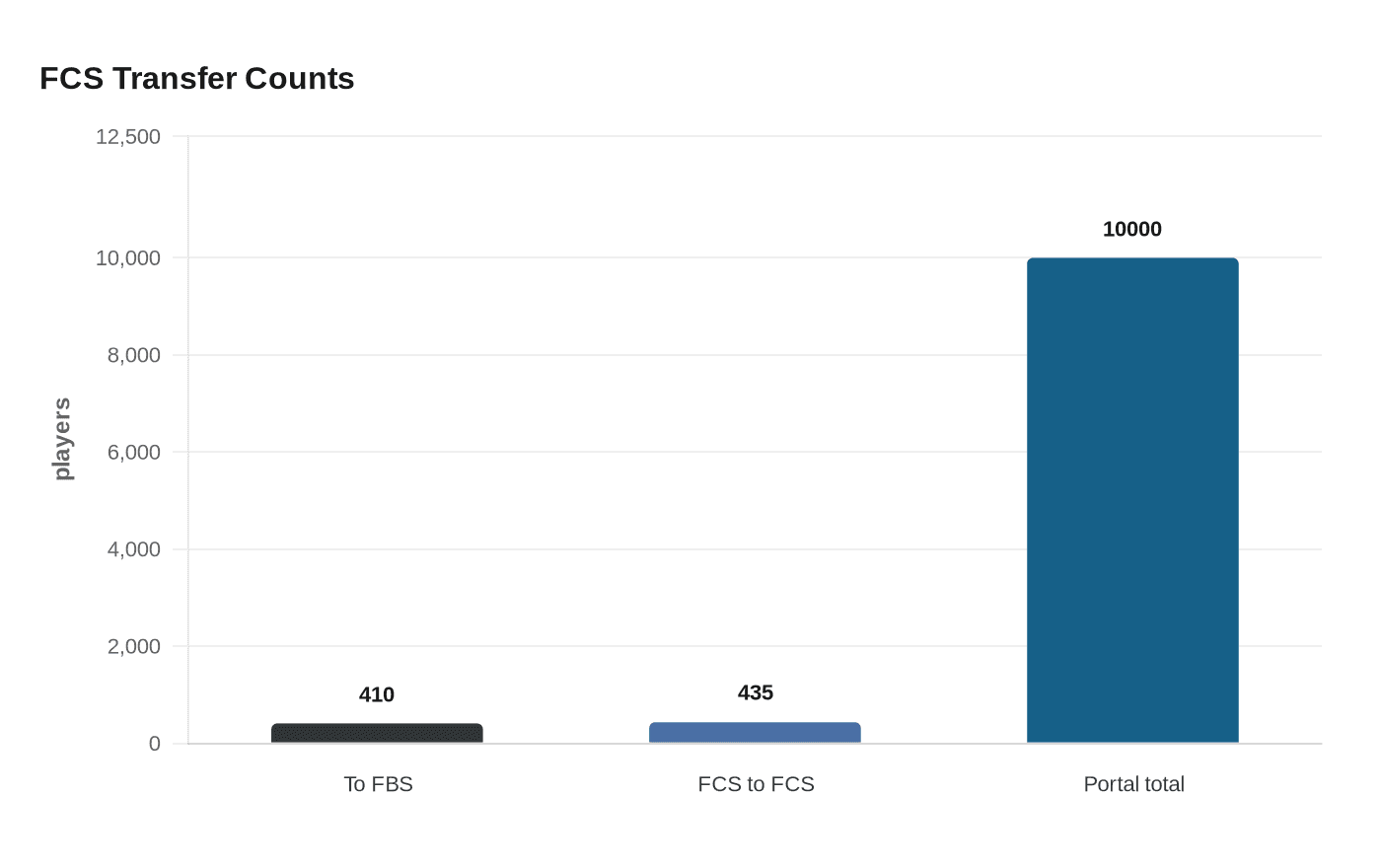
The portal is not just moving depth pieces anymore. Hero Sports’ 2026 tracking shows more than 410 FCS players heading to FBS schools and more than 435 moving from one FCS program to another, inside an offseason where over 10,000 college football players entered the transfer portal. That volume matters because every departure strips away snaps, continuity and the late-career polish NFL teams want when they go looking for FCS prospects.
The talent is still there, but it is moving faster
There is still FCS talent good enough to start at the next level right away. A recent list of 25 FCS portal players ready for FBS lineups included Western Carolina quarterback Taron Dickens, who threw for more than 3,500 yards and 38 touchdowns while setting an NCAA record with 46 straight completions, Mercer quarterback Braden Atkinson with 3,600 yards and 34 touchdowns, Harvard quarterback Jaden Craig with 5,299 yards, 48 touchdowns and just 10 interceptions, South Dakota back L.J. Phillips Jr. with 1,920 rushing yards and 20 touchdowns, Monmouth back Rodney Nelson with 1,805 rushing yards and 2,031 all-purpose yards, and Southern Utah back Joshua Dye with 1,831 yards and 28 touchdowns. Those are not fringe names; they are the kind of veterans who used to stay put, dominate one more season and become marquee FCS draft cases.
Who is still turning development into draft capital
Even with the churn, some programs still convert development into draft capital. The 2026 draft list currently includes North Dakota State wide receiver Bryce Lance, North Dakota State quarterback Cole Payton, Southeastern Louisiana defensive tackle Kaleb Proctor, Stephen F. Austin cornerback Charles Demmings and North Carolina A&T/Wake Forest cornerback Karon Prunty. Hero Sports also notes that the FCS has produced double-digit draft picks every year except 2020 and 2021, which shows the pipeline is not broken. The issue is that the middle and upper-middle of that pipeline is thinner than it used to be.
What separates the programs that keep stars from the ones that feed the market
The clearest divide in the FCS right now is between schools that can keep elite players long enough to finish their arc and schools that lose those players before the final payoff. Programs that protect veteran quarterbacks, pass rushers and top linemen keep giving NFL scouts the exact thing they value most: a long tape of production against comparable competition. Programs that cannot hold that core increasingly function like feeder systems to the Power 4, because the portal rewards immediate exposure and NIL rewards instant bidding wars more than patience. That is the structural shift Sam Herder has been outlining, and it is why retention has become the FCS’s toughest challenge.
The FCS still develops pro talent, but the model is changing
The NFL pipeline is still alive in the subdivision, but it is no longer built on the old assumption that a player will stay in place until he is fully formed. Today, the best FCS programs have to recruit, develop and retain at the same time, while also replacing the veterans who leave for bigger stages or bigger paydays. The programs that manage all three will keep producing draftable names; the ones that cannot will keep helping everyone else get richer in talent.
This article was produced by Prism’s automated news system from verified source data, official records, and press releases, then run through automated quality and moderation checks before publishing. The system is built and supervised by the people who set the standards it runs under. Read our full AI policy.
Did this article answer your question?