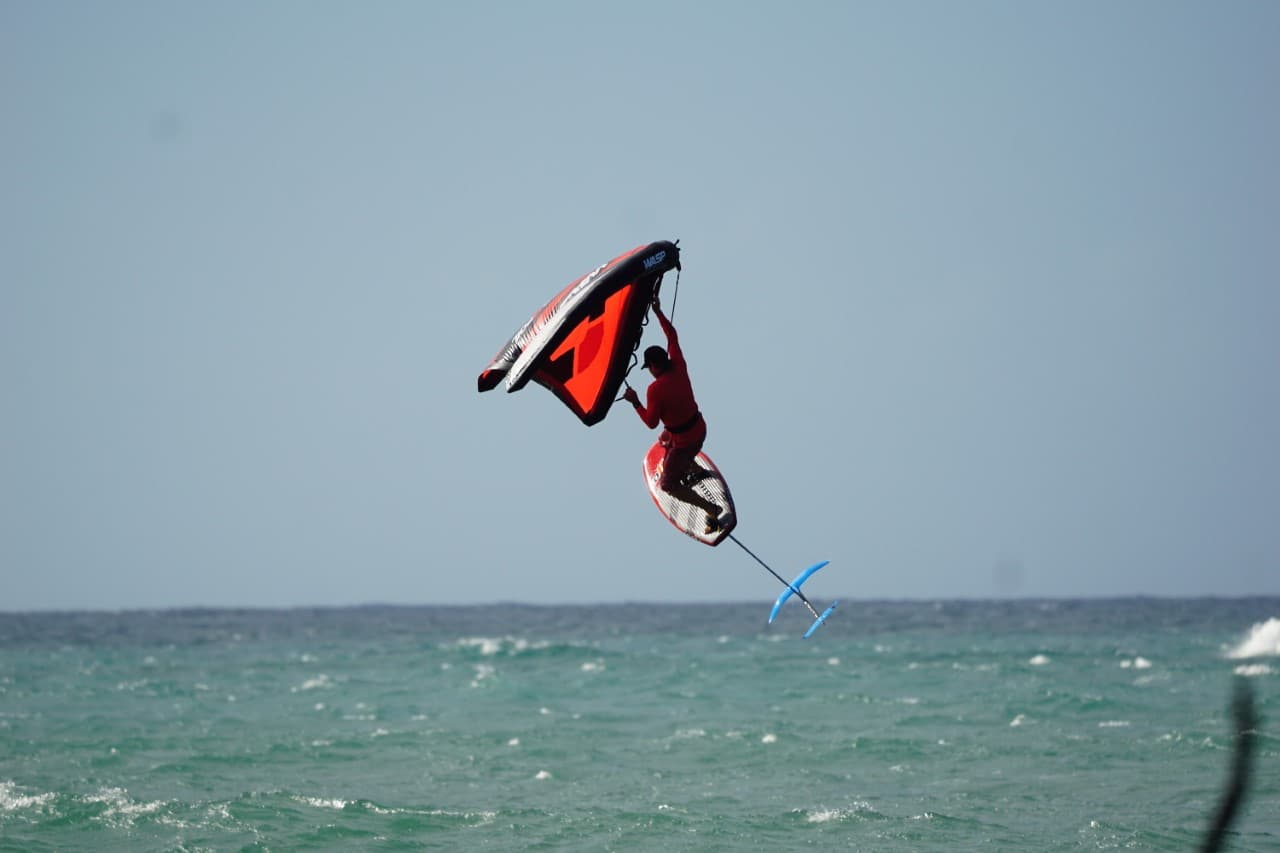
Foil Surf Race League turns wave riding into endurance test
Foil Surf Race League races replace waiting for a set wave with a beach start, wave links and boundary control, turning foil surfing into an endurance test.
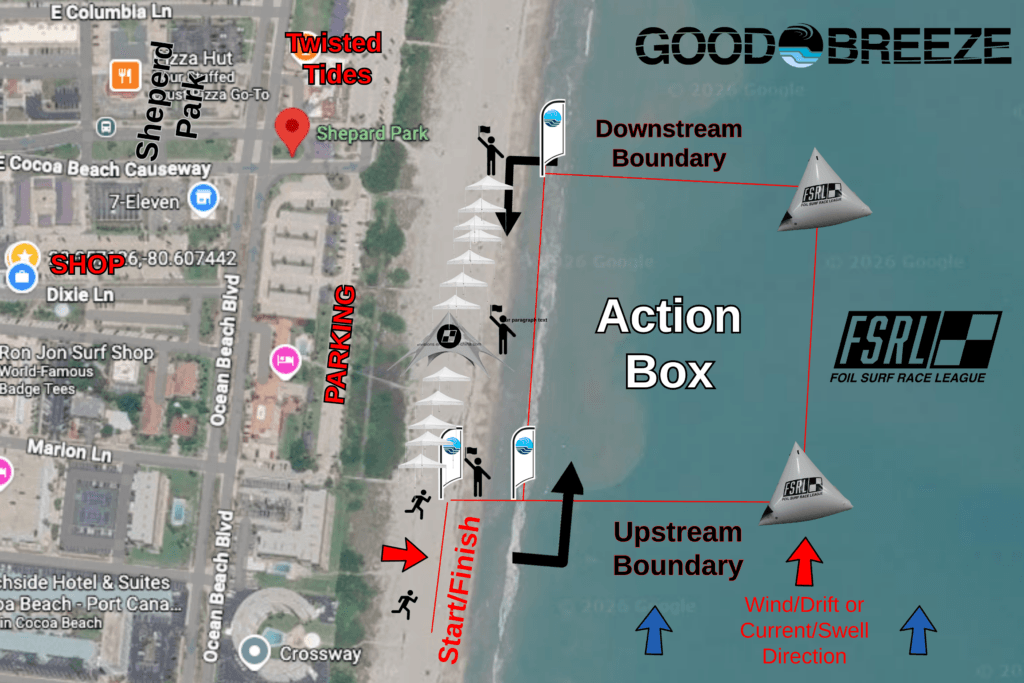
At the Foil Surf Race League’s Cocoa Beach stop, foil surfing stops being a waiting game and becomes a race against the clock, the current and your own legs. Riders launch from the beach in a Le Mans-style start, then have to connect waves well enough to stay moving downcourse. The result is a format where line choice, stamina and clean transitions matter as much as style.
How the course changes the sport
The league describes the surf format as a high-action foil surfing endurance race. That wording matters because the course is not built around one long scoring wave or one perfect carve, but around repeated decisions: get off the sand fast, find the first wave, cross an upstream boundary and then keep progressing toward a downstream boundary. In a 2025 Tonic Mag post, the same structure was repeated in plain language, which underlines how central the boundary system is to the event.
The rules are what make the race feel so different from standard surf foiling. Kiteboarding Closeouts noted that riders must be up on foil and connecting waves to move downstream, and they cannot paddle, swim, walk or run down the course toward the downstream marks. That means every lapse costs more than a lost wave, because there is no shortcut to reset position on shore.
What actually wins the race
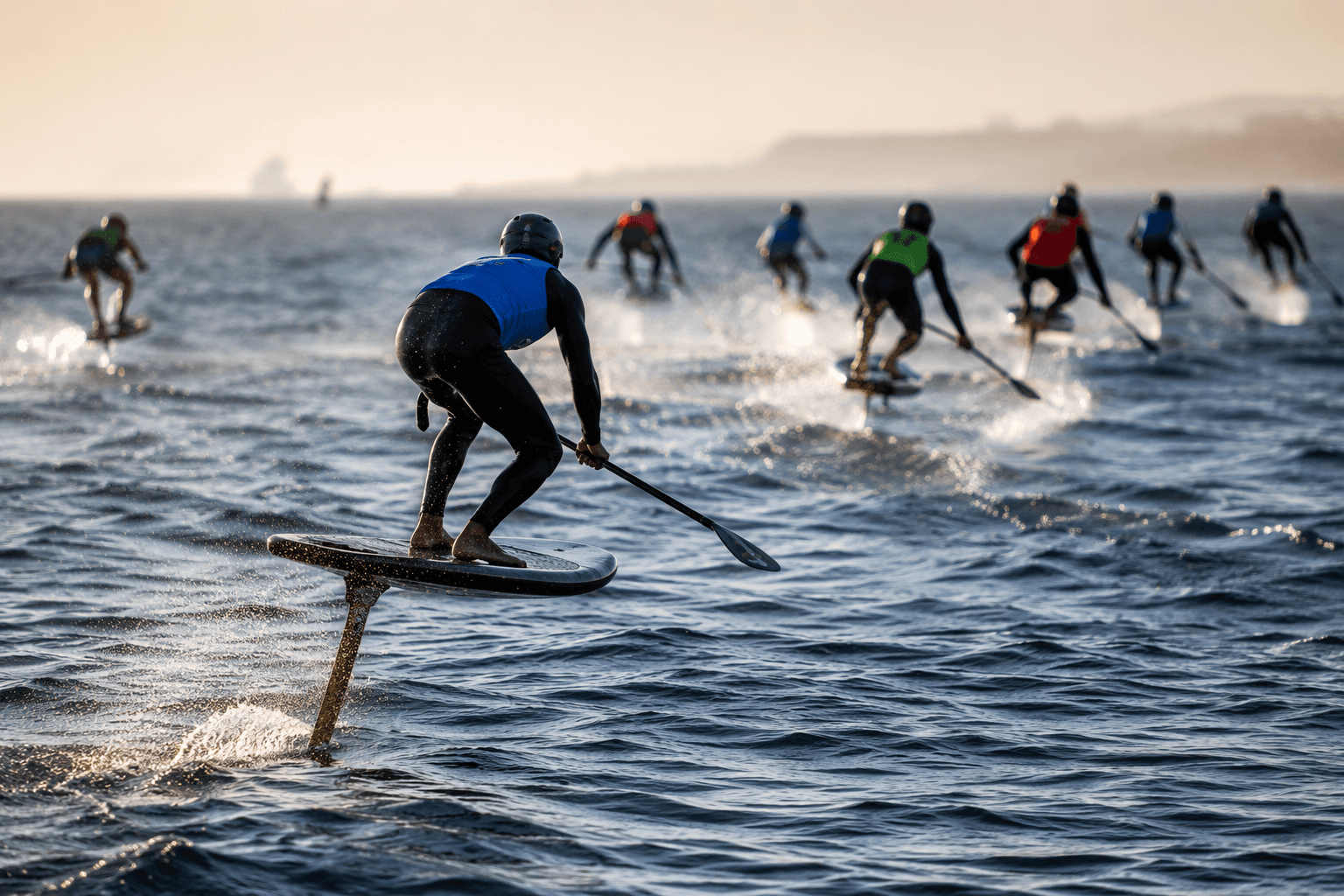
The first skill is the beach start itself. A Le Mans-style launch rewards the rider who can cover ground quickly, enter the water efficiently and get onto foil before the field strings out. Once the race reaches the surf zone, the best line is rarely the flashiest one; it is the one that keeps the board flying with the least wasted effort.
From there, the race becomes a test of repeatable choices, not single-move heroics. The rider has to decide when to sprint, when to let the foil glide, when to chase a reform and when to back off and save energy for the next usable section of water. Traffic awareness also matters because multiple athletes are trying to solve the same moving-water puzzle at the same time.
The simplest way to break the skill set down is this:
- Fast beach acceleration to get the first clean entry
- Pop-up efficiency that gets the foil flying without a delay
- Wave-linking ability, because progress comes from chaining rides together
- Boundary awareness, since upstream and downstream markers define the course
- Energy management, because the format punishes wasted pumps and unnecessary recoveries
- Situational awareness in traffic, where other riders are chasing the same flow
That mix is why the race feels closer to a tactical endurance event than a showcase for one beautiful turn.
Training changes when every wave is a checkpoint
This format pushes training away from style-only repetition and toward race-specific conditioning. A rider has to build the legs and lungs to sprint on land, the timing to pop up quickly, and the endurance to keep re-entering waves without losing composure. It also rewards riders who can read the surf zone quickly enough to choose a takeoff point that keeps the foil stable instead of forcing a scramble.
The technical priority changes too. In a normal foil surf session, a rider can chase the cleanest wall and milk it for style. In this race, the smarter choice may be the wave that gives the better exit angle or the more reliable link to the next section of water. That is the practical shift the league’s format creates: the board is still surfing, but the rider is solving a course.
Why the event has a real history now
The league’s Instagram bio says Foil Surf Race League was founded in 2020, and a 2021 race rundown video points to Cocoa Beach, Florida, with Shepard Park in the metadata. On October 25, 2021, Damien Leroy called the event “the first hydrofoil endurance racing contest run,” a line that captures how unusual the format still felt in its early years.
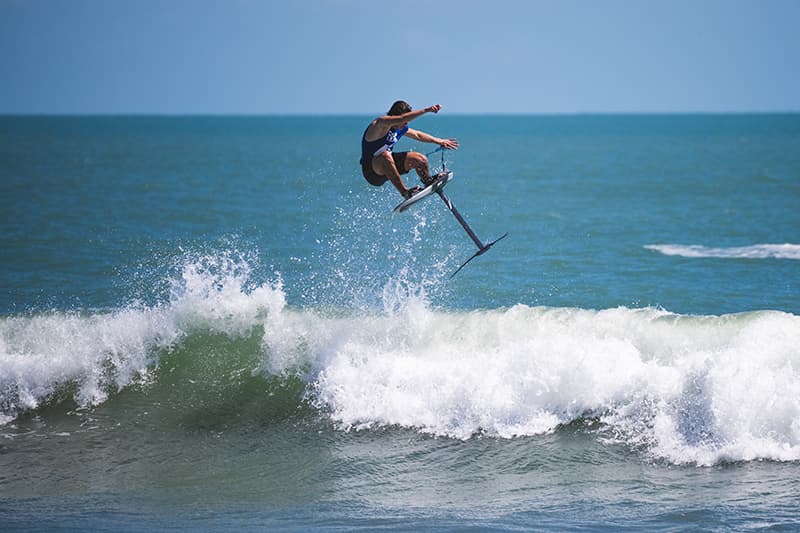
By the time the league’s seventh annual Cocoa Beach event ran March 6-8, 2026, the race had moved from experiment to repeatable calendar fixture. A Tonic Mag post said Armstrong Foils partnered with the league for the 2026 tour, and Foiling Magazine also gave the circuit attention. That combination of recurring events and sponsor interest tells you the format has moved beyond curiosity status.
How the foil community has reacted
The community response has been a mix of amusement and respect. In a Progression Project forum thread, one user described the event as “pretty fun, a bit ridiculous and kinda sketchy all at the same time,” while also saying it appeared to attract “some of the worlds top foilers.” That is a useful split-screen view of the league: the setup can look chaotic, but the field still draws serious riders.
That tension is part of the appeal. The course is odd enough to feel fresh, yet structured enough to reward legitimate racing skills. Once a rider is forced to connect wave energy across a boundary course, foil surfing stops being only about what looks best on a single turn and starts testing who can keep moving longest, cleanest and smartest.
What the format expands
Foil surfing has often been presented as a style-driven wave-riding discipline. The Foil Surf Race League redraws that idea by giving the sport a measurable objective: get from the beach, cross the upstream boundary, link waves and finish the downcourse run without leaving the foil. That makes endurance, navigation and course management part of the definition of high-level riding.
For the sport, that is more than a novelty. It gives organizers a format that can be repeated, sponsors a product that is easy to recognize, and riders a new way to prove mastery. In Cocoa Beach, the scoreboard is not just who surfed cleanest; it is who managed the moving water best from the first sprint on sand to the last line across the course.
This article was produced by Prism’s automated news system from verified source data, official records, and press releases, then run through automated quality and moderation checks before publishing. The system is built and supervised by the people who set the standards it runs under. Read our full AI policy.
Did this article answer your question?