Tabou unveils 2026 wingfoil range for every riding stage
Tabou split its 2026 wingfoil line into seven models, from school-friendly Zeppelin to radical Twister. The range aims to simplify quiver choices as riders progress.
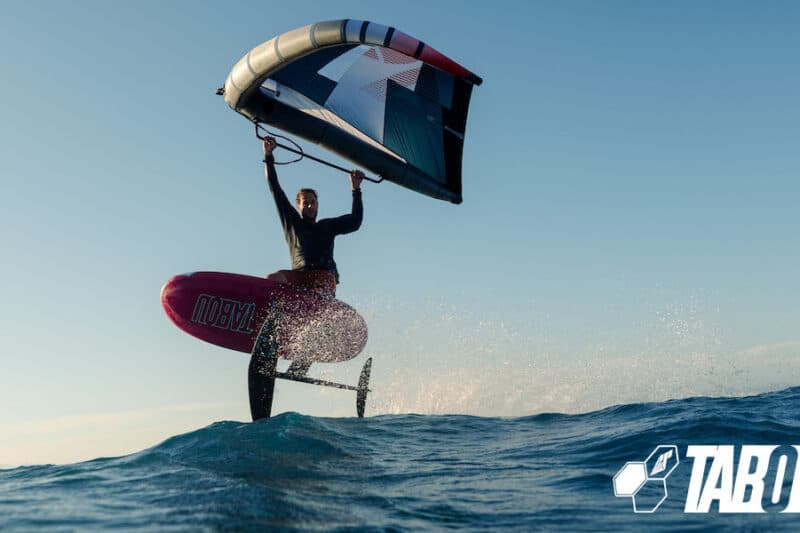
Tabou’s 2026 wingfoil range makes quiver-building simpler for riders moving from first flights into freestyle and waves, but only if the board matches the stage. The brand split the line into seven models, Flying Saucer, Rocket, Super Yaka, Pocket, Tiny, Twister and Zeppelin, which is a clearer signal than a one-board-fits-all approach. Instead of forcing beginners, intermediates and advanced foilers onto the same shape, Tabou built a progression ladder that separates learning, all-round riding and high-performance use.
At the entry end, the Zeppelin 2026 is the most school-friendly shape in the lineup. Tabou markets it as stable and forgiving, with an extra-kick tail, more volume toward the nose and reinforced construction built for repeated sessions. The PVC rail tapes and large EVA pad underline that this is the board for riders who need durability as much as lift. The Rocket 2026 sits one step up as the accessible all-rounder, aimed at riders of all levels and pitched around stability, glide, early take-off and enough responsiveness for jumps and maneuvers. That combination matters for the middle stage of progression, where riders want one board that will not hold them back as skills sharpen.

Higher in the range, the Flying Saucer 2026 is Tabou’s speed-and-control option, presented as a performance board with race and freeride credentials. The Tiny 2026 also leans performance-heavy, but with a broader use case: wingfoiling, prone foiling, pumping and freestyle maneuvers. The most aggressive shape in the collection is the Twister 2026, which Tabou describes as a radical freestyle board focused on aerial agility and surf responsiveness. Its compact outline and rocker line are meant to sharpen take-offs, while the deck recess is there to improve board feel and landing stability. For riders chasing air time and wave-linked tricks, that makes the Twister the clearest specialist in the range.
The broader picture is a brand pushing segmentation with purpose. Fabien Vollenweider, who founded Tabou Boards in 1991, brings more than 30 years of board-design experience and works from a shaping room near his home in Marseille, France, where ideas can move quickly from prototype to testing. Tabou’s 2025 archive already hinted at this direction with models such as the Flying Saucer and Super Yaka, but the 2026 collection formalizes the structure across the full lineup. In a sport still sorting out who needs what, Tabou is betting that clearer roles for each board will matter more than another generic all-purpose shape.
This article was produced by Prism’s automated news system from verified source data, official records, and press releases, then run through automated quality and moderation checks before publishing. The system is built and supervised by the people who set the standards it runs under. Read our full AI policy.
Did this article answer your question?