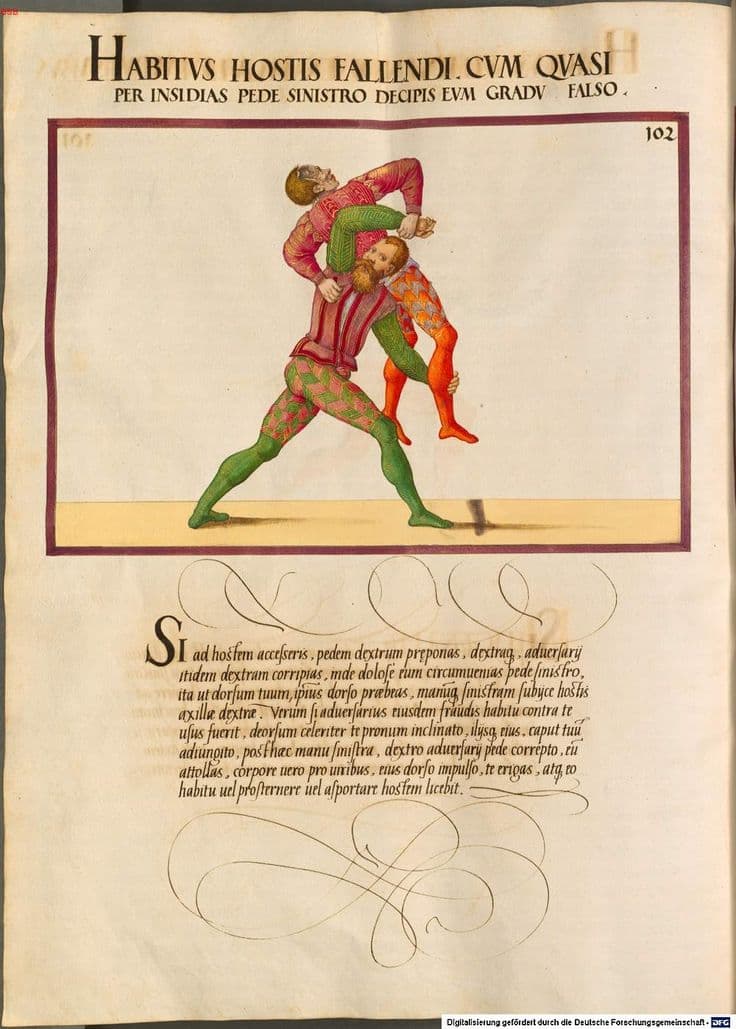
Fabian von Auerswald’s 1539 wrestling treatise marks early print era
Auerswald’s 1539 wrestling book shows HEMA was never just swords. Its 85 pieces, Saxon court setting, and print-era reach still map to clinch work and takedowns.
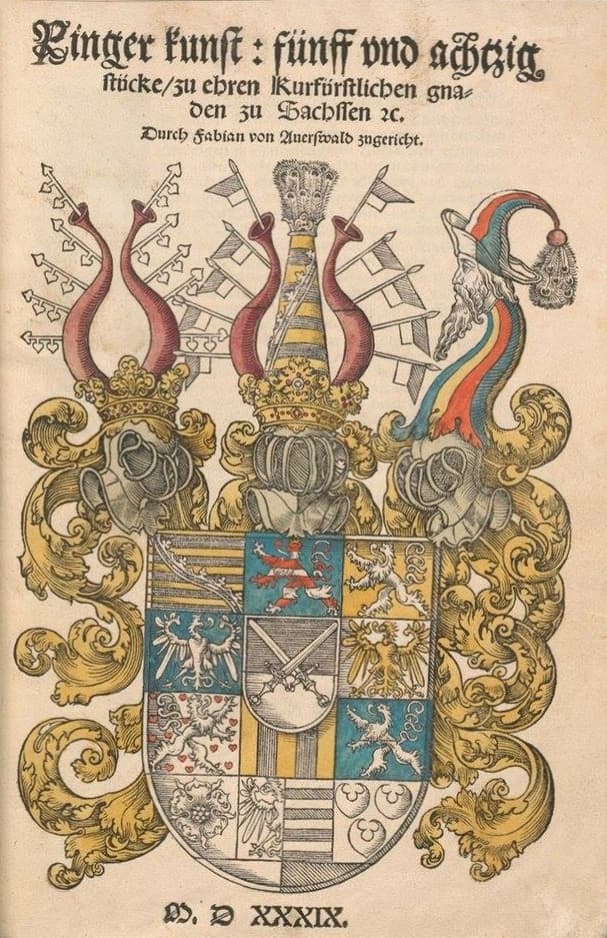
Fabia von Auerswald’s wrestling book makes one thing clear: early HEMA was never only about blades. His 1539 Ringer Kunst puts 85 wrestling pieces into print at a moment when grappling still sat inside the wider logic of armed combat, not off to the side as a novelty. That is why the book still matters now, especially in a sport where clinch entries, takedowns, and close-play control can decide an exchange before a clean weapon hit ever lands.
Auerswald at the Saxon court
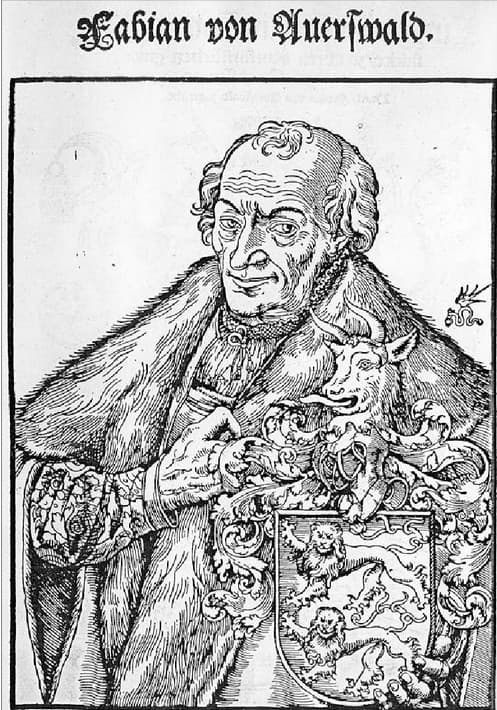
Auerswald belongs to the late medieval to Renaissance transition, and the basic facts of his life already place him at the center of elite martial culture. Wiktenauer identifies him as a German wrestling master born in 1462 and active across the 15th and 16th centuries. He served Johann Friedrich I, Duke of Saxony, and in his introduction he said he instructed the children of the Elector and members of the court in wrestling.
That courtly setting matters. Wrestling was not treated as a rustic add-on or a separate entertainment detached from combat culture. Auerswald’s position shows it as part of the training world of Saxon nobility, where body control, balance breaking, and composure under pressure belonged alongside the handling of weapons. In a modern HEMA context, that same logic shows up whenever a bout collapses into the clinch and the fighter who can stabilize first controls the rest of the exchange.
From manuscript culture to print
Auerswald’s book also sits at a crucial media shift. Wiktenauer notes that movable-type books began appearing in Europe in the 1450s, and that most 15th-century martial manuscripts already included at least one wrestling treatise. In other words, wrestling was already embedded in martial instruction before print arrived, but print made it easier to standardize, circulate, and preserve those ideas.
Ringer Kunst was written in 1537 and printed in Wittenberg in 1539 by Hans Lufft. The title survives in full as Ringer Kunst: fünff und achtzig Stücke, and the work is one of the earliest printed treatises on wrestling. The count is the key detail here: 85 pieces means 85 separate tactical moments, not a vague meditation on brute force. For readers used to tournament brackets and rule sheets, that is the closest thing to a structured syllabus for grappling in an early combat system.
The Metropolitan Museum of Art catalogues the printed book as a 1539 object and credits Hans Lufft as printer with Lucas Cranach the Younger as artist. Archive.org’s facsimile description goes further, describing the 1539 edition as containing 85 full-page woodcuts. Together, those records show the work as both a technical manual and a carefully produced printed object, made to be seen, studied, and reused, not just read once and discarded.
Why the book still maps to modern bouts
Auerswald’s value for today’s fighters is not abstract antiquarian interest. The core lesson is that close-range control is often the hidden engine of scoring. Modern tournament coaching pays heavy attention to hand fighting, body positioning, grappling entries from the bind, and the ability to stay upright long enough to finish or prevent a takedown. If a ruleset allows wrestling only in a limited window, the best fighters still need the same base skills Auerswald puts on the page: timing, balance disruption, and the ability to turn contact into advantage.
That is the correction to the “HEMA is just swords” misconception. Historical sources repeatedly show that wrestling sits inside the martial system, not beside it. If you ignore grappling, you ignore the mechanics that decide who owns the line, who breaks posture, and who can turn a messy collision into points or survival. In close-play scoring, that blind spot can cost a match even when the weapon work looks cleaner from the outside.
Auerswald’s afterlife in later fight books
The book’s influence did not stop in 1539. Paulus Hector Mair, the Augsburg aristocrat and civil servant whose massive martial compendium expanded wrestling to a far larger scale, drew heavily on Auerswald. One modern summary says Mair’s wrestling volume contains 130 sequences and that the first 77 illustrated sequences are based on Auerswald’s printed treatise. That is a strong sign that Auerswald was not a minor local writer, but a source later compilers treated as foundational.
Survival history reinforces that point. A late 16th-century manuscript copy of Ringer Kunst survives in Göttingen at the Niedersächsische Staats- und Universitätsbibliothek Göttingen. It reproduces both the text and the Cranach illustrations while adding its own material, which shows the work continuing to circulate after the first print run. That kind of reuse is exactly what early print was supposed to enable: a technical system becomes repeatable, portable, and authoritative enough to be copied again in another format.
Why this treatise still sits at the center of the conversation
Auerswald gives HEMA a clean, concrete answer to a bad simplification. Wrestling was already part of the martial curriculum in the manuscript age, print gave it broader reach in the 1530s, and later compilers like Mair treated it as serious source material rather than background noise. For anyone watching modern bouts, that translates directly into the places where matches are actually won: the entry, the bind, the clinch, the takedown, and the last moment of control before a judge calls the score.
That is why Ringer Kunst still lands as more than a historical curiosity. It preserves 85 pieces of grappling logic at the exact moment martial knowledge was moving from courtly instruction toward reproducible print, and it shows that the “sword” story of HEMA has always been incomplete without the wrestling underneath it.
This article was produced by Prism’s automated news system from verified source data, official records, and press releases, then run through automated quality and moderation checks before publishing. The system is built and supervised by the people who set the standards it runs under. Read our full AI policy.
Did this article answer your question?