HACA's 1993 reboot helped shape modern HEMA in the US
HACA’s 1993 reboot gave U.S. HEMA its working model: source-driven study, live sparring, and club structure. Those choices still drive today’s rankings, classes, and authenticity fights.
HACA did not begin as a formal federation or a tournament circuit. It started around Atlanta as a loose umbrella for people who wanted to share an interest in Western swords and historical weaponry, then got tightened into something much more durable when John Clements took over in 1993. That pivot matters because it turned a hobby network into a model for modern U.S. HEMA: study the sources, fence under agreed rules, and build an organization that can survive long enough to teach the next wave.
The loose umbrella that came first
Hank Reinhardt’s original idea for the Historical Armed Combat Association was practical before it was ideological. He wanted people to affiliate, spar under agreed rules, and get access to historical and physiological grounding for how the art should be studied and practiced. He even envisioned membership materials that would include sparring guidelines, networking, and information about future events tied to certifying weapon proficiencies.
That blueprint sounds familiar because so much of modern HEMA still runs on the same machinery. Clubs still need rules, not just enthusiasm. They still need a way to connect isolated practitioners. And they still need a way to separate casual interest from actual competence, whether that ends up as a test, a ranking, a curriculum level, or a tournament seed. Reinhardt’s model was broad enough to gather people, but specific enough to keep them working.
His credibility gave the idea weight. ARMA describes Reinhardt as a longtime authority on medieval weaponry who wrote and lectured extensively on medieval and Renaissance arms and historical fighting. His ties to Museum Replicas Limited also mattered because replicas were becoming easier to get in the United States, and accessible gear helps a revival movement move from talk to practice.
1993 is the fork in the road
The decisive change came when Clements obtained permission to take over the dormant HACA effort and reshape it. ARMA says he had studied historical fencing since 1980 and had been publicly teaching since 1992. After the handoff, HACA was re-formed as a club for research and training advice rather than a vague hobby association.
That distinction is the heart of the modern story. A loose umbrella can gather interest, but it does not tell people how to train on Tuesday night. A research and training club does. Clements’ version gave HEMA a working identity: not just collecting swords, and not just performing history, but testing ideas in practice with a documented tradition in mind.
A later book biography places him in Houston by the late 1990s, teaching and training with HACA. Another ARMA conversation describes HACA as an informal club of arms and armor enthusiasts dedicated to exploring and reconstructing Western martial heritage. Those descriptions show the same tension from different angles: the community was informal, but the purpose was serious.
What HACA standardized, and what it had to invent
HACA’s early structure helped normalize several things that still define the scene.
- agreed sparring rules instead of purely ad hoc bouts
- study groups that tied technique to historical material
- networking across isolated practitioners and clubs
- certification thinking, where skill could be named, tested, and recognized
- a split between historical inquiry and live application that still shapes classes today
That last point is the big one. Modern HEMA still argues over how much weight to give to sources, how much to trust sparring pressure, and how to keep a class from drifting into either dry academia or empty brawling. HACA’s answer was not perfect, but it set the terms of the debate. It treated scholarship and physical practice as partners, not rivals.
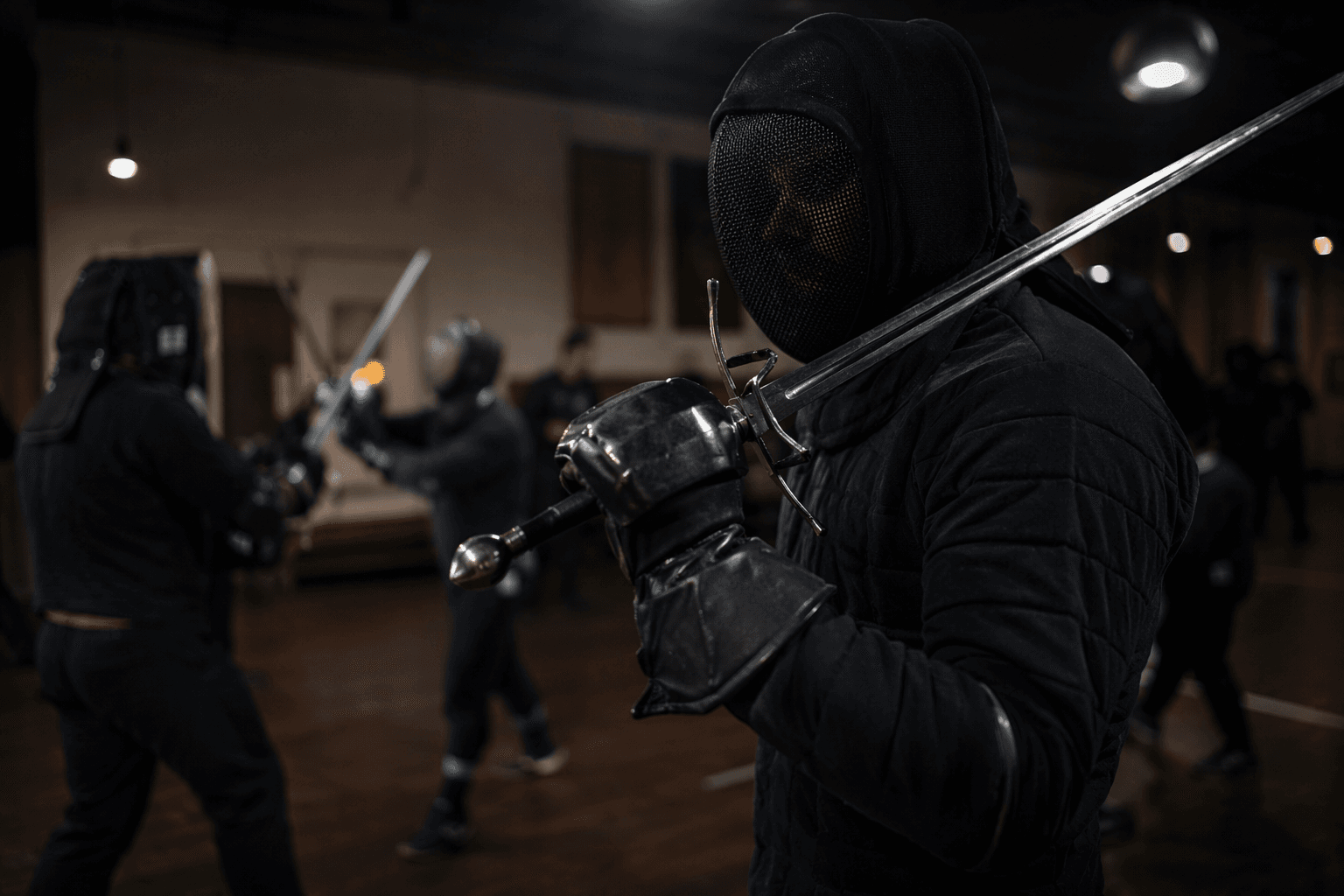
The parts it got wrong were the inevitable rough edges of an early revival. The initial concept was broad and flexible, which helped it spread, but broad concepts also need structure or they stay fuzzy. The move from umbrella organization to research-and-training club was the correction. Even the early gear ecosystem had limits: a broader history of the period notes that practitioners in the 1980s and 1990s often relied on wooden wasters and protective equipment borrowed from the Society for Creative Anachronism and reenactment circles. That kit made practice possible, but it also shows how improvised the scene still was.
The internet changed the pace before the movement had a name
By 1996, HACA had established a virtual headquarters online and had become one of the first historical fencing websites. That is a bigger deal than it might look like on paper. Before social media, an online home meant scattered researchers could compare sources, trade interpretations, and build something like a shared vocabulary without being in the same city.
That digital shift amplified the movement far beyond Atlanta or Houston. ARMA’s broader mission still frames the work as researching, reconstructing, and reviving a legitimate craft of documented Western martial culture through real weapon handling, not theatrical choreography. The internet made that mission portable. It also made disagreements unavoidable, because once practitioners could see one another’s interpretations, the arguments over authenticity got sharper and more public.
This is one reason the late 1990s are often treated as the dawn of HEMA in its modern sense. The movement was no longer just a few enthusiasts with books and wasters. It had websites, discussion networks, and enough shared language to start looking like a field.
HACA was not the only path, but it set the template
The U.S. story was never the only story. In Edinburgh, the Dawn Duellists Society says it has been teaching HEMA since 1994, and Paul Macdonald says it was founded in June 1994 after he and others wanted a society devoted to the revival and practice of historical fencing. That parallel development matters because it shows HEMA was taking shape through local institutions, not one central authority.
That is still how the scene works today. Clubs, study groups, ranking systems, and tournament formats all grew out of the same early decision-making: how to train safely, how to ground practice in evidence, and how to make a revived martial art legible to the people doing it. HACA’s 1993 reboot did not create every answer, but it established the operating system. The arguments HEMA is still having about authenticity, pedagogy, and competitive structure are built on that 1990s foundation.
This article was produced by Prism’s automated news system from verified source data, official records, and press releases, then run through automated quality and moderation checks before publishing. The system is built and supervised by the people who set the standards it runs under. Read our full AI policy.
Did this article answer your question?