HEMA Scorecard brings live scoring and automated brackets to tournaments
HEMA Scorecard turns hand-kept pool sheets into live brackets, showing who advances, who falls on tiebreaks, and how HEMA’s rule-heavy formats play out in real time.
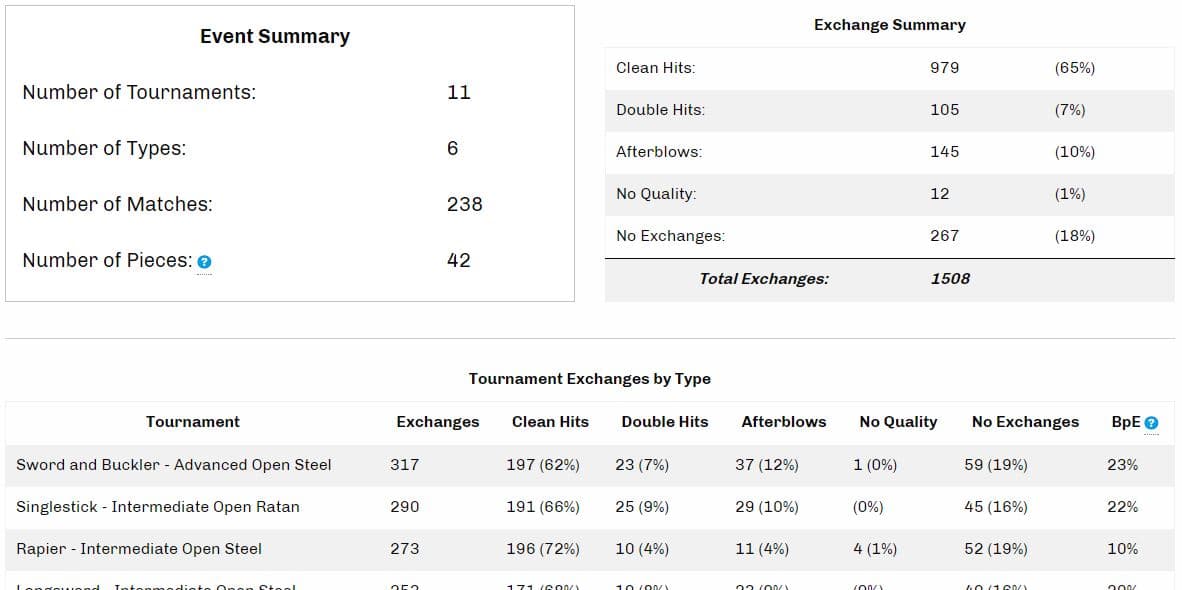
HEMA Scorecard turns pools, brackets, and afterblow-heavy rule sets into live pages that update the moment a scorekeeper enters a result, so fencers can see who is advancing, who is hanging on by a tiebreak, and which side of the bracket opens up next.
What the live page changes
One pool result can change seeding, reorder a bracket path, or decide whether a fighter stays in contention after a messy tie.
The practical effect is easy to see:
- Pool scores update in real time, so standings are not trapped on a clipboard.
- Bracket advancement is calculated automatically, which reduces the delay between the last bout and the next round.
- Fencers and spectators can follow the event while it is still happening, instead of waiting for a manual refresh at the end of a round.
- The same system can handle one-hit events with multiple rounds of pools, a HEMA-specific wrinkle that would be awkward to manage by hand.
A pool bout can determine who gets the easier path, who lands in a tougher half of the bracket, and who stays in contention before the finals.
Why HEMA needs software that understands the rules
HEMA is not a one-format sport. Scorecard supports deductive and full afterblows, pools, brackets, solo cutting events, and unusual one-hit tournaments with several rounds of pools. The software is not just moving names into slots; it is carrying the logic of the competition itself.
In a mainstream bracket sport, the data model is usually simple: win, lose, advance. In HEMA, the scoring structure can change from one event to the next, and the software has to know the difference between formats that reward clean hits, formats that deduct for afterblows, and formats that rely on pools before a bracket even begins. Scorecard can calculate pool scores and bracket advancement automatically, the sort of work that becomes error-prone when a tournament grows beyond a few bouts.
For readers trying to follow a tournament in real time, a disputed result is often not just about whether a hit landed. It can be about how the format treats the exchange, what the pool score means, and whether the bracket is reflecting the rules as intended.
The open-source backbone behind the brackets
Scorecard is not just a vendor tool. It is an open-source platform designed to help tournament managers organize and execute events for free, and the HEMA Alliance’s supported-projects page places it in the same community ecosystem as Wiktenauer. The current code repository identifies the project as developed by Sean Franklin and supported by the HEMA Alliance, and it shows more than 200 commits with recent maintenance activity.
There is also an older repository carrying the same software name, which points to a project that has lived through more than one generation of HEMA infrastructure rather than appearing overnight as a polished product.
Scorecard is free online tournament management software for HEMA tournaments and can host the full event logistics chain, including workshops and volunteer shifts. It handles more than pushing scores to a page; it also helps organizers run the weekend.
How the data feeds rankings and the wider scene
HEMA Ratings uses data from tournament software including HEMA Scorecard and HEMA CM, and an initial dump of a few thousand matches from HEMA CM helped launch the ratings project. In practice, that means Scorecard sits on the front end of a broader statistics layer that many fencers use to compare results across events.
Large tournaments have become more data-heavy. HEMA Ratings event pages for major competitions such as the London HEMA Open in 2024 and 2026 list multiple weapon categories and dozens of fighters in each category. Once a field gets that large, manual scoring is not just inconvenient; it becomes a bottleneck for the results people want to see immediately.
Scorecard currently lists active, published, recent, and upcoming tournaments across Lithuania, Australia, the United States, Canada, Serbia, Sweden, Mexico, and other places, which shows the software is not tied to one national scene. The same competition logic is being reused across very different events and formats.
Why livestreams and overlays now matter as much as the bracket
Scorecard is also wired into how tournaments are presented on stream. A separate OBS overlay project exists specifically to display a match from HEMA Scorecard in livestreams, and the repository for Scorecard itself includes livestream-related files such as livestream.php and videoLivestream.php. That makes the software part of broadcast presentation, not just back-office administration.
The bracket page, the live score table, and the stream overlay are all telling the same story at once. When a fighter jumps a seed or survives a pool by a narrow margin, the software makes that visible in real time, and the tension carries into the broadcast itself.
It also sharpens controversy. In a format where afterblows, pool math, and bracket advancement all matter, the live system can make a result look definitive before the dust settles, or expose just how thin the margin really was.
This article was produced by Prism’s automated news system from verified source data, official records, and press releases, then run through automated quality and moderation checks before publishing. The system is built and supervised by the people who set the standards it runs under. Read our full AI policy.
Did this article answer your question?