Modern HEMA federes echo centuries-old German practice swords
The feder became HEMA’s workhorse because it handles like a longsword without behaving like one. Its blunt tip, flex, and schilt explain why clubs trust it for hard sparring.
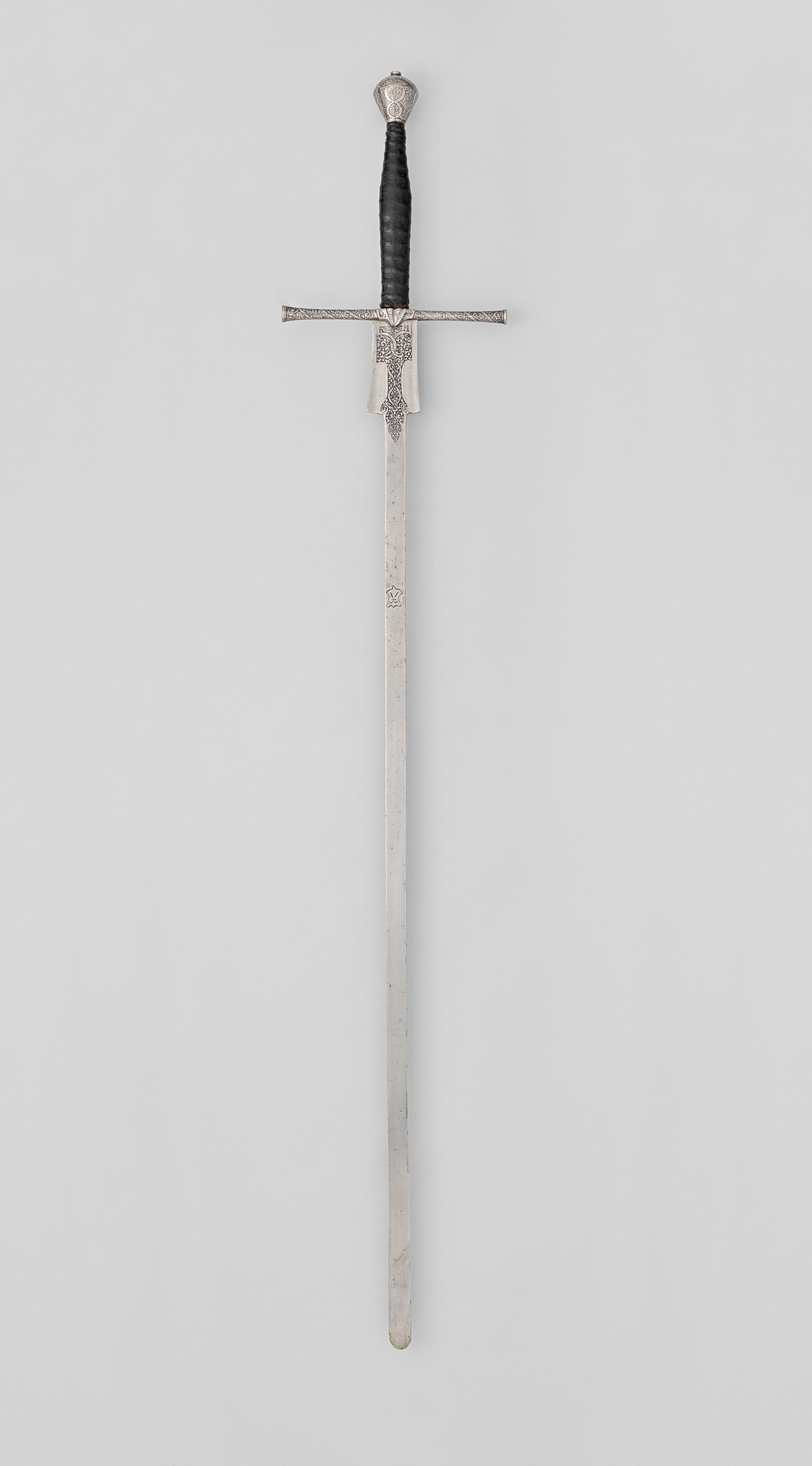
An Ulrich Diefstetter practice sword from Munich, dated to about 1575, had dull edges and a blunt tip. Modern clubs use the feder for sparring and technical work because it lets them train at speed without asking a sharp blade to do a fencing sword’s job.
Why the feder became the training standard
The feder is built to live between two worlds: it should move close to a longsword, but it should not behave like a weapon meant for cutting flesh. In practice, that means a feder is intentionally flexible, unsharpened, tipless, and fitted with a schilt, the broad protective section that helps shield the fingers in bind work and close engagement.
HEMA longsword is not just about passing drills. It is about thrusts, winds, blade contact, and hand fighting at range and in the clinch, all of which punish a stiff or sharp-style simulator. A feder that flexes well, presents a blunt point, and gives the hand extra protection lets you train those exchanges with less risk while still preserving the timing and mechanics that make longsword distinct.
What to look for before you buy
If this is your first serious training sword, the first question is not brand. It is whether the weapon matches the way your club actually fences. The historical range in Kvetun Armoury’s analysis of the Codex Danzig points to swords around 125 to 135 cm and roughly 1.3 to 1.7 kg, which gives you a useful frame of reference for size and mass. A feder that drifts far outside that zone may still be usable, but it will no longer teach the same handling as the longsword tradition many schools study.
Three features should drive the decision:
- Flex: the blade should give on thrusts rather than transmit force like a rigid bar.
- Tip design: look for a blunt, tipless finish rather than a pointed imitation of a sharp sword.
- Hand protection: the schilt or large ricasso-like section should create real coverage for the fingers when the blades meet.
Handling matters just as much as measurements. A feder should feel close enough to a longsword that transitions, winding, and blade presence make sense in drilling, but not so heavy or blade-dominant that it turns sparring into endurance work.
The feder is older than the modern club scene
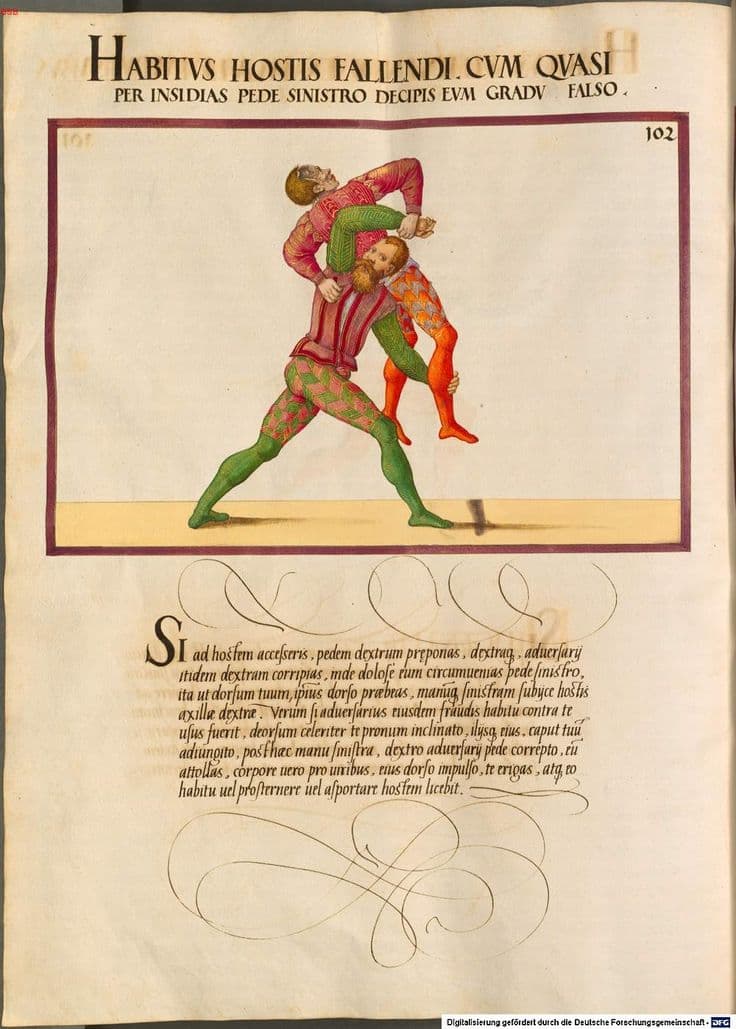
The feder’s present-day dominance can look like a modern sports solution, but the object has deep roots in German martial culture. German practice swords were purposely made with dull edges and blunt tips, and they descended from knightly war swords. The German school continued to practice the longsword long after it had been abandoned elsewhere, which explains why the practice sword remained relevant inside that tradition.
The surviving objects back that up. The Metropolitan Museum of Art dates an Ulrich Diefstetter practice sword from Munich to about 1575, and records a pair of practice swords from Saxony dated about 1575 to 1625.
Liechtenauer, Danzig, and the manuscript trail
HEMA’s feder culture also makes more sense when you place it beside the manuscript tradition that feeds modern classes. Johannes Liechtenauer was a late-14th-century German fencing master whose tradition became foundational to German longsword fencing. The Pseudo-Peter von Danzig gloss predates the Starhemberg Fechtbuch of 1452, which shows how early these teachings were being organized and expanded.
That manuscript world did not treat sword work as one undifferentiated skill. Joachim Meyer taught the long sword, dusack, and rapier, while the Talhoffer record at the Metropolitan Museum of Art points to long swords alongside thrusting shields, maces, spears, and daggers in 15th-century fight books. The feder fits that environment because it gives modern practitioners a tool for the longsword branch of a much broader martial curriculum.
Wiktenauer began in 2009 as a collaboration to collect and organize primary HEMA source materials. When clubs argue about training weapons, they are comparing a live training tool to a documented tradition that includes long swords, practice swords, and manuals built around instruction rather than spectacle.
Why makers keep splitting the category
The feder is no longer a single product so much as a family of design choices. Regenyei lists Standard, Custom, Tulip, Trnava, Short, and Replica models. That variety reflects different preferences for blade behavior, hand protection, and historical styling inside the same basic training category.
Other makers have pushed the idea in adjacent directions. Blackfencer’s Steel Generation line includes longswords, rapiers, sideswords, montantes, and other steel HEMA weapons with blunt edges and a blunt thick tip for safer thrusts. Kvetun Armoury lists FFG Federschwert, Federschwert 1570, and Federschwert Lichtenauer, and builds its equipment for training, sparring, and tournaments to stringent safety standards, with customization available.
The practical bottom line
For a new serious student, the best feder is the one that preserves longsword mechanics while lowering the cost of mistakes. The historical record points to blunt edges, blunt tips, a protective schilt, and dimensions close enough to period practice swords to keep the feel honest. The modern market then splits that template into families, from Regenyei’s models to Kvetun’s and Blackfencer’s steel trainers.
This article was produced by Prism’s automated news system from verified source data, official records, and press releases, then run through automated quality and moderation checks before publishing. The system is built and supervised by the people who set the standards it runs under. Read our full AI policy.
Did this article answer your question?