Nicolaes Petter’s 1674 wrestling manual bridges HEMA and sport combat
Petter’s 1674 wrestling manual shows why HEMA is bigger than swords: the clinch, the throw, and the knife-threat response still shape modern training.

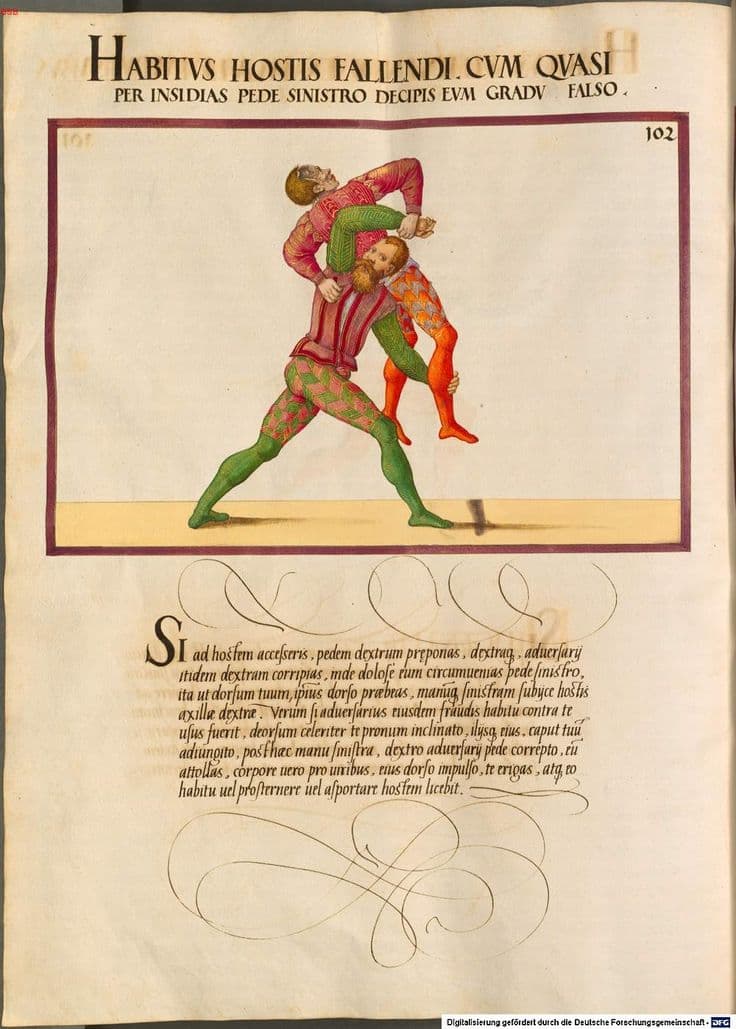
In one Romeyn de Hooghe etching from Nicolaes Petter’s *Klare Onderrichtinge der Voortreffelijke Worstel-Konst*, one wrestler grabs and pulls another over. The manual lands in the part of HEMA that matters most when distance disappears. It combines de Hooghe’s etched plates with civilian self-defense against quarrelsome attackers and knife threats, making it as useful for modern sport combat conversations as it is for martial history.
Why Petter belongs in HEMA
HEMA is not just the study of swordplay. The HEMA Alliance defines Historical European Martial Arts as the study and practice of historical European fighting techniques. Many traditions evolved into sporting forms such as sport fencing, boxing, and wrestling. Reconstructing HEMA means working from fencing treatises, wrestling treatises, and books of military strategy, not from blades alone.
That is where Petter becomes essential. His manual sits squarely in the civilian end of the tradition, where a fight is more likely to begin with a grab, a shove, or a clinch than with a clean duel. The work is useful against quarrelsome troublemakers and against those who threaten or try to harm someone with a knife.
What the 1674 book actually is
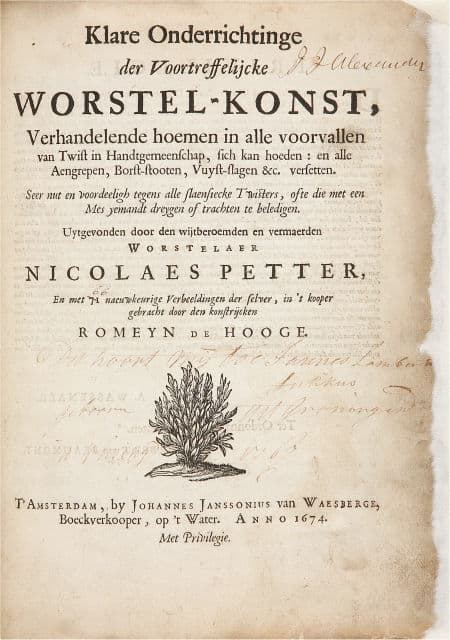
Petter was a German-born wine merchant and wrestling master active in Amsterdam, born in Mommenheim, Germany. The work was published posthumously in Amsterdam in 1674, with privileges, and the DBNL record preserves the Dutch-text edition as a diplomatic transcription based on scans from the Internet Archive. The colophon also identifies Johannes Janssonius van Waesberge as the Amsterdam printer-publisher, while the illustrations are credited to Romeyn de Hooghe.
The book was first offered for publication in 1674 by Petter’s widow, which fits the posthumous nature of the edition and helps explain how a wrestling manual moved from a working master’s repertoire into the book trade. The work first appeared with text in German, a reminder that its audience was not limited to one language or one city.
Why the plates still read clearly
Romeyn de Hooghe gives the manual much of its lasting force. The Royal Academy catalog puts the count at 71 precise images, and the British Museum catalogs one Petter plate as an etching by de Hooghe showing two wrestlers in action.
A manual like Petter’s gives modern practitioners something rare: a named master, a dated edition, a known illustrator, and plates that show position, pressure, and collapse instead of abstraction. De Hooghe’s baroque line work turns wrestling into a sequence of visible body problems, making the book easy to study in a training hall, on a projector, or on a phone screen between rounds.
What modern fighters can take from it
Petter’s real value is that he makes unarmed combat concrete, urban, and socially specific. The work is not about battlefield pageantry. It is about the mess of civilian violence, where hand-fighting, balance, and timing decide whether a threat gets stopped or escalates.
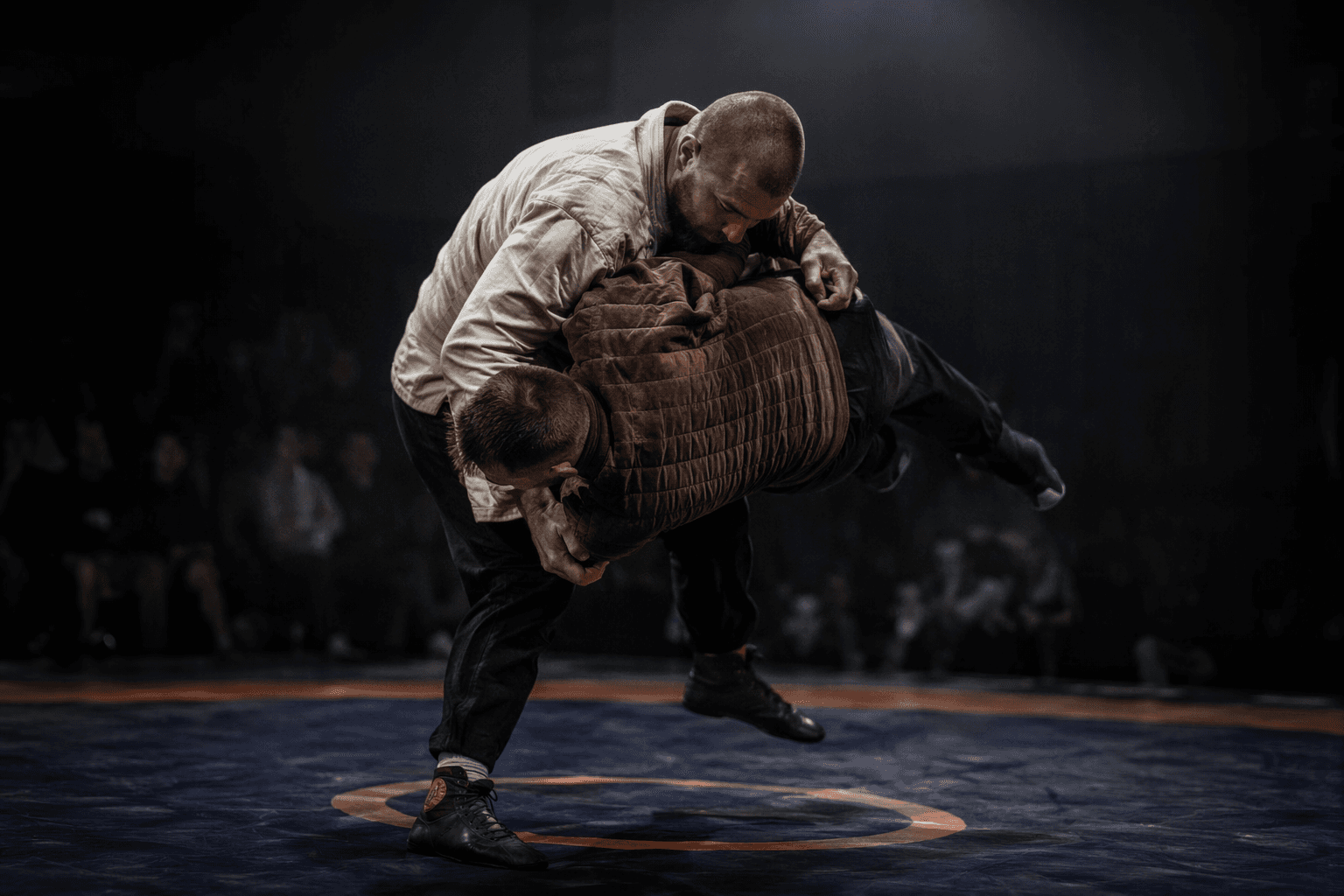
That is why the manual cuts against the common HEMA mistake of treating the sword as the center of everything. When wrestlers outperform pure fencers in the clinch, the gap usually is not a lack of blade knowledge. It is a lack of hand fighting, body positioning, off-balancing, and the ability to solve an exchange after the weapon line collapses. Petter’s manual exposes that gap by showing that European martial culture never treated grappling as a side note.
His focus on twisting hand-to-hand assaults and knife threats also makes the book unusually close to modern self-defense thinking. The lesson is not that a 17th-century manual can be copied into a contemporary rule set. The lesson is that the underlying problems are familiar: entry, control, disruption, and the ability to keep your feet when another person is trying to dump you onto the ground.
How the tradition kept traveling
The book was reprinted several times, and one edition was an outright plagiarism, a sign that the material was valuable enough to copy rather than merely admire. A French translation appeared in Leiden in 1712, and German material derived from Petter surfaced in later treatises, extending the manual’s life beyond its original Amsterdam edition.
Petter’s style was luctorius. Sydney Anglo judged the manual one of the most important unarmed-combat treatises ever printed, fitting that record of reuse, translation, and borrowing.
An English translation by Remko Prevo, preserved by the Association for Renaissance Martial Arts, makes the manual easier to access for modern readers who want to work from the text itself.
This article was produced by Prism’s automated news system from verified source data, official records, and press releases, then run through automated quality and moderation checks before publishing. The system is built and supervised by the people who set the standards it runs under. Read our full AI policy.
Did this article answer your question?