Sealand profiles new HEMA athlete Dom Hartin, from games to armored combat
Dom Hartin’s route into HEMA ran from Elder Scrolls and Baldur’s Gate to Liverpool club training, a birthday sword party and armored combat.

Sealand named Dom Hartin its newest athlete in HEMA on June 18, and his path showed how the sport keeps drawing new fighters through clubs, family events and serious technical training. The profile traced a route that began with fantasy games and ended with armored combat, a progression that fits the way Historical European Martial Arts keeps renewing its competitive base.
Hartin started with titles like Elder Scrolls and Baldur’s Gate before he began training with a Liverpool club a little more than a year before the profile. That first step matters because HEMA still depends on local entry points, not spectacle alone. Liverpool HEMA says it was established in 2017 and centers on 16th-century German longsword methods, while also training Scottish basket-hilted broadsword, Napoleonic-era British sabre, medieval dagger and wrestling, and the dussack. For Hartin, that mix provided a structured on-ramp from casual interest to serious practice.
The Sealand profile said Hartin proposed to his partner in Italy, then marked her 40th birthday with a sword-fighting party instead of a standard dinner. Northern Fells Fencing, near Penrith, hosted the event for friends and family, and later became his primary training home. The article used that sequence to show what HEMA actually looks like on the ground: steel weapons, historical tools and a wide technical range that includes swords, daggers, polearms, shields, capes, unarmed grapples and throws. It also singled out the Federschwert, the German longsword training weapon used for safer sparring with thrusting steel.

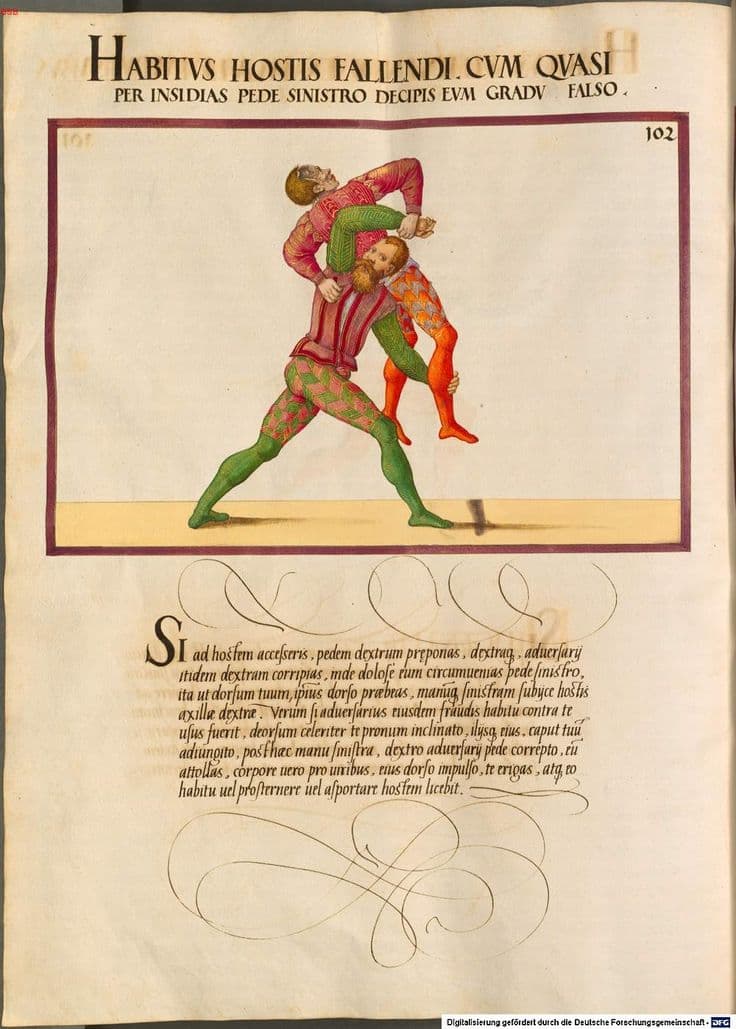
Hartin’s next step was Harnischfechten, the armored-combat branch of the art, which the profile described as one of HEMA’s most demanding disciplines. That move from open sparring to armored work is a real marker of development inside the sport, because it demands deeper technical control, conditioning and familiarity with source-based fencing. HEMA is built on surviving treatises and manuals from the late medieval, Renaissance and early modern periods, and the profile’s arc from games to armor reflected that blend of historical study and modern competition.
The wider support system around the sport helps explain how entrants like Hartin keep arriving. HEMA Alliance says it supports the community with club finders, event support, instructor certification, Wiktenauer and HEMA Scorecard, while Wiktenauer describes itself as a collaboration to collect and present primary source materials for HEMA research. A Library of Congress entry for Hans Talhoffer’s 1467 combat manual notes instructions for fighting with and without armor, on foot and horseback, using swords, daggers, pikes and other weapons. HROARR’s Global HEMA Census snapshot listed 8,852 paying practitioners worldwide in 2013, including 905 practitioners and 53 groups or chapters in the United Kingdom, a baseline that shows how far the organized scene had already spread.
This article was produced by Prism’s automated news system from verified source data, official records, and press releases, then run through automated quality and moderation checks before publishing. The system is built and supervised by the people who set the standards it runs under. Read our full AI policy.
Did this article answer your question?