IHSAA boys basketball pairings use lottery draw to set postseason paths
Indiana’s boys bracket is a lottery, not a seed list, and that random draw can send contenders into heavy sectionals, tricky travel, and packed semifinal nights.

The first thing to understand about Indiana’s boys basketball postseason is that the road to Gainbridge Fieldhouse is not lined up by seed. It is shaped by a lottery-style draw that uses ping-pong balls, and that randomness can turn one school’s path into a minefield while another gets a cleaner run. In a state where the tournament is the 116th annual boys basketball state event, the draw itself is part of the spectacle, not a hidden administrative step.
How the draw works
The Indiana High School Athletic Association places ping-pong balls representing each school into a lottery-style air-mix machine to determine postseason pairings. That process sets the home and visiting teams through all 64 sectionals and 16 regionals, so the bracket can produce collisions that have nothing to do with power rankings and everything to do with chance. The semi-state pairings are then determined by another transparent air-mix draw using four ping-pong balls for each remaining foursome, which keeps the entire path feeling raw, public, and unmistakably Indiana.
That is why the pairing show matters so much. Greg Rakestraw and Kyle Neddenriep host the 2025-26 boys basketball pairings show, which streamed exclusively on IHSAAtv.org and was simulcast on affiliates of the IHSAA Champions Network. The state finals are set for Saturday, March 28, 2026, at Gainbridge Fieldhouse in downtown Indianapolis, so the draw is effectively the first turn in the long funnel toward the city’s biggest high school basketball stage.
Why the format creates pressure
Indiana’s postseason is built to compress drama into short windows. Sectional games begin Tuesday, March 3, 2026, and run through Saturday, March 7, then regionals follow on Saturday, March 14, before the final four championship games in Indianapolis. Because the bracket starts with a random draw, coaches cannot wait for a favorable path to appear later; they have to prepare for whoever lands in front of them, often with little margin for error.
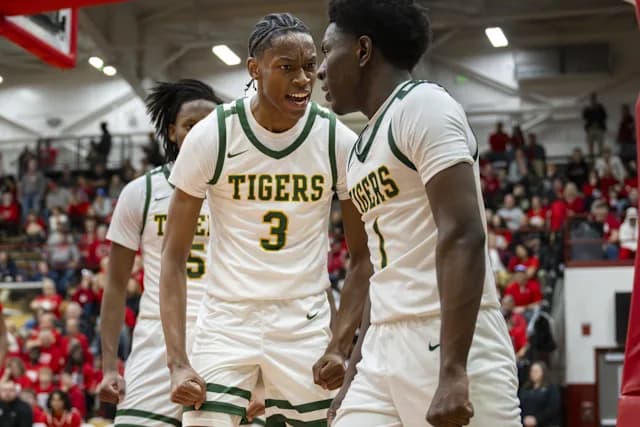
That structure creates the kind of early heavyweight collisions fans in Indiana love. A strong roster can be dropped into a sectional where another legitimate contender is waiting on the same night, and there is no reseeding to separate them. The result is a postseason where the first weekend can feel like a state-level elimination game, with crowded gyms, student sections on top of the court, and a single bounce deciding whether a program gets a longer run or goes home in seven days.
The middle rounds add another layer. Under the current format, regionals are single-game championships and semi-state is a two-game format, which means the bracket does not just decide opponents, it changes the emotional rhythm of the tournament. One game can end a title run instantly, while the next round asks teams to survive back-to-back pressure in a span where preparation, recovery, and composure become as important as talent.
The 2022 change that reshaped the middle rounds
The present setup came from a major format change approved by the IHSAA Executive Committee in a 15-2 vote. That change followed a survey of principals, athletic directors, boys coaches, and girls coaches, and 73.4% of the 781 respondents supported the switch. The previous format, in place since 2002, used a two-game regional and a single-game semi-state; the new version flipped that structure so the regional became the one-game championship and semi-state became the two-game round.
That adjustment was not just cosmetic. The IHSAA said the change was intended to create more excitement in host communities and be financially beneficial for host sites, and that is easy to see in practice. More decisive games in more places mean more nights where a gym can feel like a must-win event, more local interest around hosting, and more of the tournament’s economic energy staying in the communities that get those rounds.
For coaches, the change sharpened the strategic edge of the bracket. A random sectional draw already demands constant scouting and flexible game plans. Once the regional and semi-state rounds were reworked, the postseason became even more about survival across different settings, from a sectional host site to a regional championship to the neutral-stage feel that eventually leads to Gainbridge Fieldhouse.
Why Indiana’s bracket feels different from a standard seeded tournament
A seeded postseason tries to protect the best teams from one another until late. Indiana does the opposite at the front end: it lets the draw decide who gets squeezed together early. That creates a tournament culture where geography, timing, and luck all matter in ways fans can feel immediately, especially when an elite team lands in a sectional loaded with fellow contenders or when travel turns a normal midwinter game into a long night on the road.
The draw also adds crowd intrigue. Local fans know the bracket can turn a sectional into a neighborhood rivalry cluster, while regionals and semi-states can suddenly pull together fan bases that would not otherwise meet until much later. Because the pairings are announced in a show format and then carried on streaming and radio, the reveal itself becomes a communal event, part analysis and part anticipation.
The scale of the tournament helps explain why it still draws that level of attention. In 2001-02, sectional competition began with 385 teams and 5,475 student-athletes, a reminder that the state tournament is not a niche bracket but a massive annual sorting of Indiana basketball’s best and most ambitious programs. The fact that those numbers still resonate speaks to how many communities invest in the bracket before a ball is tipped.
A tradition that reaches back more than a century
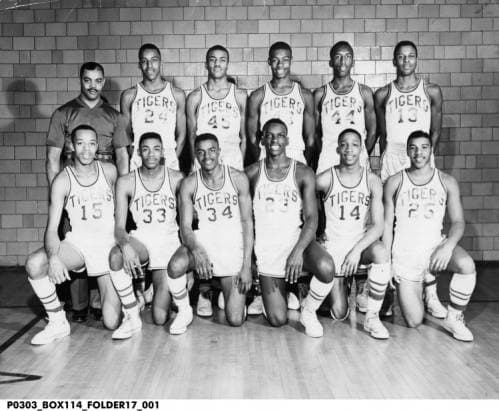
The tournament’s roots go back to 1911, when the first boys basketball state tournament was held. The IHSAA’s historical timeline says that event was not acknowledged by the Board of Control as the first official tournament until 1957, and it also notes that the association officially sponsored the tournament for the first time in 1912. That history gives the modern draw unusual weight: a lottery-style machine is now used to shape the same competition that helped define Indiana basketball culture more than a century ago.
That lineage is why the pairings show feels like more than administrative housekeeping. It sits inside a tradition that has long connected school gyms, county rivalries, and downtown Indianapolis into one statewide story. The bracket can still make or break a season in an instant, but in Indiana it also carries the larger meaning of a tournament that has been building its own folklore since 1911.
By the time the final four teams reach Gainbridge Fieldhouse on March 28, the random draw, the sectional grind, the regional pressure, and the semi-state tension will already have done their work. In Indiana, the path is never just about who is best; it is about where the balls land and how a season survives the chaos that follows.
This article was produced by Prism’s automated news system from verified source data, official records, and press releases, then run through automated quality and moderation checks before publishing. The system is built and supervised by the people who set the standards it runs under. Read our full AI policy.
Did this article answer your question?