Indiana's historic gyms reveal basketball built by local communities
Mooresville, Bourbon and New Harmony show how Indiana’s old gyms were financed, built and reused by towns that refused to surrender their basketball identity.
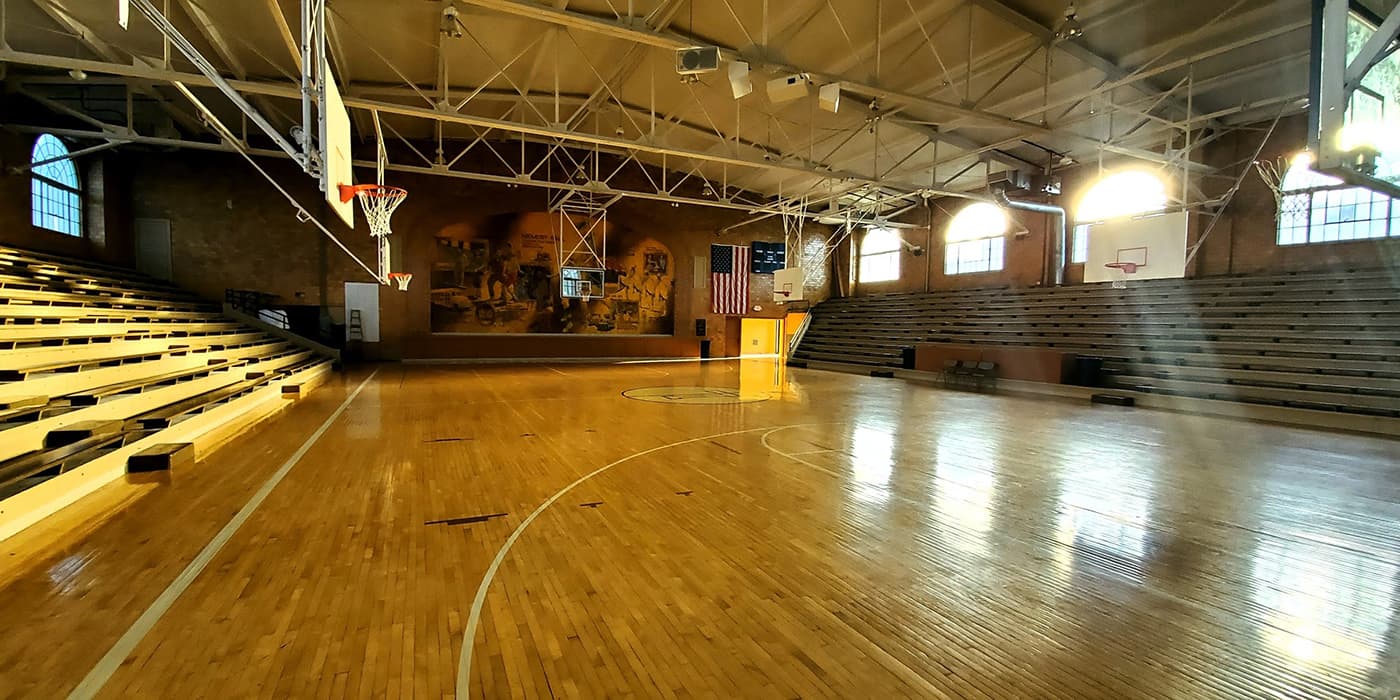
Indiana basketball was built in places where the community paid for the floor, hauled the gravel and then packed the bleachers. In Mooresville, that started with a 1920 gym that Morgan County had never seen before, a building financed by $100 loans from residents and businesses, a $23,000 fundraising push, and boys who helped dig the basement and carry gravel for the foundation. When school consolidation later replaced many of these spaces, the old gyms did not just become leftovers. They remained the places where towns kept score on identity, memory and who still owned the home-court edge.
The towns that built their own home courts
Mooresville’s gym is the clearest example of basketball as civic construction. Dedicated in 1920, it became Morgan County’s first building made specifically for basketball, then served the high school until 1959, when a new high school and gym replaced it. Even after that, the building stayed in circulation for junior high games, elementary physical education classes, and now the Mooresville Junior Basketball League, which makes it less a preserved relic than a working piece of the town’s basketball identity.
Bourbon tells the same story in a different key. Its 1928 gym was built as an addition to the older school building to meet new state rules for physical education, and it quickly became the town’s center of gravity. The Comets played there for generations, including sectional-winning boys teams in 1943, 1950 and 1962, and the room carried far more than basketball. School plays, dances, assemblies, graduations and movies all shared the same floor, which is exactly why consolidation and replacement buildings hit so hard when they arrived.
How bigger crowds changed Indiana’s gym architecture
The pressure that reshaped these town gyms also built the state’s signature showcase venues. The Indiana Historical Society’s Hinkle Fieldhouse history notes that the first state high school basketball tournament was played in 1911, the finals moved to Indianapolis in 1921, and rising fan interest pushed communities toward larger gyms so more people could get in. That arc reaches Hinkle, which opened in 1928 with an arched-truss roof that gave spectators unobstructed sightlines, and it reaches the Marion Memorial Coliseum, which seated 5,500 fans. At the Indianapolis Exposition Building, standing-room-only crowds topped 7,000.
Those numbers matter because they explain the double life of Indiana gym culture. On one side were intimate town floors, where a packed house could make a sectional game feel like a state final. On the other side were larger buildings that turned basketball into a public spectacle, a place where the game could be seen by bigger crowds, louder boosters and more eyes searching for the next star. The state did not choose one model and abandon the other. It built both, and each served a different kind of basketball power.
What consolidation took, and what preservation kept alive
When schools consolidated, the loss was not only a building. It was the compression of a town’s social life into one room that everybody knew by smell, sight and sound. Mooresville’s gym survived because the town kept using it after the school outgrew it, and a 1996 committee even raised donations and secured a $77,150 Lilly Endowment grant for renovations when the building began to deteriorate. Today it still sits among other historic school buildings, including the 1861 Academy and Newby Memorial Elementary from 1936, which gives the campus the feel of a continuous basketball and school timeline rather than a museum display.
New Harmony shows how preservation can keep a gym in the public life of the town even after its original school use ends. Its 1924 Ribeyre Gymnasium gained national pop-culture fame in the 1992 film A League of Their Own, then became The Ribeyre Center after a student and community-led effort to repurpose it. It is now the town’s largest events venue. Lebanon’s 1931 Memory Hall followed a related path, serving residents of an adjoining apartment complex and being rented for private events, which is the kind of reuse that preserves familiarity even when the old varsity schedule is gone.
Why these old gyms still matter in Indiana basketball
Jasper adds another layer to the same pattern. In 1939, the Public Works Administration helped fund its yellow brick gym for $100,000, and in 1984 school leaders renamed it the Cabby O’Neill Gym to honor Leo “Cabby” O’Neill, the coach who led the Wildcats to the 1949 state championship. Bourbon’s gym, meanwhile, became a community centerpiece precisely because it was built to do more than host games. Those buildings show how Indiana basketball developed through local investment, state rules, public money and long memories, not just through championship banners.
What gets preserved in the best of these gyms is not nostalgia. It is crowd intimacy, the feeling that the whole town has squeezed into one room, and the mystique that comes from playing in a place where the floor has already seen decades of sectional pressure, school dances and civic life. What gets lost when consolidation wins is harder to measure, but easier to see: fewer places where the gym doubles as the town square, and fewer buildings that still tell the story of Indiana basketball as something built by neighbors before it was ever branded by institutions.
This article was produced by Prism’s automated news system from verified source data, official records, and press releases, then run through automated quality and moderation checks before publishing. The system is built and supervised by the people who set the standards it runs under. Read our full AI policy.
Did this article answer your question?