Milan Miracle still defines Indiana high school basketball lore
Milan’s 32-30 title run still sets Indiana’s underdog standard, from Bobby Plump’s 4:15 stall to the museum and marker that keep the 1954 upset alive.
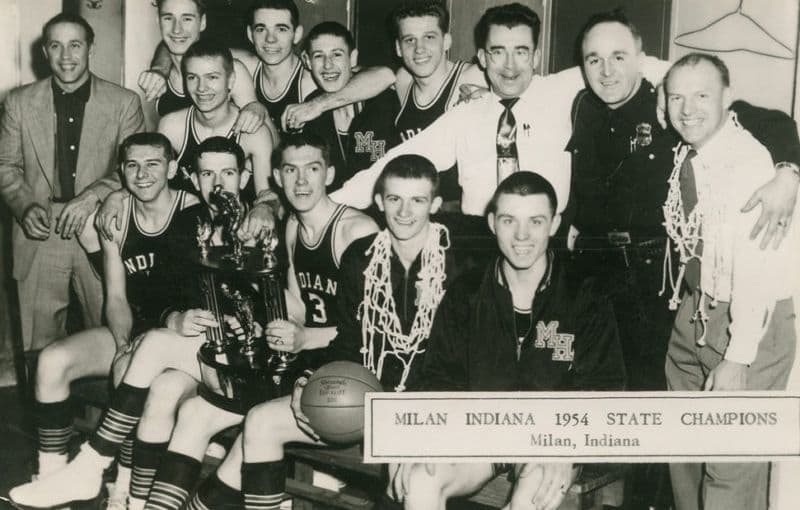
Milan High School’s 32-30 victory over Muncie Central on March 20, 1954 still looks like the cleanest definition of Indiana basketball drama. A school with 161 students beat a program of 1,662 before about 15,000 fans at Butler Fieldhouse, now Hinkle Fieldhouse, and Bobby Plump finished it with a jump shot and three seconds left.
The night that built the legend
The final stretch is the part that keeps getting replayed because it was as strategic as it was shocking. The Indiana Historical Society says Plump controlled the ball for 4 minutes and 15 seconds in the fourth quarter, a deliberate stall that protected Milan’s lead while the crowd packed Butler Fieldhouse and waited for someone to break the tension. The Indiana High School Athletic Association’s archive account preserves the finish in plain terms: Plump drove home the winning jump shot, and the scoreboard stopped at 32-30.
The size gap made the result feel impossible even by tournament standards. Milan’s 161 students were up against Muncie Central’s 1,662, and the Indiana Historical Bureau’s marker on the game notes that the Indians beat a then four-time state champion that was ten times their size. That combination of scale, stakes, and timing is why the game never turned into a simple upset story. It became the standard by which Indiana measures belief.
Why the Milan Miracle still lands in 2026
The Milan Miracle endures because it still tells Indiana something about itself. Before class basketball, schools of every size played for the same state title, so one run could carry a town farther than enrollment, population, or budget ever should. Milan proved that a small-school team could not only compete in the same bracket, but win the whole thing and hold off a heavyweight in the final seconds.
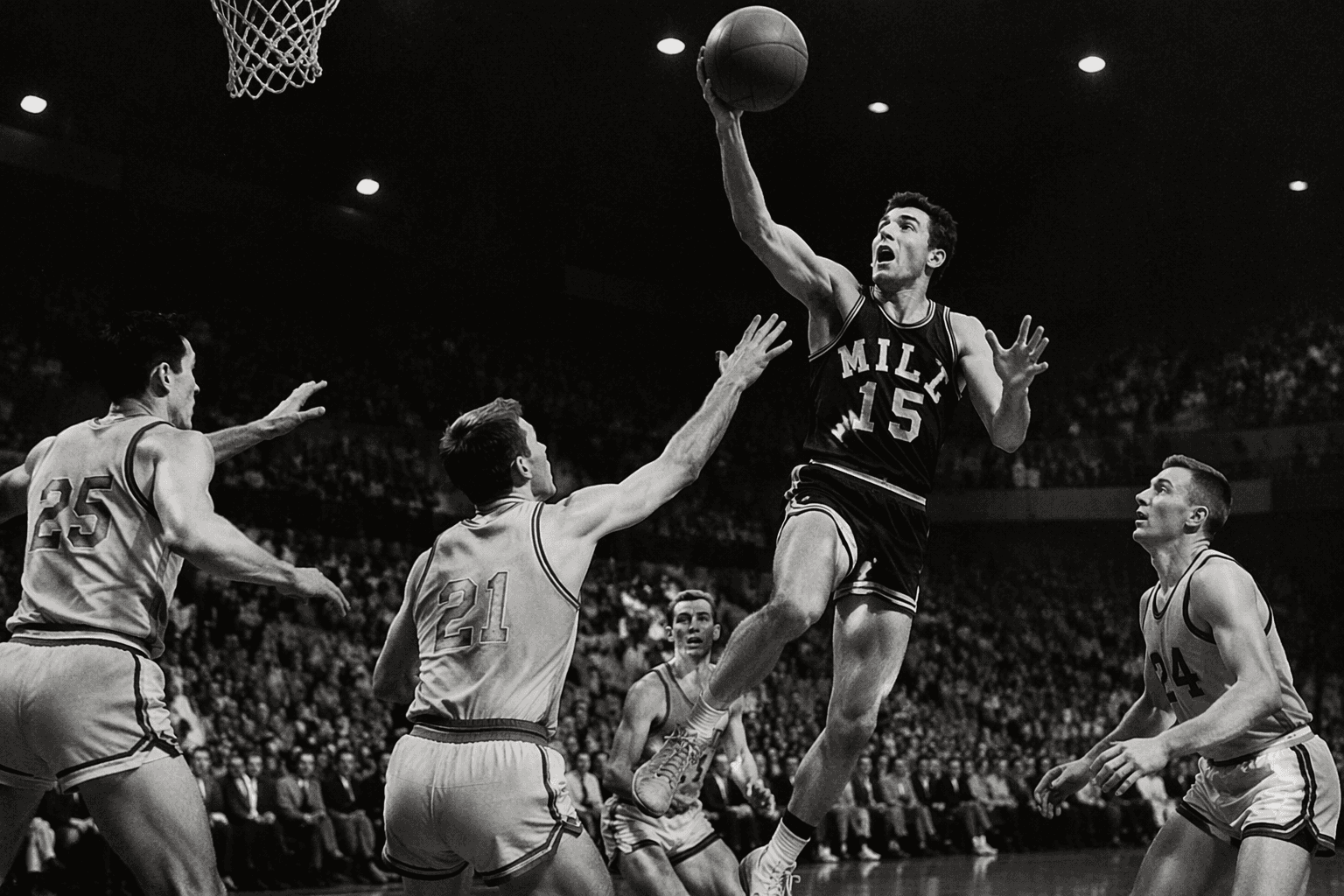
That is why the upset still matters in today’s class-basketball era. The structure is different now, but the emotional logic has not changed: small-town gyms still fill with the belief that one team, one weekend, and one postseason push can reset how a community sees itself. Milan’s title gave that idea a permanent address.
The 1954 Indians finished the season 28-2, which matters because the title did not come from a fluke night alone. It came from a team that held up across an entire season, then survived the last possession against a larger, more established program. That is the part Indiana keeps returning to, because it connects the romance of the underdog to the discipline that made the run possible.
The institutions that keep the story alive
Milan did not leave the story to memory alone. The Milan 1954 Museum exists to preserve the artifacts and memorabilia of that team, and its history page says local leaders created the museum effort specifically to house the 1954 Indians’ keepsakes. That gives the Miracle a physical home, with objects and photos that keep the upset from floating away into legend.
The Indiana Historical Bureau’s marker frames the game as the pinnacle of “Hoosier Hysteria,” which is exactly how the state still talks about the bond between basketball and identity. The marker’s language matters because it puts the result in the middle of Indiana’s wider sports culture, not just Milan’s town history. The game is not treated as a local footnote. It is presented as a landmark in how the state understands itself.
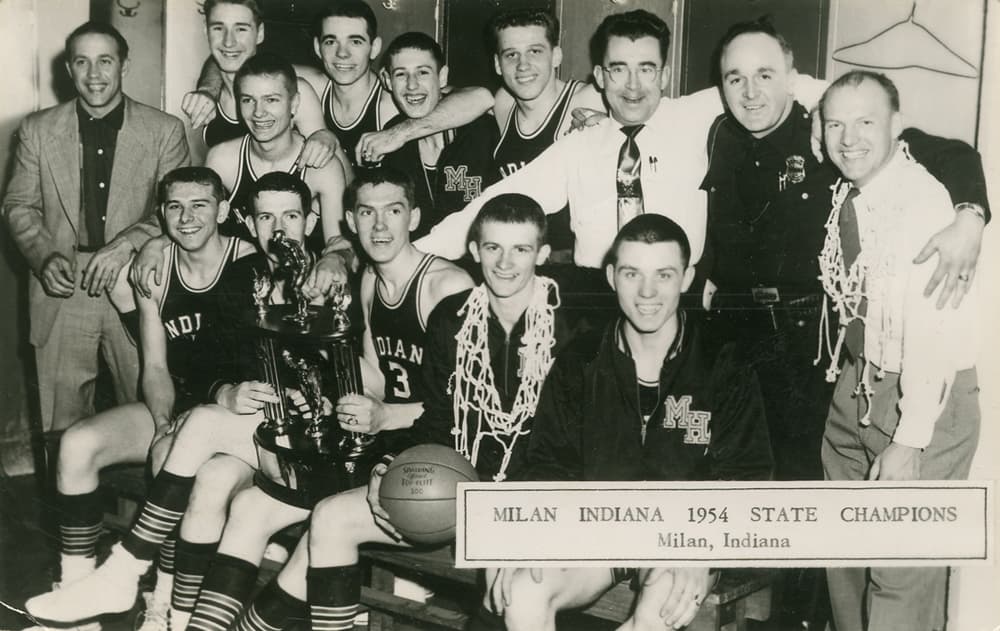
That preservation work also explains why the story continues to travel. The museum, the marker, and the archival record keep the details consistent: the 161-student school, the 1,662-student opponent, the 15,000 fans, the final three seconds, and the 32-30 finish. Those facts give the mythology something solid to stand on.
How the upset moved beyond Milan
The 1954 championship became bigger than one town almost immediately. The next-day homecoming reportedly drew massive crowds along the roads back to Milan, a public celebration that turned a state title into a community event with its own spectacle. In Indiana, that kind of return matters almost as much as the trophy itself, because the town gets to live inside the win for a little longer.
The game also escaped into national memory through the 1986 film Hoosiers, which drew its emotional core from the Milan victory. That helped turn Bobby Plump’s shot and the 4:15 stall into part of a broader American sports vocabulary, but the film did not replace the real game. It amplified it, and the original still carries the sharper details: the crowd, the size mismatch, the fieldhouse, and the last shot.
That is why Milan still defines Indiana high school basketball lore. It is not just a pleasant memory from a colder, simpler era. It is the clearest proof that in Indiana, a small school can still force the whole state to stop and watch, and sometimes the last shot belongs to the smallest team in the building.
This article was produced by Prism’s automated news system from verified source data, official records, and press releases, then run through automated quality and moderation checks before publishing. The system is built and supervised by the people who set the standards it runs under. Read our full AI policy.
Know something we missed? Have a correction or additional information?
Submit a Tip