Wingate’s tiny school, huge journey to back-to-back Indiana titles
Wingate built back-to-back state titles without a gym, turning basement practices and six-mile road trips into a blueprint for Indiana basketball’s small-school rise.
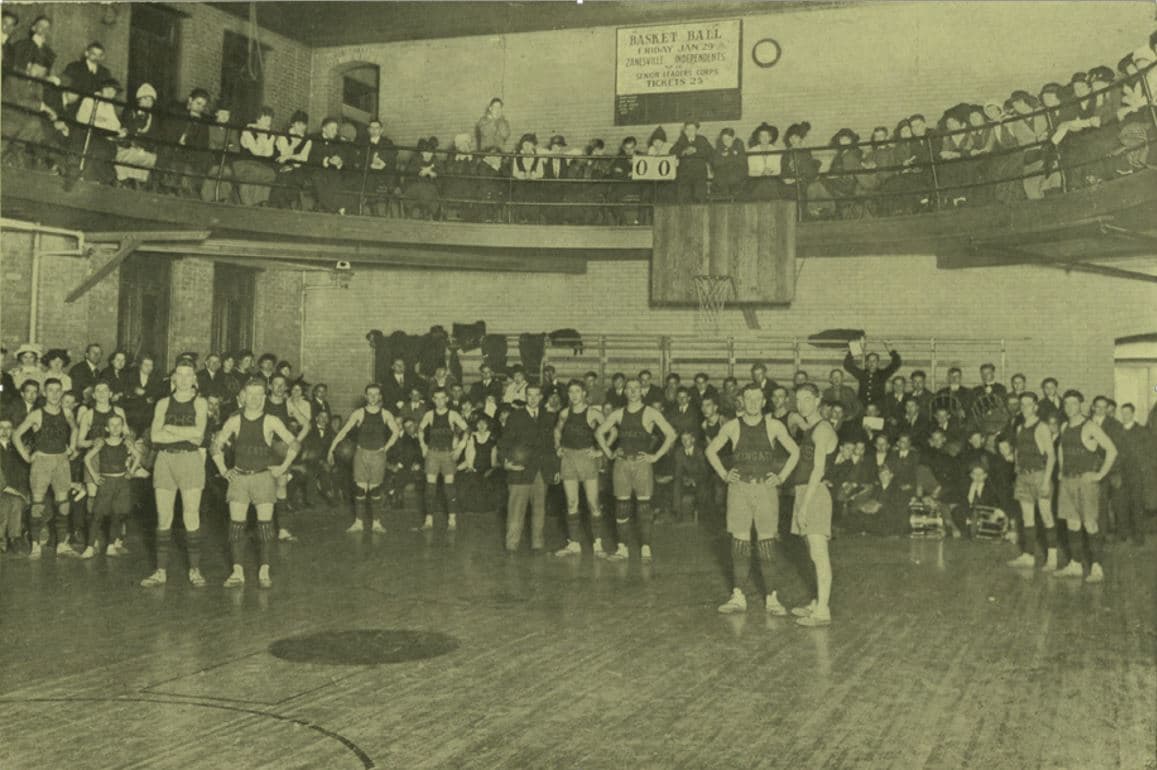
Wingate did not need a gymnasium to build a championship program. It had 446 people in town in 1910, a high school of 67 students, and only 22 boys in the building, yet Jesse Wood turned that tiny talent pool into consecutive state champions in 1913 and 1914. That is not just an underdog story. It is one of the clearest early proof points that Indiana basketball became a statewide obsession because small schools learned how to outwork bigger circumstances.
The place, the numbers, and the problem Wingate solved
Wingate’s edge started with discipline, not convenience. The school had no gym of its own, so practices took place in a small room in the southwest corner of the basement or outside when the weather cooperated. When the team needed real court space, it traveled six miles to New Richmond twice a week, and that same gym served as Wingate’s home court for games. In modern terms, that is a program built on logistics as much as talent.
The mileage tells you how much of early Indiana basketball was an endurance test. Wingate logged 576 miles in the 1912-13 season and 1,675 miles in 1913-14, with most of that travel done by train and interurban. That kind of schedule did not just demand stamina. It forced a team to become comfortable with discomfort, which is exactly what championship teams often look like before anyone else notices they are championship teams.
Jesse Wood made the schedule harder on purpose
Wood, a former player at Indiana State Normal, did not treat local small-school opponents as the standard. He raised the level of competition by scheduling stronger teams, including recent state champions Crawfordsville and Lebanon. That matters because Wingate’s titles were not built in a closed loop against familiar neighbors. They were forged against teams that knew how to win, which is the fastest way to expose whether a program is real.
His best move was recognizing that one of Wingate’s central players did not need years of reputation to matter. Wood built around Homer Stonebraker, a lanky sophomore who had not previously played basketball. In a state where so much early success depended on speed of development, that is the sort of coaching decision that separates a good local team from a title team. Wood was not just teaching plays. He was building a program that could identify a raw player, trust him, and get him ready before the rest of the state caught up.
What the back-to-back titles actually say about Indiana
Wingate’s 1913 and 1914 championships say something bigger than one school’s run. They show that Indiana’s early basketball culture was not only a big-town story, and it was not defined solely by established powers. A tiny school with no gym, limited enrollment, and a practice setup that sounds improvised even by early 20th-century standards still found a way to become the best team in the state twice in a row.
That is why Wingate belongs in the center of Indiana basketball history. The state’s obsession with the game grew out of programs that made hard things normal: long trips for practice, borrowed facilities, and schedules that forced teams to prove themselves far from home. Wingate did all of that before the better-known myths of Indiana basketball were fully written, which means the state’s early identity was already taking shape in places most people would never have called a basketball hotbed.
Travel was the hidden curriculum
Wingate’s six-mile trips to New Richmond were more than a commute. They were part of the program’s DNA. Twice a week, the team had to leave town just to get inside a gym, and that routine turned transportation into part of training. By the time the season demanded nearly 1,700 miles in 1913-14, the players had already learned that effort off the court was inseparable from performance on it.
That travel also helps explain how early teams were formed in Indiana. They were not built through convenience or abundance. They were built through persistence, local backing, and a willingness to organize around basketball even when the infrastructure was missing. In Wingate’s case, the community made that possible by supporting a team that had no home gym but still had a home identity.
Why Wingate still matters in the state’s basketball memory
Milan’s later run became the most famous small-school miracle in Indiana, but Milan did not invent the template. Wingate was there first, beating the odds with a smaller enrollment, tougher travel, and a coach who understood that ambition had to be scheduled, practiced, and repeated. That makes Wingate more than a charming prelude to a better-known story. It is part of the foundation.
The deeper lesson is simple: Indiana’s early game belonged to the schools that were willing to improvise without lowering the standard. Wingate practiced in a basement corner, rode trains and interurban lines, borrowed a gym in New Richmond, challenged stronger opponents, and still won back-to-back titles. That is not a footnote to the state’s basketball history. It is one of its clearest original chapters.
This article was produced by Prism’s automated news system from verified source data, official records, and press releases, then run through automated quality and moderation checks before publishing. The system is built and supervised by the people who set the standards it runs under. Read our full AI policy.
Did this article answer your question?