Horse Country welcomes half a million visitors, reshaping racing's image
Horse Country has pulled nearly 500,000 guests into Kentucky’s Thoroughbred world, and Hallie Hardy’s numbers show how farm tours can turn curiosity into racing interest.
Horse Country has done the part of racing's job that the track cannot do alone: it gets people close enough to the horse that the sport starts to make sense. Under Hallie Hardy, the nonprofit says it has welcomed nearly 500,000 guests, and the real story is not just the total. It is how a farm tour, a vet stop or a stallion visit can turn a casual day trip into a lasting connection with Thoroughbred racing.
From a public-relations problem to a front-door solution
Horse Country was created in 2015, but its roots go back further than that. A 2011 Jockey Club McKinsey Report raised concerns about racing’s public perception, and in 2013 a group of Kentucky leaders known as the Mule Team, Brutus Clay, Headley Bell, Price Bell and Dr. Luke Fallon, brought in Disney Institute consultants to help shape the concept. The result was a not-for-profit built to connect people to horses through behind-the-scenes tours at farms and other equine facilities in Kentucky, with a mission centered on the horse, the land and the people who make the industry work.
The timing mattered. Horse Country opened its first tours during the inaugural Breeders’ Cup at Keeneland, and in its first five months it sold 10,000 tickets. The early footprint was already broader than a simple barn tour, with a dozen farms, two veterinary clinics and a feed company opening their doors to the public. That was the first clue that the pitch was not just access, it was context.
Hallie Hardy’s job is conversion, not ceremony
Hardy is in her fifth year as executive director, and she fits the role because she understands both the region and the emotional pull of horses. Her background in Central Kentucky and her lifelong attraction to the animals give her a translator’s job: turn the hidden side of the industry into something a first-time visitor can read. That is the challenge racing keeps running into, because most people do not arrive through wagering, television or form cycles. They come through family visits, curiosity and the simple force of being around horses.
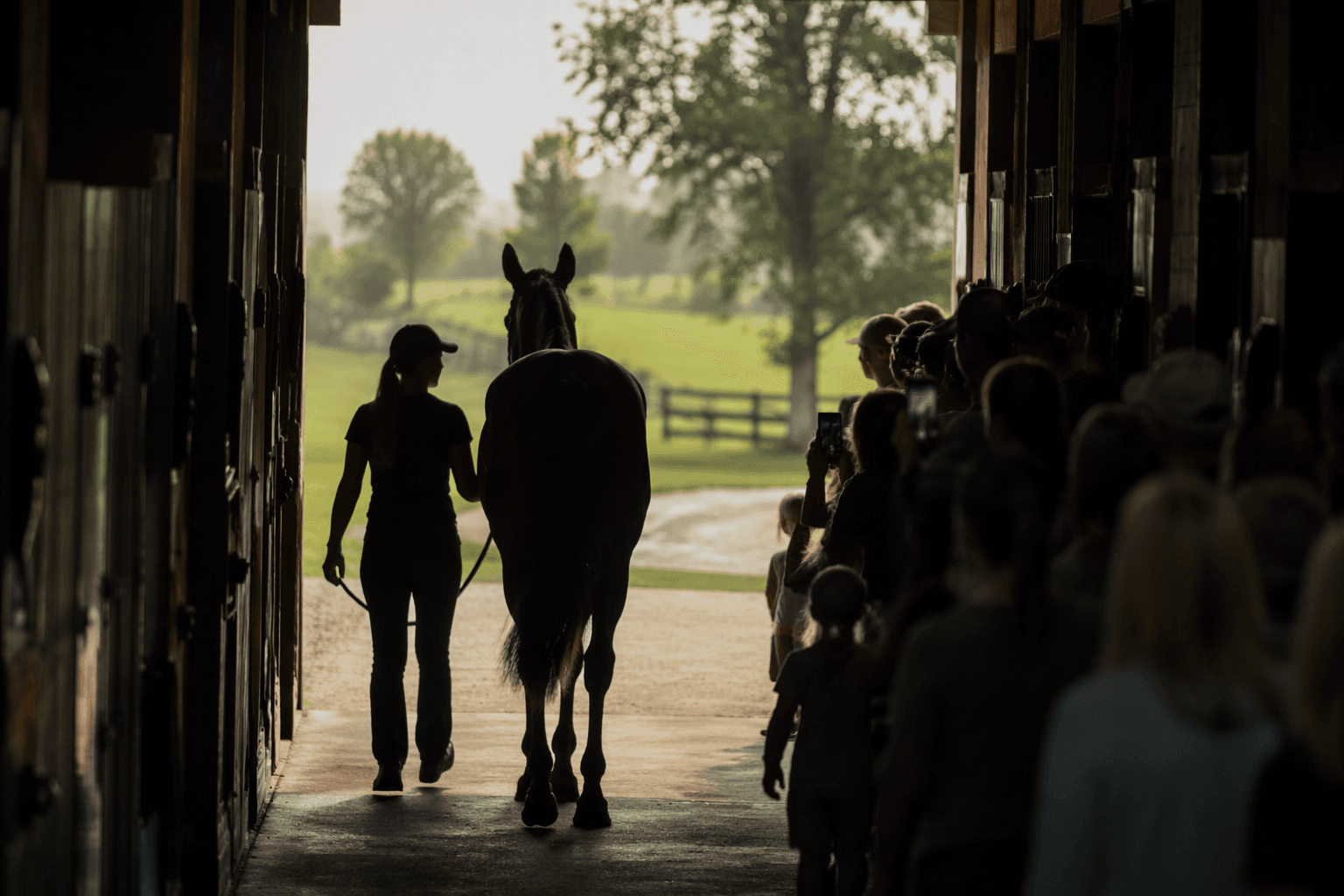
The data backs up that idea. Horse Country says 70% of its visitors have limited or no prior knowledge of Thoroughbred racing, while 84% are first-time visitors and 16% are repeat guests. The organization’s guest surveys show an average net promoter score of 91, which is a loud signal that the experience is not just pleasant, it is persuasive. If racing wants more than nostalgia, that is the metric that matters: whether a first visit changes how a person sees the sport.
Hardy has also said the reaction is often immediate. Visitors show up with a narrow view of the industry, then leave with a much more positive understanding after seeing the care, labor and attention that go into breeding and raising Thoroughbreds. That is not a sentimental claim. It is the conversion point Horse Country is built around.
The network is bigger than the farms on a postcard
The scale of the membership is part of the story. Horse Country’s roster runs through some of the most recognizable names in Kentucky racing and breeding, including Airdrie Stud, Claiborne Farm, Gainesway, Lane’s End, Spendthrift Farm, Three Chimneys, WinStar Farm and Godolphin’s Jonabell. It also includes equine medical and aftercare partners such as Hagyard Equine Medical Institute, Rood and Riddle Equine Hospital, Keeneland, The Jockey Club, Taylor Made Farm and Second Stride.
That matters because the tours are not selling a fantasy version of the sport. They show the infrastructure behind it, from breeding sheds and stallion barns to veterinary care and aftercare connections. Horse Country says its itineraries now include stallion visits, aftercare experiences and racing lifestyle offerings, which broadens the product beyond a racetrack ticket and gives visitors a better sense of how much of Kentucky’s economy sits behind each runner.
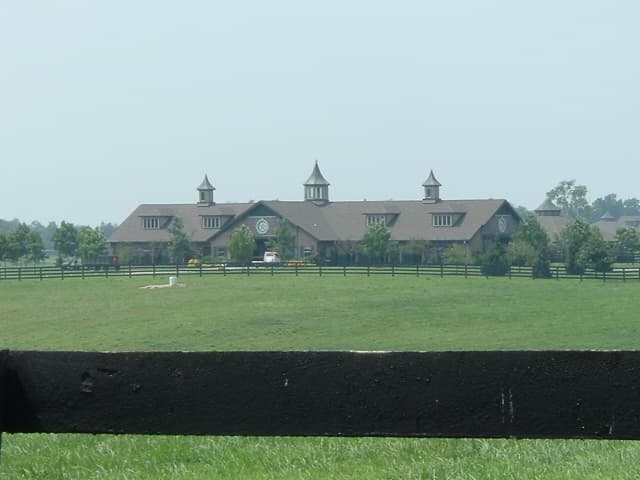
This is where the organization quietly outperforms a lot of racing’s public messaging. The sport often tries to persuade from the grandstand out. Horse Country starts at the ground level, where the horses live and the industry actually operates.
The visitor numbers show real momentum
The growth line is hard to miss. By 2025, Horse Country said it had welcomed nearly 500,000 guests. Hardy said the organization was on track for similar 2025 numbers to 2024, after 2024 locations hosted more than 42,000 guests across 28 locations, a 12% increase from 2023. Over 6,000 students toured last year, which gives the whole enterprise a longer horizon than one-off tourism.
There is also a sharper recent trend line. In a 2024 Thoroughbred Daily News feature, Hardy said Horse Country had grown by about 40% from 2022 to 2023 and had “absolutely blossomed” since COVID. That kind of momentum matters because racing is not just trying to fill a weekend calendar. It is trying to build a pipeline, the kind that turns a family outing into an ownership curiosity, a clinic visit into a fan, and a fan into someone who understands why a stakes schedule exists in the first place.
Horse Country is not pretending to replace the racetrack. It is doing something more basic and, in some ways, more valuable: making the sport legible. In an industry that lives and dies on purses, handles and the next stakes day, that may be the most durable investment of all.
This article was produced by Prism’s automated news system from verified source data, official records, and press releases, then run through automated quality and moderation checks before publishing. The system is built and supervised by the people who set the standards it runs under. Read our full AI policy.
Know something we missed? Have a correction or additional information?
Submit a Tip