Britt Hertz tests gymnastics skills in parkour challenge videos
Britt Hertz’s latest parkour clip shows where gymnastics helps and where it stops, with route reading and improvisation turning the first surprise into the real test.
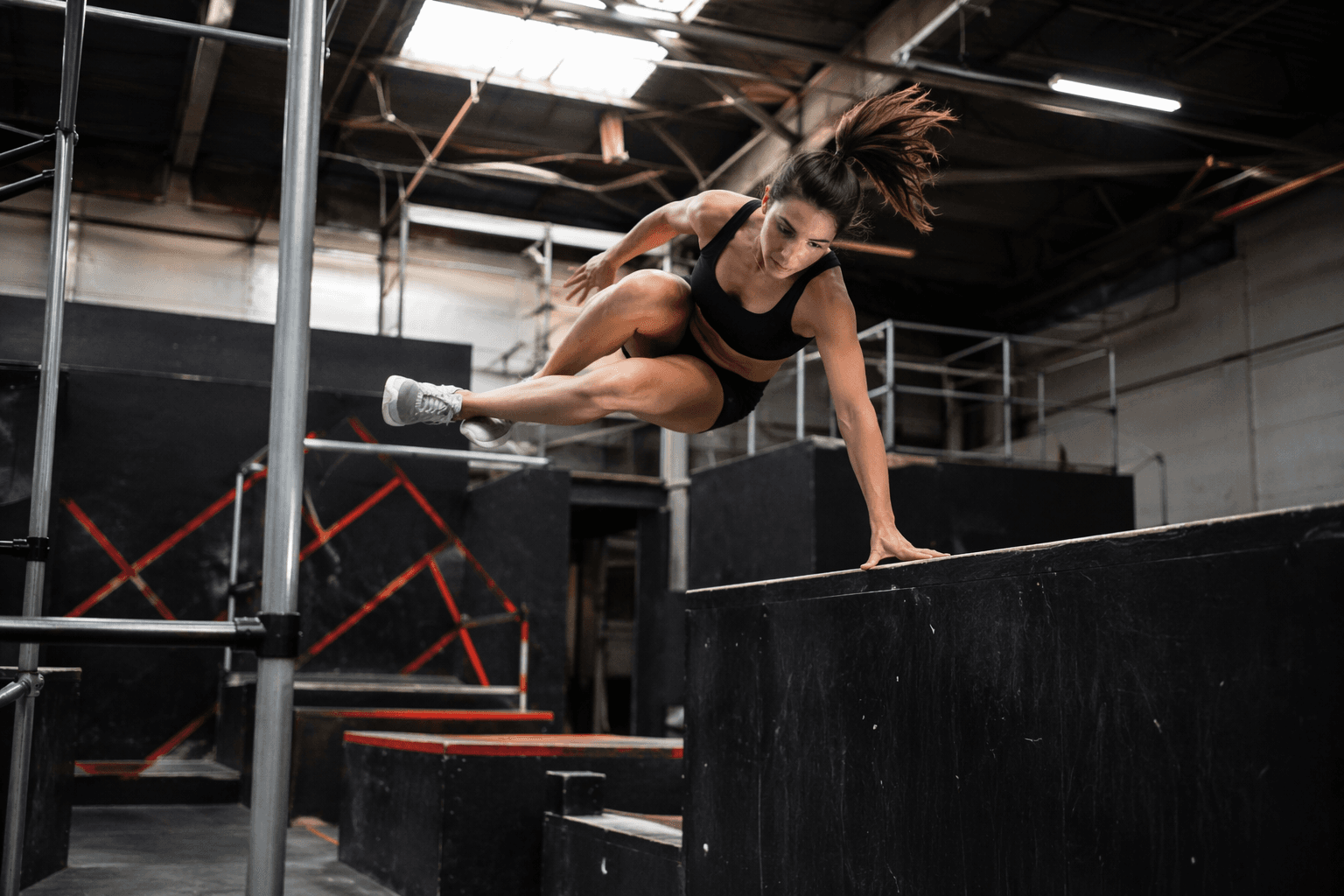
Britt Hertz hit the first clear wall in her latest parkour challenge as soon as the movement stopped looking like a gym routine and started demanding a route choice. In the June 29 clip, she pushed into urban agility against rails, gaps, and unfamiliar flow patterns, and the surprise was immediate: gymnastics gave her precision, timing, and body control, but parkour asked for something else.
That difference is the point of the video. Hertz’s background clearly helps with spatial awareness, upside-down comfort, and landing mechanics, all skills that matter when the body is moving fast through space. But parkour is built around reading an environment in real time, connecting obstacles that were never designed as sport, and committing to lines that can change with one bad takeoff or one hesitant landing. The clip makes that contrast visible without a scoreboard: Hertz is not chasing points, she is trying to solve the space in front of her.
The June 29 video followed an earlier mid-June installment that framed the same question more directly, asking whether her gymnastics skills could translate to parkour obstacles. That crossover works because it is not just a stunt reel. It shows how much of elite movement is transferable, and how much parkour still depends on adaptation in uncontrolled spaces. A gymnast can enter the setting with strong fundamentals and still get checked by the lack of a fixed floor, fixed apparatus, or predetermined routine.
That matters now because parkour has moved well beyond internet-adjacent challenge content. The International Gymnastics Federation approved development of parkour in February 2017, now recognizes it inside its discipline structure, and runs Parkour World Cup events under official rules. FIG listed a World Cup in Istanbul from June 4 to June 7 and another in Montpellier from May 14 to May 17, while USA Gymnastics also includes parkour in its official programming and news coverage.
The sport’s roots make Hertz’s test even more telling. Parkour traces back to Georges Hébert’s early-1900s natural method and the French military obstacle-course tradition, both of which emphasized usefulness, climbing, running, swimming, and obstacle work over polished repetition. That history still lives in the modern sport, where adaptability is the prize.
The risk profile helps explain why the crossover draws attention. One peer-reviewed study cited in parkour research reported a 61.5% injury prevalence among surveyed practitioners, while a U.S. youth gymnastics study estimated 72,542 gymnastics-related emergency department injuries per year. Hertz’s videos sit between those two worlds: the controlled mechanics of gymnastics and the open-ended judgment of parkour. The result is a cleaner argument for the sport than any novelty clip could make on its own.
This article was produced by Prism’s automated news system from verified source data, official records, and press releases, then run through automated quality and moderation checks before publishing. The system is built and supervised by the people who set the standards it runs under. Read our full AI policy.
Did this article answer your question?