FIG parkour program focuses on safe long-term athlete development
FIG's parkour pathway is built on progressions, landing mechanics, and long-term safety, not reckless showmanship.
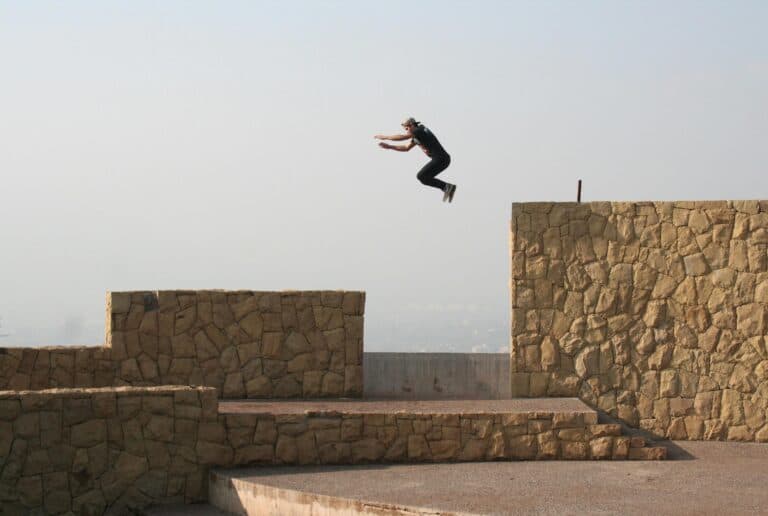
Parkour looks explosive from the outside, but the sport’s formal development model is built on control. FIG’s Age Group Programme, introduced in 2011 with partial IOC support, was designed to give coaches a structured route for physical and technical training, with gradual progressions and standardized programs that support long-term athlete development. That is the core myth to bust: the modern pathway is not about throwing athletes at walls and hoping they survive. It is about building durable movement skills step by step.
A sport built on progression, not bravado
The parkour age-group manual makes the structure explicit. It describes a multi-level competition program, plus a multi-level education and testing system for physical and technical skills. The same FIG material says the program was created as an effective framework for the safe and healthy long-term development of athletes, and it was prepared with Hardy Fink among the key editors while Morinari Watanabe backed the project as FIG president. In other words, the sport’s governance is no longer improvising around isolated tricks; it is trying to turn movement into a teachable, measurable pathway.
That matters because FIG’s broader age-group philosophy, shaped in gymnastics under figures such as Bruno Grandi, was built as a response to scrutiny from medical, educational, and media professionals. The complaint is familiar across gymnastics-style sports: too many training hours, too little development time, and young athletes pushed into high-intensity work before their bodies are ready. FIG’s own age-group language answers that criticism directly by stressing safe, optimal long-term development through gradual and safe progressions, not early specialization for its own sake.
What beginner parkour actually looks like
The best evidence that parkour is coached safely is in the first moves. BBC News coverage broke the discipline down into basic actions such as the Tic Tac, Cat Leap and Landing Roll, showing that the entry point is not a rooftop leap but a series of controlled body positions and impact-management skills. The Landing Roll is especially telling: the athlete bends the knees, rolls through the shoulder, and uses the hands and a foot to return to movement. That is not spectacle first. It is mechanics first.
The early BBC guidance also gave straightforward safety advice that still reads like a coaching checklist: do not start with high walls, practice daily, train in groups, and do not let dares push the session beyond the athlete’s ability. Hugh Schofield’s 2002 BBC feature in Paris framed Le Parkour as an urban discipline rooted in self-definition and movement, while David Belle, credited as the sport’s founder, described the built environment as a place to move through with purpose. Zoe Murphy’s later BBC coverage in London kept that balance between daring and discipline, showing the sport as something more considered than a pile of risky stunts.

For parents and coaches, the practical lesson is clear. A sound parkour curriculum starts with movement literacy: balance, controlled takeoffs, safe landings, obstacle spacing, and the ability to stop or redirect a line before fatigue turns into poor judgment. Once those foundations are reliable, athletes can add wall contact, precision jumps, vaults, and flow between obstacles. FIG’s multi-level testing model exists to make that sequence visible instead of leaving it to guesswork.
From French streets to international governance
Parkour’s culture grew in France before it found formal sport structures. BBC reporting from Paris tied the movement to David Belle and the Paris suburbs, while noting that the 2002 BBC trailer Rush Hour helped bring the sport to a wider international audience. That early media exposure mattered commercially as well as culturally: it turned an underground practice into a recognizable global brand, but it also fed the copycat-stunt problem that FIG’s safety-first language now tries to counter.
The leap from subculture to governing framework came in February 2017, when FIG approved parkour’s development as a new sport. The first FIG Parkour World Cup series launched in 2018 in partnership with FISE, with events on the World Action Sports Festival circuit in Hiroshima and Montpellier. The first FIG Parkour World Championships were originally planned for 2020, then delayed by COVID-19, and ultimately staged in Tokyo in 2022. That timeline shows how quickly the discipline moved from street identity to calendar, ranking systems, and world championships.
Why the safety message is part of parkour’s future
Parkour’s public image still leans heavily on spectacle, but the governing reality is much more methodical. FIG’s age-group structure, the parkour manual’s testing system, and the BBC’s early beginner advice all point in the same direction: the sport advances best when athletes learn to absorb force, manage risk, and repeat clean movement under pressure. The athletes who last are usually the ones who master the quiet work first, then earn the harder lines later.
This article was produced by Prism’s automated news system from verified source data, official records, and press releases, then run through automated quality and moderation checks before publishing. The system is built and supervised by the people who set the standards it runs under. Read our full AI policy.
Did this article answer your question?