Parkour competitions grow from local meets to global championships
Parkour now climbs from local jams to streamed world championships. Qualifiers, national titles, and senior speed and freestyle decide who reaches the top.
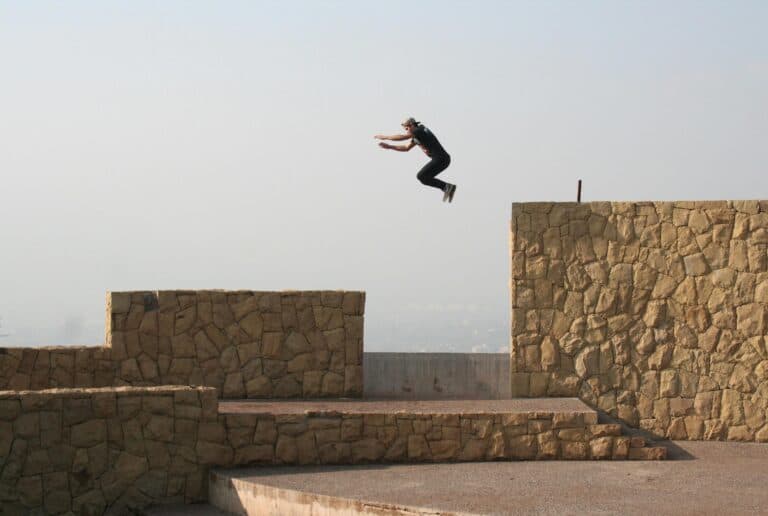
The 2026 U.S. National Parkour Championships were livestreamed in partnership with the United States Parkour Association and Sport Parkour League. Parkour now has a visible ladder, with local meets feeding regional qualifiers, national titles, and international finals that are far easier for fans to track than they were a decade ago.
The ladder starts at the local level
Parkour’s competition scene has moved well beyond its roots as a loose practice on streets, walls, and playgrounds. The International Parkour Federation’s mission includes supporting worldwide and local competitive and non-competitive events while also helping create affiliated national governing bodies.
Instead of one rigid pipeline, the sport has built a layered path in which local meets identify talent, give athletes experience under pressure, and connect them to a wider competitive scene.
Sport Parkour League wants a standardized format and season of events around the world. In North America, its championships use local and regional qualifier events that end in a final in Vancouver, British Columbia, giving athletes a clear route from early rounds to a marquee stage.
How athletes move up
The path upward is now concrete enough that fans can follow it like a season. A strong showing at a local or regional event can move an athlete into bigger sanctioned competition, while prior results can matter as much as a one-day breakout.
- Local meets are where athletes first prove they can handle a course cleanly and under pressure.
- Regional qualifiers separate the regular contenders from the athletes who can repeat those performances.
- Elite sanctioned events and prior championship placement now open the door to the 2026 SPL 5 Parkour World Championships, and on-site qualifiers have been removed from that system.
In the 2026 Sport Parkour League setup, athletes qualify for SPL 5 through victory at elite sanctioned events or through placement from SPL4, which rewards a sustained record rather than a single flash of form.
What the world stage looks like now
The international version of parkour started moving into formal sport territory when the FIG Executive Committee gave the green light in February 2017 to develop parkour as a new sport. Five years later, the first FIG Parkour World Championships were held in Tokyo from October 14 to 16, 2022.
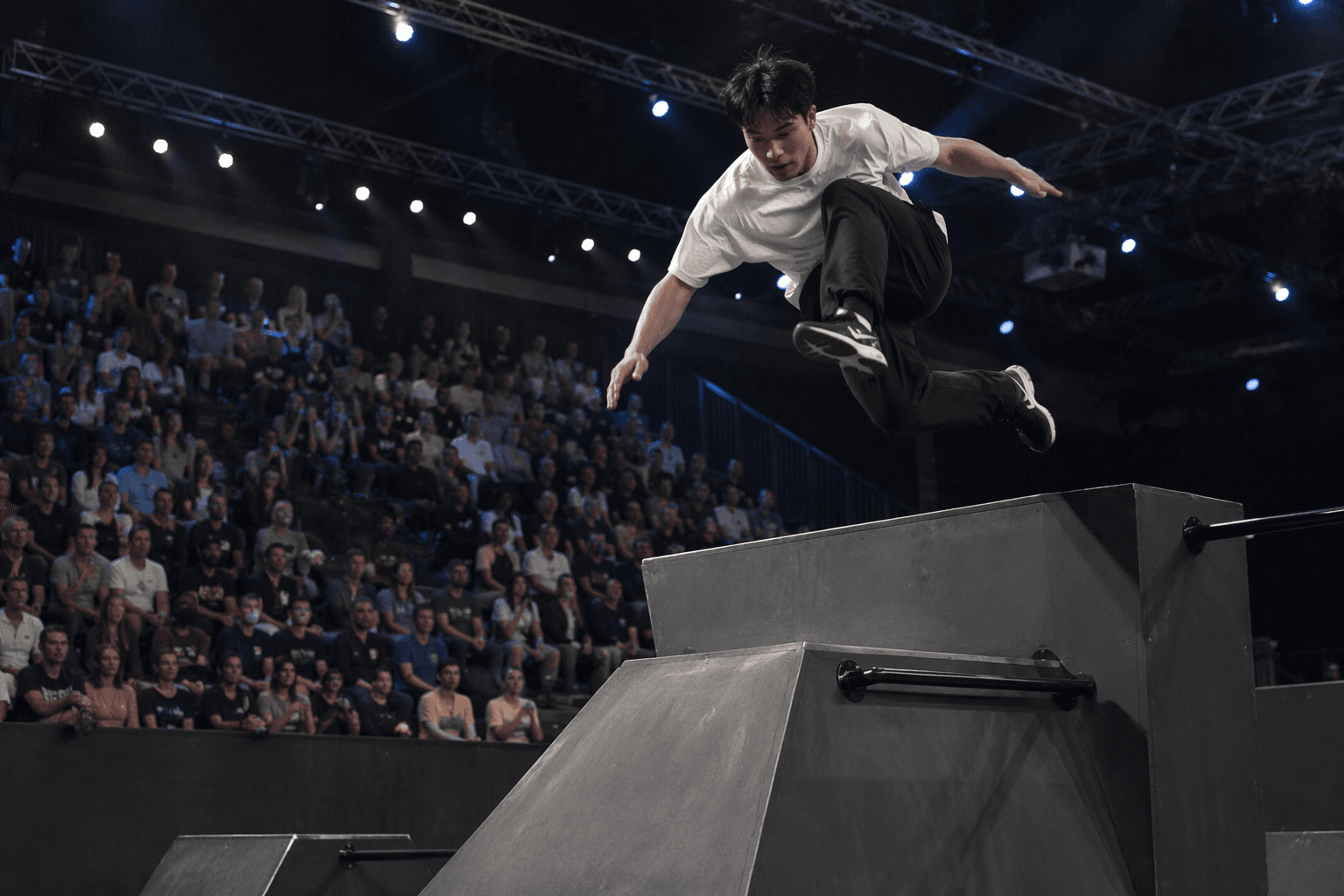
The second FIG Parkour World Championships took place in Kitakyushu, Japan, from November 15 to 17, 2024, and that event added the first-ever FIG Parkour Junior World Championships.
FIG’s 2024 championships were organized in senior speed and freestyle. Speed rewards precision and efficiency on the clock, while freestyle highlights control, creativity, and the ability to make difficult movement look decisive under pressure.
Why fans can follow it better now
Parkour’s rise in public view was fueled long before formal championships arrived. Movies, documentaries, YouTube, advertising, and video games all helped turn a once-subcultural practice into something broad audiences could recognize, and the Ultimate Parkour Challenge accelerated that shift with a major television audience.
MTV’s Ultimate Parkour Challenge aired in 2009 and 2010. The World Freerunning Parkour Federation puts the viewing audience at 3.5 million people. The series premiered on October 22, 2009, and a six-episode version began airing on May 6, 2010; the first three episodes were broadcast live.
Countless competitions are streamed live on the internet, so fans do not have to wait for highlight clips or rely on local scene knowledge to understand who is climbing the ladder.
Why the governance fight matters
Parkour is still in the middle of defining who gets to shape its future. The International Parkour Federation, incorporated in 2014, calls itself a world governing body built to empower local leaders, while FIG treats its own involvement as part of a formal recognition process and several national gymnastics federations already offer parkour activities.
Different institutions are trying to define how parkour should be organized, recognized, and presented, and that affects everything from junior pathways to world championship branding.
This article was produced by Prism’s automated news system from verified source data, official records, and press releases, then run through automated quality and moderation checks before publishing. The system is built and supervised by the people who set the standards it runs under. Read our full AI policy.
Did this article answer your question?