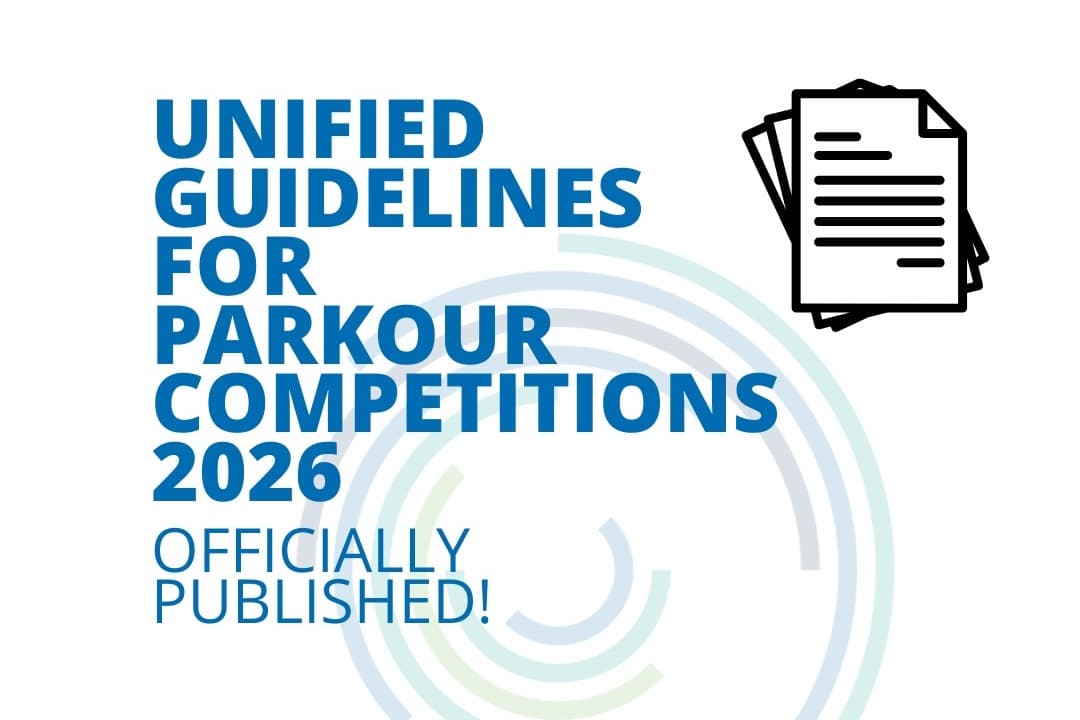
Parkour Earth circulates unified 2026 competition guidelines
Parkour Earth’s new 32-page framework tries to settle parkour’s biggest fight: what judges should reward, and how to make that call consistently.
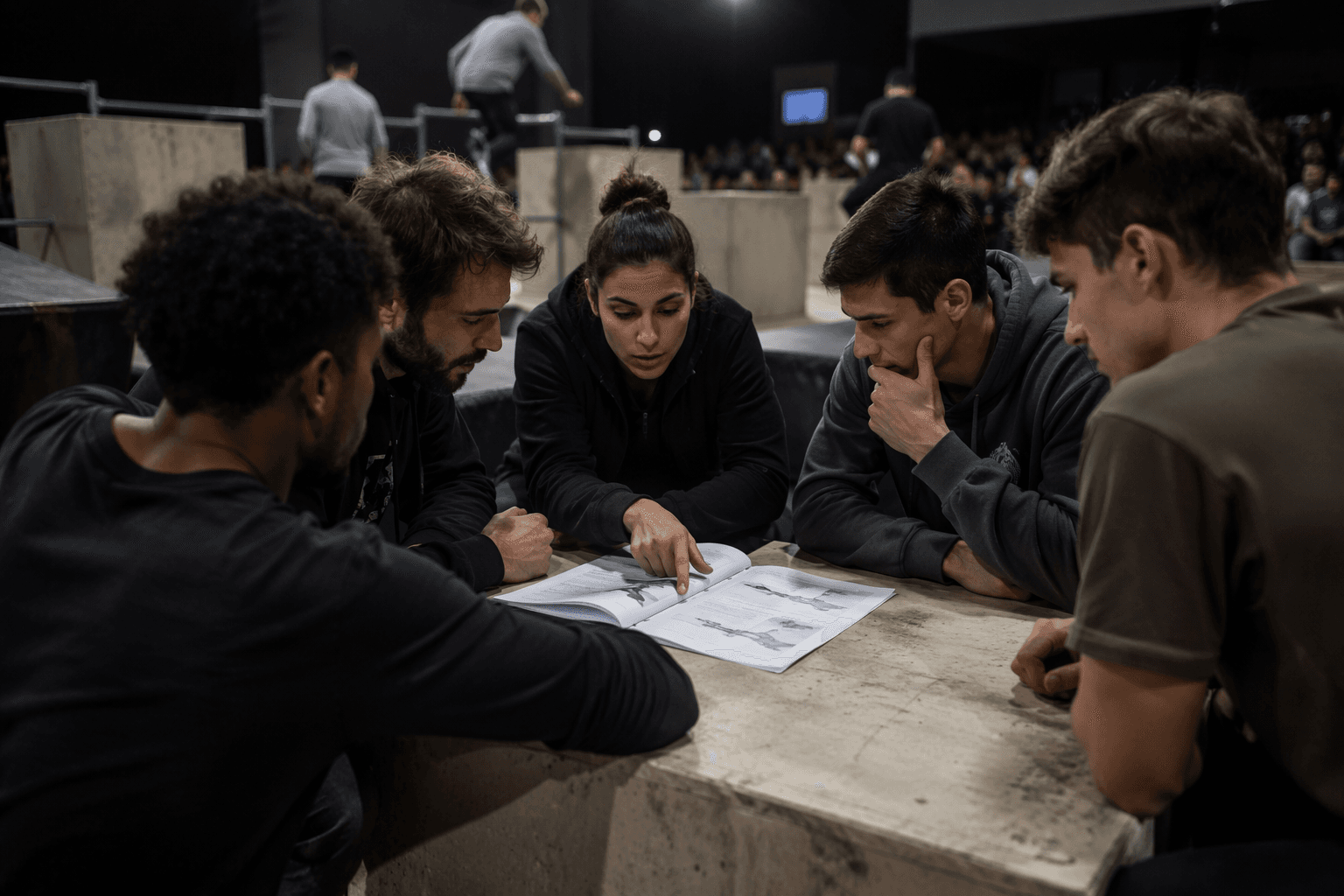
Parkour Earth is trying to settle the sport’s loudest argument with a 32-page answer. The new Unified Guidelines for Parkour Competitions 2026 pull Speed, Skill and Style into one shared framework, with judges, organisers and federations all expected to work from the same playbook. That matters because parkour has grown into a sport where results, not just runs, need to travel cleanly across cities, countries and qualification pathways.
What the framework is trying to standardize
The document is not just a rule sheet. Parkour Earth says it sets out clear competition structures, a unified judging system, safety and equipment standards, age categories and organizational best practices, while Parkour UK describes it as a shared international framework that also covers landing standards, course design principles and practical guidance for organisers. Put simply, it is designed to tell a competition what to value, how to build the course and how to explain the score.
The deeper fight is over what good competitive parkour should reward. Speed asks athletes to move fast through a course without losing control. Skill and Style pull in the direction of technical execution, movement quality and presentation, which means the guidelines are not just about timing or obstacle clearance, but about how a run is interpreted. A unified judging system gives those categories a common language, which is the difference between a sport that can compare performances across federations and one that leaves every event feeling like its own universe.
Parkour Earth is also careful not to freeze the sport in place. Parkour UK says the guidelines are a living document that evolves yearly with community feedback, and that choice is telling. Parkour needs enough consistency for athletes, judges and organisers to trust the result, but enough flexibility to keep pace with a discipline built on creativity, local scene culture and constant adaptation. That balance is the real governance test behind the new framework.
Why organisers will feel the change first
For course builders, the practical effect is immediate. If the guidelines are followed closely, course design becomes less improvisational and more transparent, with safety standards and equipment expectations set before the first athlete steps onto the floor. That should help smaller gyms, federations and community groups that want to host events but do not yet have a deep institutional playbook.
The availability of the document for individuals and organisers matters for the same reason. A downloadable framework lowers the barrier to entry, especially in a sport where local scenes often grow from volunteer energy rather than from a permanent bureaucracy. It also gives organisers a cleaner way to explain why a course looks the way it does, why a landing is judged the way it is and how an athlete’s run is meant to be read.
Age categories and organisational best practices add another layer of standardization. Those details are less glamorous than a final-round run, but they are often what make a competition credible when different federations or host venues are trying to compare results. In a sport still building its formal infrastructure, the strongest signal is not a flashy slogan but a system that judges, coaches and athletes can recognize from one event to the next.
Brno turns the framework into a pathway
The timing matters because Parkour Earth’s first World Championships are set for Brno, Czech Republic, from October 28 to November 1, 2026. The championship will feature Speed, Skill and Style, and Parkour Earth says athletes can qualify through national federations, international qualifying events, wild card video submissions and the Skill Takeover route. That multi-pathway model only works if the underlying competition language is consistent enough for different routes to feed into the same event.
Parkour Earth’s AGM 2026 summary adds another important piece: new statutes were adopted and the qualification system was confirmed. That means the framework is not floating above the season as a theory. It sits inside a broader governance shift, one that is trying to make the route to Brno understandable before athletes, selectors and organisers start making decisions that affect a world championship field.
The championship is also being built with the Czech Parkour Association, which places the event inside a local partnership rather than a purely remote international structure. That is typical of how parkour is maturing now: global standards, local execution. The unified guidelines are the bridge between those two layers.
Britain is the first major test case
The clearest live example is in Britain, where Parkour UK has set its first British Championships for August 1-2, 2026, at Street Monkeys Academy in Preston, with onsite qualifiers on Friday, July 31. Parkour UK says the event will use Speed, Skill and Style formats and that it is a key selection event for the Parkour Earth World Championships in Brno. An external selection panel will later decide the UK team, which makes the competition more than a stand-alone national title race.
The event is also being framed as a community entry point, not just a selector. Parkour UK is running a women’s Q&A session with community ambassador Georgia Donati-Clarke on July 1 at 2 p.m. to help create a safe and welcoming environment, a reminder that governance in parkour is not only about finals and podiums. It is also about who feels comfortable entering the system in the first place.
Ticketing shows how formal the sport is becoming. Parkour UK has listed an adult competitor ticket at £80, with an early-bird price of £65 that includes limited-edition socks. Even the pricing speaks to the shift: parkour competitions are now structured enough to sell as ticketed, selection-based events with public-facing programming and a defined route to international qualification.
The longer build behind the rules
The guidelines did not appear out of nowhere. Parkour UK says the sport has been growing in the UK for more than twenty years, and its earlier Parkour Framework project included Georgia Donati-Clarke, Luke Brown of Spiral Freerun, Zak Winston, Stephen Somerville of Movement Park and athlete Amy Harcourt, who brought international competition experience. That earlier work points to a longer effort to define parkour more clearly for coaching, safety, judging and governance.
Parkour UK’s Level 1 coaching qualification fits the same pattern. It focuses on the principles and practice of safe, ethical and effective parkour sessions, which means competition standards are being built alongside coach education rather than in isolation. Parkour Earth, for its part, says it connects athletes, federations, events and communities worldwide and supports both competitive and non-competitive parkour, including jams, community events, coaching, movement culture and athlete development.
Parkour UK also says it is not currently taking new membership sign-ups while it redevelops its membership offering. That detail, alongside the new competition guidelines and the Brno championship pathway, shows a sport still laying its institutional tracks even as the field itself keeps moving fast.
This article was produced by Prism’s automated news system from verified source data, official records, and press releases, then run through automated quality and moderation checks before publishing. The system is built and supervised by the people who set the standards it runs under. Read our full AI policy.
Did this article answer your question?