Rogue Parkour youth results reveal rising juniors and speed contenders
Rogue Parkour’s youth results show a real pipeline, with Jacklyn Flores, Keanu Taylor and Zane Butler separating in both Skills and Speed as the ladder tightens.
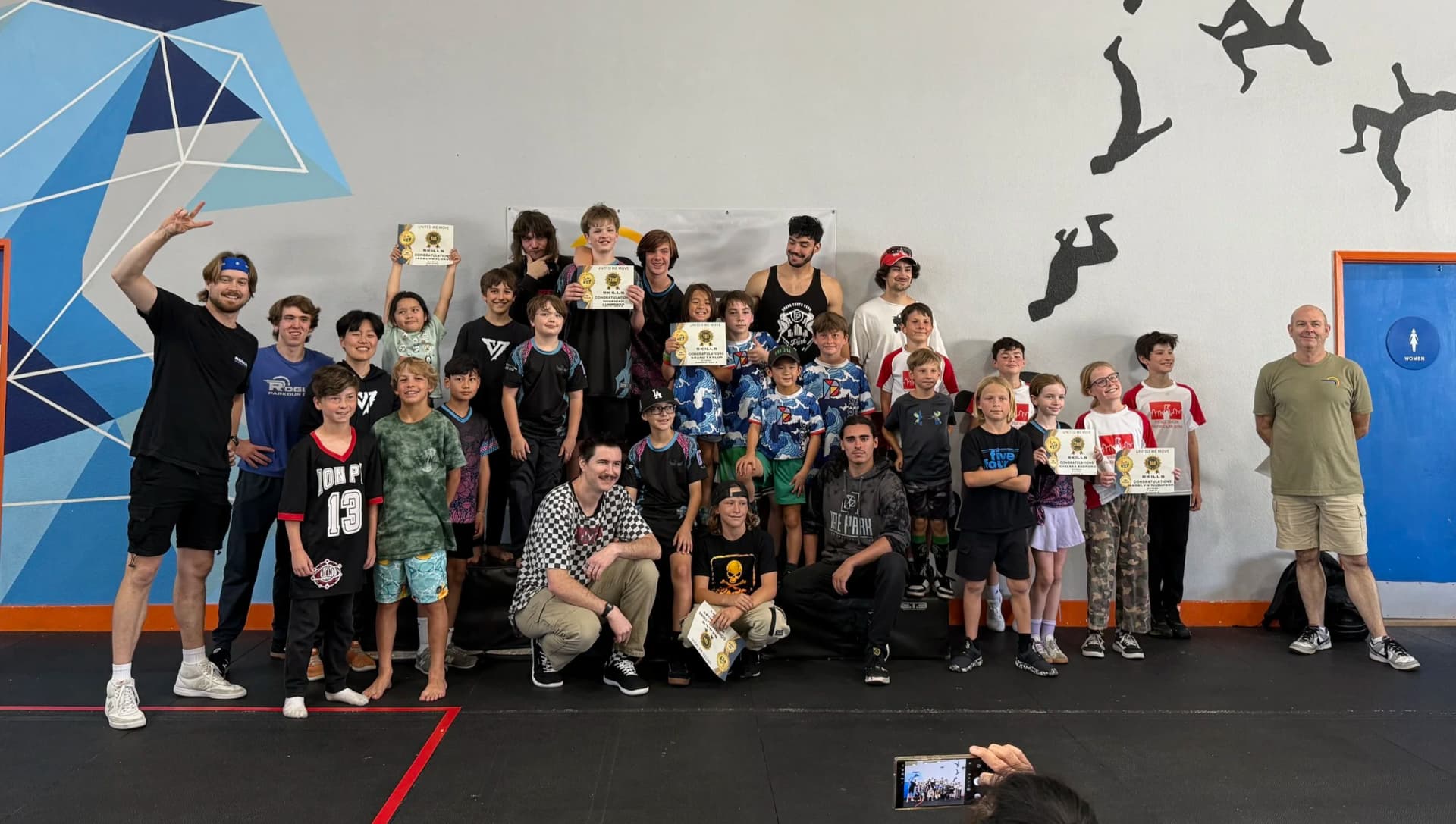
Rogue Parkour's youth results page makes the pipeline look real, not theoretical. Jacklyn Flores, Keanu Taylor and Zane Butler all showed they can translate form into results, while the youth men's field ran deep enough to fill 13 ranked spots in Skills and 11 in Speed.
Youth divisions are already sorting talent by discipline
Skills is where the first hierarchy appears, and the junior and youth lists tell you immediately which athletes are catching up to the sport’s technical demands. Jacklyn Flores won the juniors women’s division, Madelyn Thompson took first in youth women, and Chelsea Bedford finished second. On the boys’ side, Keanu Taylor won junior men, followed by Liam Guarin, Uriah Lunsford, Tevin Chang and Peter Stepenov, a compact top five that already feels like a real competitive order rather than a casual turnout.
The youth men’s Skills bracket went much deeper. Zane Butler led the way, then came Nehemiah Lunsford, Jude Link, Dashiell Trone, Azure Buss, David DiMaggio, Cian Hennigan, Sawyer Devenberg, Ivan Stepanov, Noah Meza, Colton Palmer, Henry Lopez and Evan Shishlov. That is not just participation, it is a ladder, with athletes spread across enough places to show that youth parkour in the United States is no longer waiting for a handful of obvious stars to show up.
Speed separates the all-around names from the pure burners
Speed changed the picture just enough to matter. In juniors women, Arra Ellison took first and Jacklyn Flores moved to second, a clean example of how a Skills winner can still be pushed in a straight-line test. Junior men stayed familiar at the top, with Keanu Taylor winning again, followed by Tevin Chang and Peter Stepenov.
The youth men’s Speed field gave the clearest look at specialization. Zane Butler remained on top, but the chase order shifted to Jude Link, Nehemiah Lunsford, Evan Shishlov, David DiMaggio, Colton Palmer, Cian Hennigan, Ivan Stepanov, Sawyer Devenberg, Jordan Yodowitz and Henry Lopez. That mix matters because it shows the event is not simply rewarding one type of parkour athlete, it is sorting who can carry precision, control and acceleration across different tests.
The important names are the ones that repeat. Jacklyn Flores appears near the top in both junior women’s Skills and Speed, and Keanu Taylor does the same in junior men, which suggests they are already building an all-around profile. Zane Butler’s double win in youth men is even more revealing, because it points to a younger athlete who can lead in both a technical and a speed setting without losing ground when the format changes.
The age bands are the point, not the paperwork
USPK describes itself as the national governing body for parkour, freerunning and L’Art du Deplacement in the United States, and the structure around these results shows how the sport is trying to mature. Its division bands break out junior athletes born in 2017 to 2019, youth athletes born in 2014 to 2016, teen athletes born in 2010 to 2013, adult athletes born in 2013 or before, and masters athletes born in 1986 or before. That kind of age sorting is how a sport stops guessing at talent and starts tracking it.
The next step is even more important. USPK says the top 10 athletes in each division from every regional championship qualify for Youth Nationals Week, scheduled for July 12 through July 17, 2026, at Woodward PA. The finale is open to junior, youth and teen athletes, and they will compete in SPEED, SKILL and STYLE, which means the strongest all-around programs are the ones that can develop athletes across multiple formats instead of forcing early specialization too soon.
That structure matters because USPK also says the U.S. competition scene is still in its infancy and continues to evolve. In a young sport, results pages like Rogue Parkour’s are not just scoreboards. They are evidence that the bottom of the pyramid is finally filling in, with enough juniors and youth athletes entering the system that regional performance can feed a national calendar instead of existing as isolated meets.
Rogue Parkour is acting like a feeder gym, not just a training space
Rogue Parkour sits at 8050 Ronson Rd in San Diego, California 92111, and its competitive footprint fits the results it just produced. The gym promotes kids and youth classes, camps and competitive team opportunities, which is exactly the kind of setup a sport needs when it is trying to turn casual participation into a sustainable athlete pipeline. That combination of coaching, repetition and competition is what gives names like Flores, Taylor and Butler a place to sharpen more than one skill set.
The deeper lesson from these youth results is not simply that a few athletes won twice. It is that the sport is beginning to show layers, with juniors and youth athletes already separating into all-around contenders, pure speed threats and a larger second tier that can still be pushed upward. When a results page can show 13 ranked youth men in Skills, 11 in Speed and repeat winners across disciplines, that is a sign the feeder system is starting to produce more than flashes.
This article was produced by Prism’s automated news system from verified source data, official records, and press releases, then run through automated quality and moderation checks before publishing. The system is built and supervised by the people who set the standards it runs under. Read our full AI policy.
Did this article answer your question?