Asia Pickleball Games sets standard for continental championship in Taichung
Taichung turned a tennis center into Asia’s pickleball blueprint, and APG now sets the regional standard for courts, rankings and prize money.

Taichung turned an ordinary tennis complex into a continental pickleball stage, and that conversion is the real story behind the Asia Pickleball Games. What began as a regional gathering has become a working template for Asian cities that want more than local play, because APG proved a tennis venue can be staged, broadcast, and credentialed like a major championship without waiting for a purpose-built arena.
Taichung’s conversion blueprint
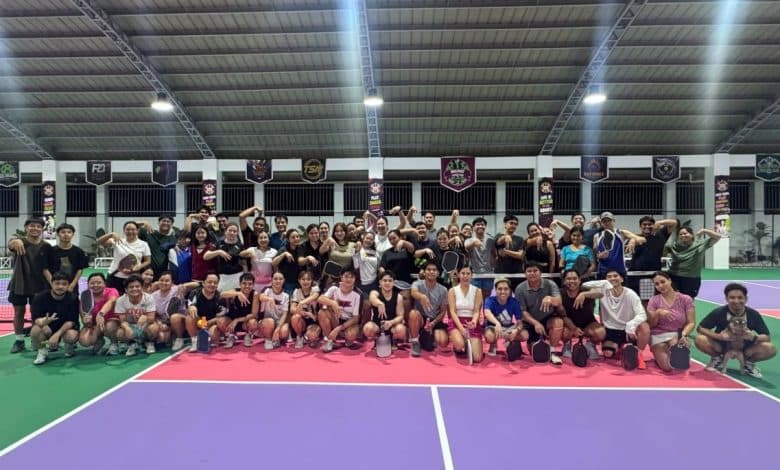
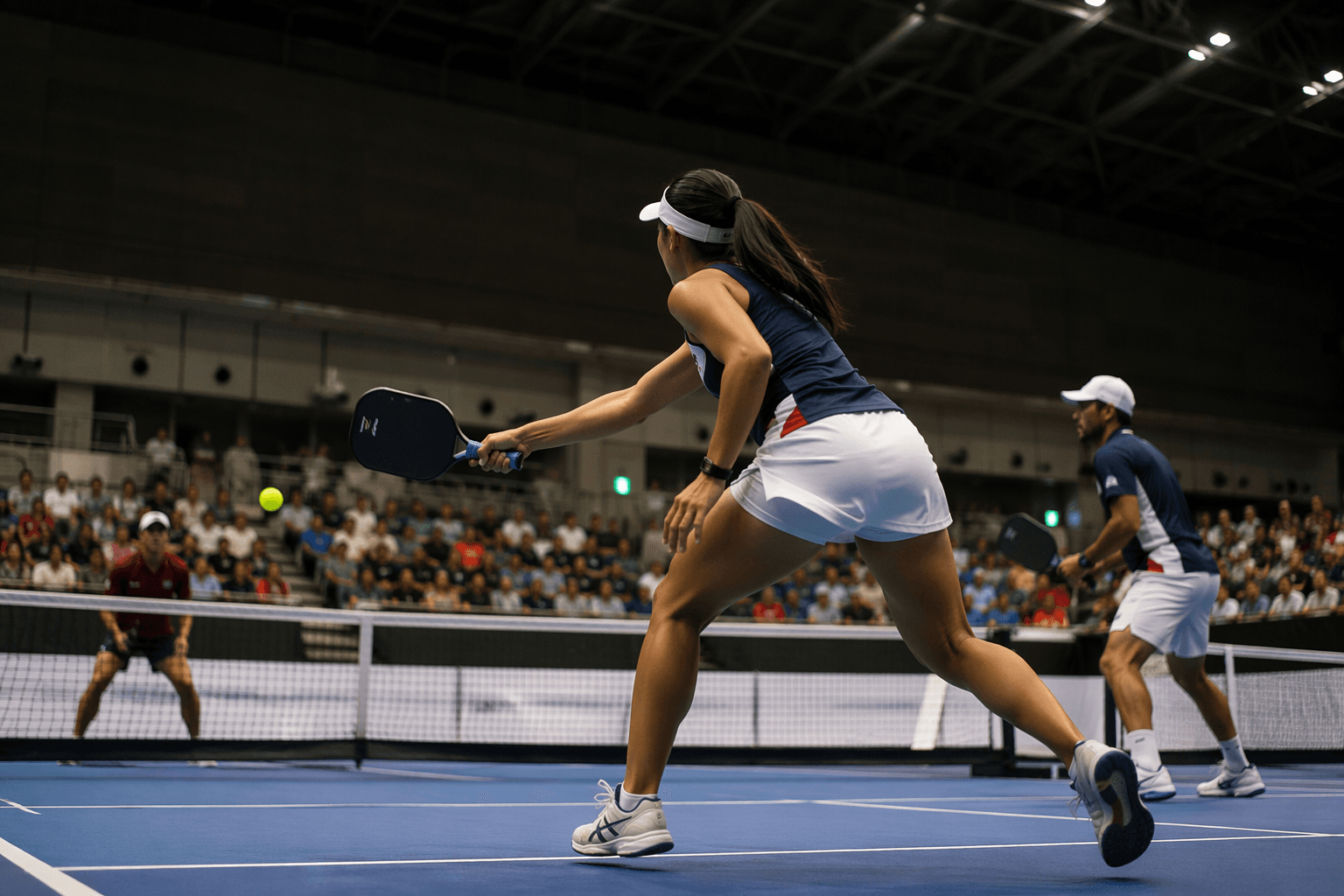
The first Asia Pickleball Games in 2023 did the heavy lifting. AFP turned the Taichung International Tennis Center into a pickleball showcase with 22 courts, about 500 of Asia’s best players, and roughly 800 visitors, while matches on two center courts were live-streamed. That combination matters because it shows how a venue can move from standard tennis use to a continental-stage event with enough court volume, sightlines, and media access to feel established rather than improvised.
The lesson for Asian cities is practical. Pickleball does not need a massive new build to signal ambition; it needs an existing site that can be converted quickly, laid out clearly, and presented with enough visual structure that the event reads as important on screen and on site. Taichung did that in 2023, and APG has spent the next two editions turning that one-off conversion into a repeatable formula.
The federation behind the format
AFP has built the framework around the event as carefully as the event itself. The Asia Federation of Pickleball describes itself as a non-profit organization dedicated to promoting and integrating Asia nations into the sport, and its public materials say it has 18 members and estimates 70,000 players in member countries. It also says it follows the official USA Pickleball rulebook and code of conduct, which gives APG a standardized operating language instead of the looser feel that still defines many emerging tournaments.
The ranking layer is just as important. AFP adopted DUPR as the official ranking platform for the inaugural APG, linking the Asian competition to a global rating ecosystem from the start. That move gave players a reason to treat Taichung as more than a regional stop, because results fed directly into a system that carries competitive meaning beyond the tournament week itself.
What APG 2024 added to the standard
The 2024 edition pushed the model from promising to credible. APG ran from October 24-27, 2024, in Taichung and drew 780 athletes from 11 countries and regions, with a US$20,000 prize pool. Taiwan News noted that the top three finishers in the open division qualified for USA Pickleball events and were exempt from registration fees, a clear incentive structure that linked Asia’s championship stage to the next level of competition.
AFP’s event materials sharpened the venue story even further. The Taichung International Tennis Center was described as built to Olympic Games specifications and converted into 22 to 26 outdoor pickleball courts, with center-court seating for 200 spectators. That scale is exactly what other Asian host cities still struggle to assemble: enough courts to support a real draw, enough seating to frame the best matches, and enough broadcast-friendly space to make the event feel premium.
How the championship worked on the ground
APG 2024 was structured with the kind of detail that separates a serious championship from a loose festival. AFP used the DUPR rating system and uploaded results to DUPR, then split competition across singles, gender doubles, and mixed doubles in 19+, 35+, and 50+ divisions, plus 4.0 and open categories. It required players to be Asian national ID or passport holders, limited each player to one event per day, and set a minimum of four teams per event, which made the field feel regional and controlled rather than open-ended.
The registration rules were just as specific. Fees were US$45 for 4.0 events and US$55 for open events, registration closed on September 23, 2024, and AFP said prize money would be credited through PayPal 30-45 days after the event, minus service fees. Those details matter because they show how APG is being built as a real competitive product, with defined entry standards, published payment terms, and a schedule that players can plan around.
- 2024 entry was limited to Asian national ID or passport holders.
- Each player could enter only one event per day.
- Prize money was paid through PayPal 30-45 days after the event, after service fees.
- Registration closed on September 23, 2024.
The combination of rules, rankings, and venue design is why Taichung now looks like more than a host city. It functions as a benchmark for what continental pickleball can look like when an organizer starts with an existing tennis center and builds upward from there, not outward into expensive construction.
Why the Taichung model travels
The strongest part of the APG blueprint is that it is repeatable. A city does not need to be the biggest market in Asia to matter; it needs enough court inventory, a venue that can be reconfigured cleanly, and an organizer willing to tie competition to a recognized ranking system and a formal rulebook. Taichung checked those boxes in 2023 and reinforced them in 2024 with larger fields, a clearer prize ladder, and tighter event logistics.
That is where many rival markets still fall short. They may have player interest, but they often lack the combination of infrastructure, standardized competition, and qualification pathways that turn interest into a true regional event. APG shows how pickleball in Asia advances fastest when the venue becomes part of the product, not just the backdrop.
The regional calendar keeps expanding
AFP’s broader schedule suggests APG is not an isolated flagship but part of a larger push to institutionalize the sport across Asia. Its 2025 tournament calendar included the inaugural Asia Pickleball University Championship in Da Nang, Vietnam, held July 17-20, 2025, extending the federation’s footprint beyond Taichung. That matters because it shows the same logic spreading: build events around clear standards, place them in cities that can convert existing facilities, and create a pathway that connects regional play to wider competition.
Taichung remains the clearest proof of concept. It has already shown that a converted tennis center, a published rulebook, a global ranking platform, and a clean prize structure can lift an Asian event into continental territory, and that is the standard the next host cities will be measured against.
This article was produced by Prism’s automated news system from verified source data, official records, and press releases, then run through automated quality and moderation checks before publishing. The system is built and supervised by the people who set the standards it runs under. Read our full AI policy.
Did this article answer your question?