Delhi High Court Upholds IPA Recognition as National Sports Federation
Delhi High Court dismissed AIPA’s challenge and upheld the Ministry’s April 25, 2025 recognition of the Indian Pickleball Association as the national federation, a key win for the sport’s governance.
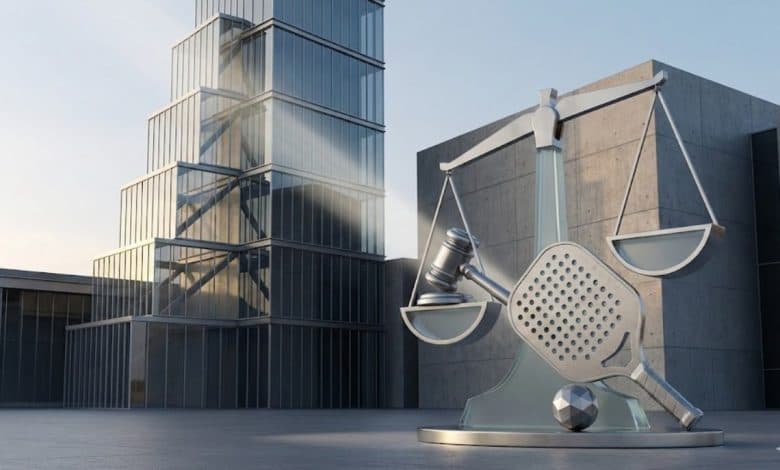
The Delhi High Court has upheld the central government’s decision to recognise the Indian Pickleball Association (IPA) as the National Sports Federation for pickleball, dismissing a writ petition by the All India Pickleball Association (AIPA). Justice Sachin Datta issued a written judgment dated 2 February 2026 in W.P.(C) 5736/2025, finding no legal infirmity in the Ministry of Youth Affairs and Sports’ recognition order of 25 April 2025 and the limited relaxations the Ministry granted to IPA.
The court framed its review around the National Sports Development Code of India, 2011, noting that "Sports Code is a consolidated set of executive instructions and not a rigid or immutable statutory framework." The judgment emphasised that nascent disciplines require contextual treatment, stating that "Nascent or emerging sports such as pickleball cannot be treated on par with legacy or established sports." On that basis the court declined to substitute its own view for the policy decisions of the Ministry, holding it was not the court’s role under Article 226 to sit in appeal over the comparative merits of rival sports bodies. The bench concluded the Ministry’s choice did not suffer from arbitrariness or manifest unreasonableness and dismissed the petition along with pending applications.
The Ministry had assessed IPA’s constitution as broadly aligned with key governance provisions of the Sports Code while finding AIPA’s constitution deficient in several mandatory respects. In the absence of an International Olympic Committee-recognised global governing body for pickleball, the Ministry placed weight on IPA’s affiliation with the Global Pickleball Federation, which it viewed as having a wider international footprint than the organisation linked to AIPA. The Ministry also exercised relaxation powers for emerging sports by exempting IPA from certain eligibility conditions, including the three-year prior existence requirement and the 50 percent district-unit affiliation threshold.
IPA was represented before the High Court by Senior Advocate Rajshekhar Rao, assisted by Ashish Verma and Saksham Thareja of SAAR Associates. The court declined to undertake a detailed fact-finding exercise on objections by a third applicant about IPA’s credentials and national events, directing that such objections be pursued administratively at the stage of annual renewal of IPA’s recognition.

For pickleball in India and across Asia, the ruling is a governance milestone. It clears a pathway for the recognised federation to organise national circuits, pursue government funding and athlete-support schemes, and consolidate selection and development pathways for top paddlers. The decision also underscores how regulatory flexibility in the Sports Code can accelerate institutional development for fast-growing sports, while preserving administrative checks through renewal and oversight.
Practically, players, coaches and tournament promoters can expect greater clarity in affiliation and sanctioning for domestic events, even as challenges over constitutionality and competitive representation may surface in administrative renewals. The High Court’s ruling hands IPA the immediate institutional authority to build the national calendar and international interfaces but leaves open the administrative renewal process as the forum for any lingering disputes.
This article was produced by Prism’s automated news system from verified source data, official records, and press releases, then run through automated quality and moderation checks before publishing. The system is built and supervised by the people who set the standards it runs under. Read our full AI policy.
Did this article answer your question?