How Asia’s racquet-sport culture is accelerating pickleball growth
Asia’s racket-sport base is turning into pickleball’s hidden engine. Yuta Funemizu shows why soft tennis, badminton and table tennis habits are translating so fast.

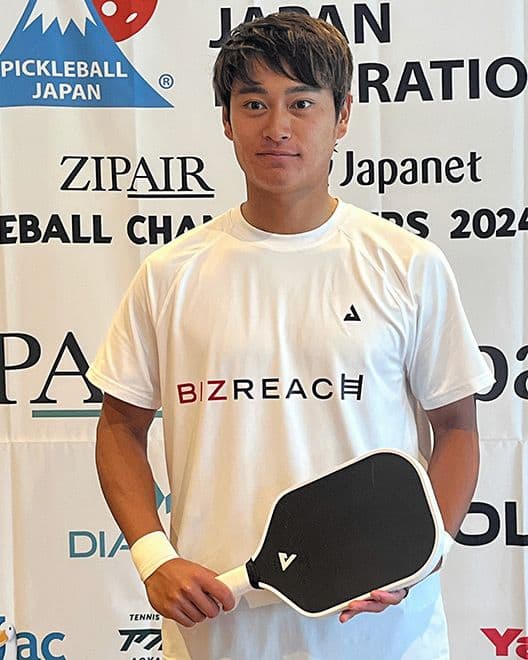
Yuta Funemizu came to pickleball from soft tennis and recognized almost immediately that his game had a place in the new sport. The same instincts that made him a champion in Japan could carry into a much bigger stage.
Funemizu’s crossover reveals the regional advantage
Funemizu said pickleball appealed to him because the court is narrower than soft tennis, rallies are easier to sustain, and beginners can start having fun after only 10 to 20 minutes of practice. It rewards precise control over brute force, keeps points alive long enough for new players to feel connected to the game, and gives racquet-sport converts an immediate sense that their old skills still matter.
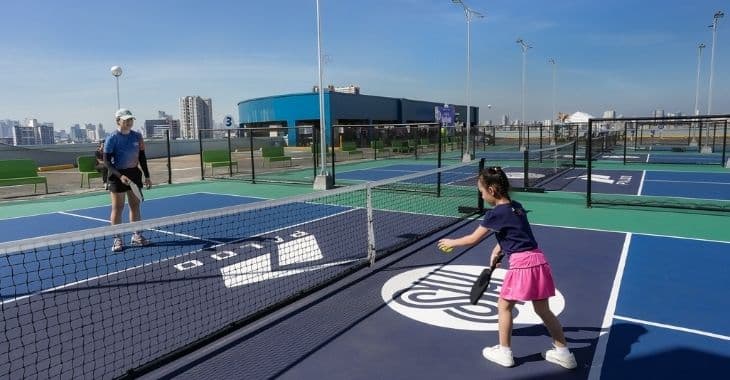
He also brought a teacher’s perspective to the sport. As a soft-tennis instructor in Japan, he saw how difficult racquet sports can be to teach when beginners cannot even serve well enough to begin a rally. Pickleball changes that learning curve. The game lets new players make contact, keep the ball in play and understand the geometry of doubles faster than many traditional racquet sports do.
Funemizu’s own career underscores how quickly that pathway can open. Funemizu is a soft tennis champion from Gunma, Japan. On February 27, 2025, the PPA Tour announced that he became the first Japanese player to sign an exclusive United Pickleball Association contract, making him eligible for the Carvana PPA Tour and Major League Pickleball.
What actually transfers from one racquet sport to another
The crossover is not abstract. It shows up in the habits players already own before they ever step onto a pickleball court. Soft tennis players arrive with an instinct for finesse and patience. Tennis players bring court sense, depth control and shot construction. Badminton players often understand quick reaction time and compact hand speed. Table tennis players tend to adapt fast to spin and paddle-angle adjustments.

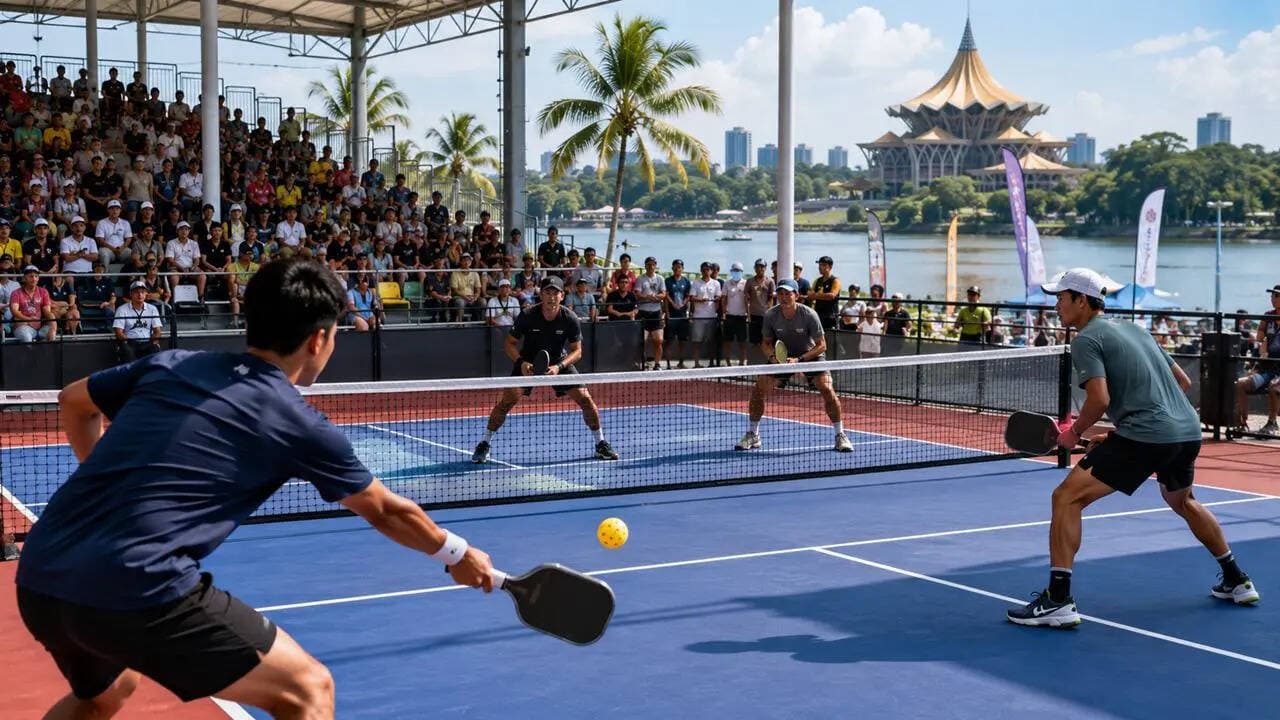
In pickleball, those traits decide who can reset a point, soften a volley, disguise a dink, or survive the kitchen exchange long enough to force a mistake. Asia’s best-developed racquet-sport pipelines are producing players comfortable with repetition, doubles communication and tactical adaptation.
Funemizu sees pickleball as a way to bring new fans toward tennis, badminton and table tennis rather than replacing them. In Asia, the sport is building a connected racquet-sport ecosystem where the same player can move between disciplines with less friction than in markets where racquet culture is thinner.
The numbers show a region already primed to grow
UPA Asia and YouGov surveyed more than 14,000 respondents across 12 Asian territories, with at least 1,000 respondents in each market. In that research, roughly 1.9 billion people in those territories were aware of pickleball, about 812 million had tried it at least once, and about 282 million said they play at least monthly. UPA Asia and YouGov found that awareness and participation across those territories rose 60% year over year.
About 28% of Asian pickleball players have racket-sport experience, UPA Asia’s survey found. When a new sport lands in a region where a meaningful share of players already understands racket mechanics, the adoption curve shortens. Beginners do not have to learn every athletic concept from scratch, and competitive players can often identify useful patterns much earlier.
In that research, pickleball was described as fun, healthy and easy to learn. It is accessible enough for newcomers, but still detailed enough to reward players who can read spin, vary pace and coordinate with a partner.
Asia is producing a distinct pickleball identity, not just new participants
Mia Athilla played competitive tennis for more than 10 years and is studying sports science at Universiti Teknologi Mara Shah Alam, with a Kuala Lumpur background that shaped her analytical approach. That combination helps Asia produce pickleball players who think in patterns, not just shots.
In China, Ben Johns said the sport feels like a natural fit because tennis and table-tennis athletes already have the hand skills, reflexes and racket background to adapt quickly. Across Asia, the base of players coming from tennis, table tennis, badminton and soft tennis is helping create a style that values touch, speed and tactical adaptability over pure power.
Asian pickleball often looks different from a version of the sport built in a less racquet-saturated market. The exchanges are sharper, the hands are quicker, and the doubles patterns are often more deliberate.
The institutions are catching up to the player base
The growth is now visible in the sport’s organizing structure. The Asia Federation of Pickleball lists 18 member organizations, and it supported the merger of the International Pickleball Federation and the World Pickleball Federation on November 30, 2024, a position it announced on December 2, 2024.
This article was produced by Prism’s automated news system from verified source data, official records, and press releases, then run through automated quality and moderation checks before publishing. The system is built and supervised by the people who set the standards it runs under. Read our full AI policy.
Did this article answer your question?