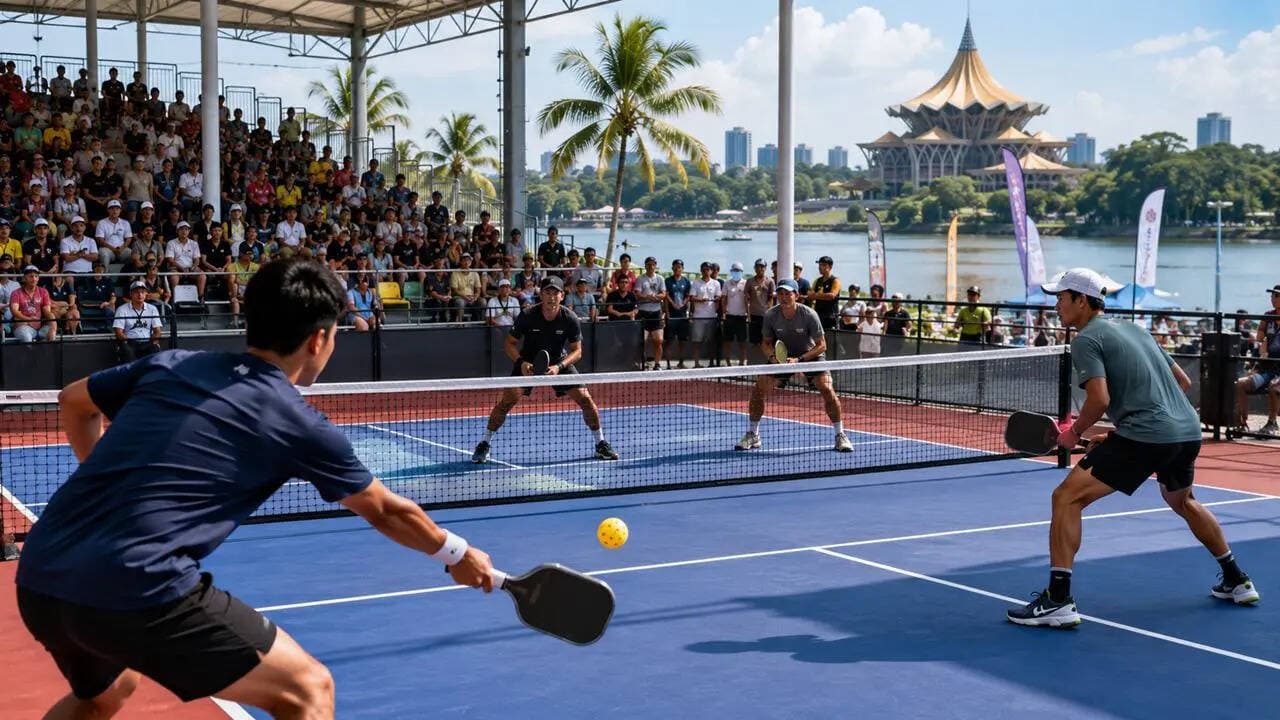
Intel Market Research Forecasts Rapid Growth for Pickleball Balls Market in Asia
Intel Market Research projects strong growth for the pickleball balls market in Asia, signaling rising demand, product innovation, and investment tied to expanding leagues and facilities.

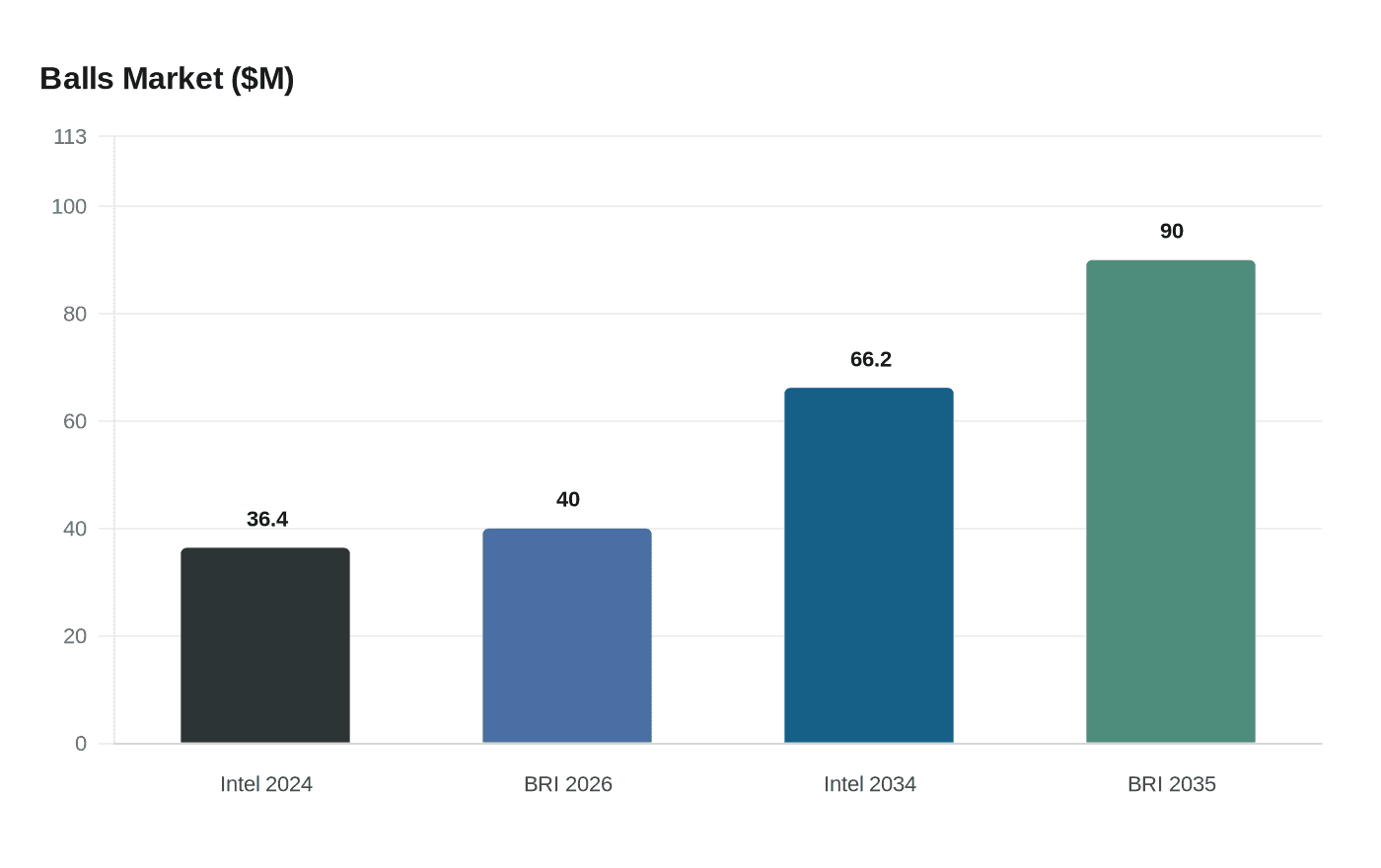
Intel Market Research estimates the global pickleball balls market at USD 36.4 million in 2024 and projects growth to USD 66.2 million by 2034, a compound annual growth rate of 9.2%. Those figures sit alongside alternative forecasts that paint a range of outcomes for manufacturers and retailers targeting Asia-Pacific courts. BusinessResearchInsights pegs the balls market at roughly USD 40 million in 2026 and forecasts about USD 90 million by 2035 at an 8.5% CAGR, while Cognitivemarketresearch offers a much more aggressive trajectory that places the market in the billions by the early 2030s.
The divergence in estimates matters for clubs, venue operators, and distributors across Asia because investment decisions hinge on scale. Market Us and Meticulous Research provide broader context about the sport’s ecosystem: the global pickleball market and equipment segments are expanding rapidly, driven by rising professional leagues, tournament growth, and infrastructure spending. “This substantial growth reflects the sport's unprecedented popularity surge, driven by its accessibility across age groups, the establishment of professional leagues, and significant investments in sports infrastructure development worldwide,” one industry summary states, underlining why ball suppliers are recalibrating supply chains for Asia.
Product performance is central to that recalibration. “Pickleball balls are specialized plastic balls with perforations, designed for the sport of pickleball a hybrid of tennis, badminton, and table tennis.” These balls “typically measure approximately 2.9 inches (7.4 cm) in diameter and are constructed from durable polymers to ensure controlled bounce and enhanced wind resistance compared to traditional tennis balls.” Manufacturers explicitly differentiate indoor and outdoor models through variations in weight, hardness, and hole patterns - changes that affect rally speed, spin behavior, and court strategy. Intel’s regional notes highlight practical performance needs in hotter climates: “Temperature-resistant formulations are critical for outdoor play in desert climates.”
For Asia, where facility builds from public courts to private clubs are accelerating, those technical choices will shape play. BusinessResearchInsights estimates that Europe and APAC together account for roughly 30% of market share outside North America, suggesting meaningful, if varied, demand across Japan, South Korea, India, Southeast Asia, and Australia. In the Middle East and Africa, Intel points to UAE and Saudi Arabia expatriate communities and luxury sports complexes as early adopters, while South Africa leads local uptake through existing racket sports infrastructure.
The competitive landscape is already populated by established brands preparing for scale. Onix Sports, Franklin Sports, Dura, Selkirk Sport, Pickleball Central, Wilson, Gamma, Engage and others appear across vendor lists, with suppliers pursuing eco-friendly material innovations, custom ball designs, and longer-lasting constructions aimed at tournament play.
For players and organizers, the immediate implications are practical. Expect wider product availability in regional pro and amateur tournaments, more indoor-outdoor differentiation on court schedules, and price competition as suppliers chase volume. For investors and facility operators, the conflicting forecasts underscore the need to clarify whether budget decisions target balls-only demand or the broader equipment and participation boom.
What comes next is confirmation: manufacturers will likely pilot temperature-resistant and eco-friendly lines in Asia, tournament organizers will standardize ball choices, and regional distributors will test varied price points. For anyone involved in Asian pickleball - from paddle shops to park managers - the market signals that supply and innovation are catching up to the sport’s rapid cultural and commercial rise.
This article was produced by Prism’s automated news system from verified source data, official records, and press releases, then run through automated quality and moderation checks before publishing. The system is built and supervised by the people who set the standards it runs under. Read our full AI policy.
Did this article answer your question?