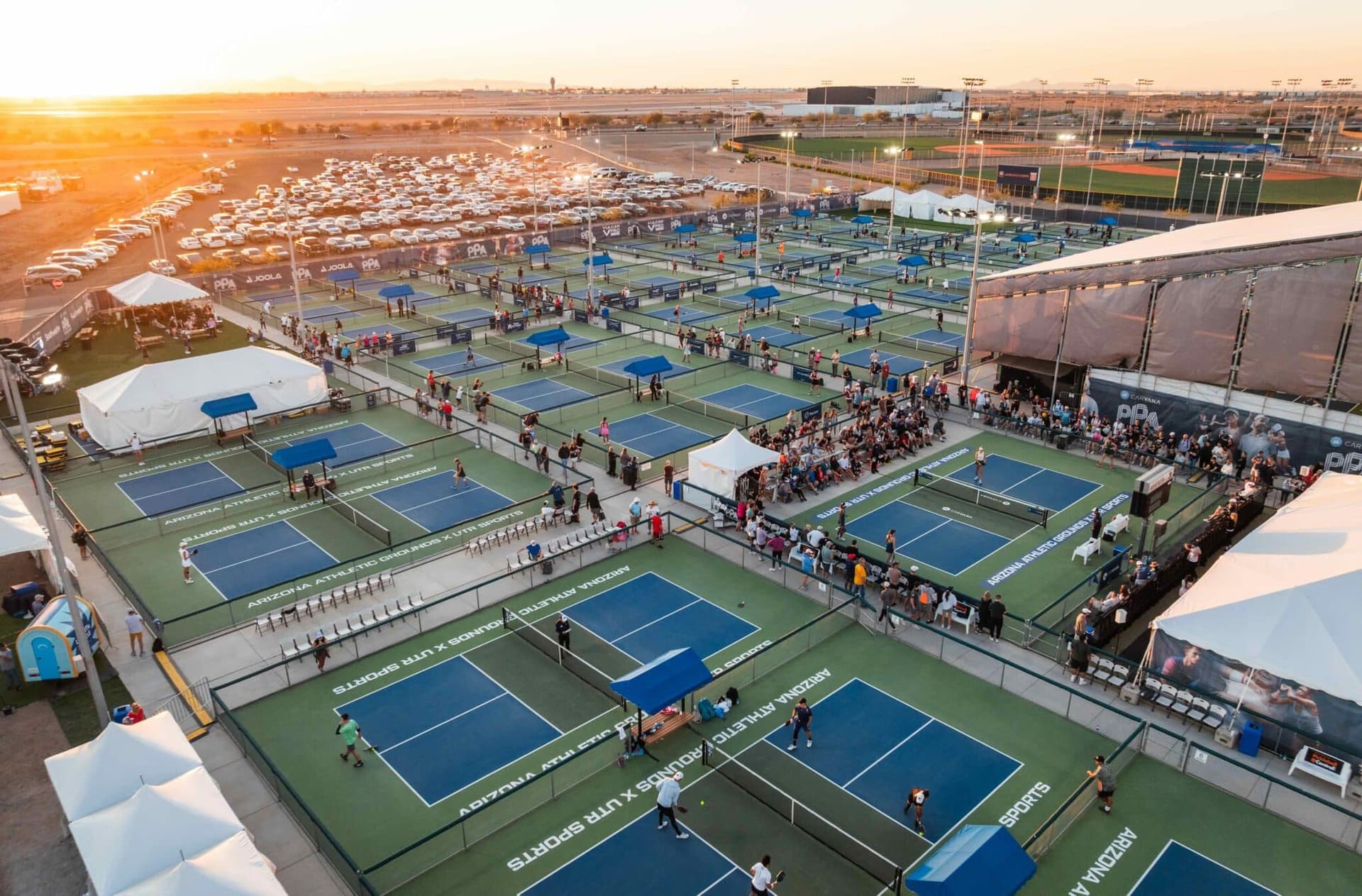
Japan’s pickleball boom spreads to streets, hotels and commercial hubs
Pickleball is turning Tokyo streets, towers and hotels into playable real estate. Japan's operators are betting city-center convenience will make the sport mainstream.
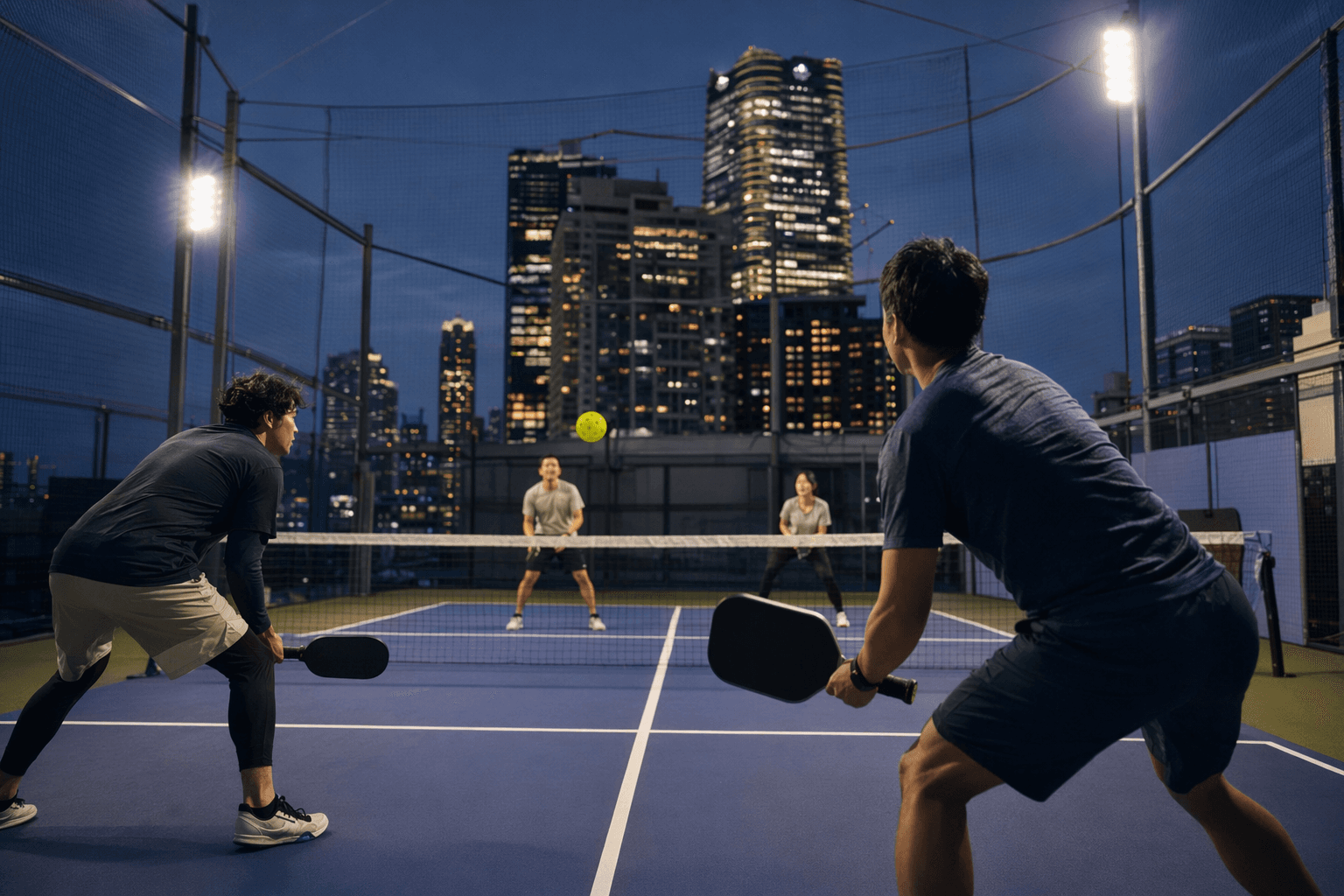
Pickleball’s new address is the city center
Pickleball in Japan has moved past borrowed gym time and into some of the country’s most valuable urban space. The sport is now showing up on streets, in hotels and inside commercial buildings, a sharp sign that it has become more than a niche hobby and is starting to behave like a mainstream city activity.
That shift matters because Japan does not give up central real estate easily. When operators place courts near Shimbashi Station, inside a hotel in Sakai, or under the shadow of Tokyo Tower, they are making a deliberate bet: pickleball is now strong enough to justify prime urban land, and convenient enough to fit into the rhythm of work, tourism and after-hours social life.
The market is signaling real scale
The most important reason this expansion is happening now is simple: the demand curve has become visible. Pickleball Japan’s site shows more than 3,100 registered members, 52 partner organizations and four official courts, which is still a small footprint compared with mass sports, but a meaningful base for a young market.
That base is being reinforced by growth numbers that have started to circulate widely. A cited study said participation in Japan reached about 45,000 by March 2025, nearly 390% higher than a year earlier. A 2026 market survey cited by Pickleball Japan went even further, putting the country at about 330,000 players and 11.89 million potential players. Those two figures are not the same type of measurement, but together they show why landlords, hotel operators and facility owners are paying attention: the sport is not just growing, it is still early enough to catch on before the market matures.
The institutional side is moving too. Japan’s two leading organizations, the Japan Pickleball Association and the Pickleball Japan Federation, signed a merger agreement on March 13, 2026, and the merger took effect on April 14, 2026. A unified national body gives the sport a cleaner structure for courts, events, sponsorship and facility planning, which is exactly the kind of framework commercial operators like to see before they commit space.
Why operators are giving up precious floorspace
Pickleball’s strongest selling point in Japan is not just that it is popular. It is that it is easy to package as an urban lifestyle product. The game attracts different generations, can be played by people with different athletic backgrounds, and works well as a social experience rather than only as a tournament sport. That makes it unusually attractive for cities where land is scarce and every square meter has to serve more than one purpose.
Tokyo’s new venues show the logic clearly. PICKLEBALL ONE GINZA SHIMBASHI was announced for November 2025 in the Shimbashi area, three minutes from Shimbashi Station, with operating hours from 6 a.m. to 11 p.m. That schedule is the giveaway. It is designed for before-work sessions, lunch breaks, evening play and a city crowd that wants flexibility, not a suburban sports park.
The same thinking explains why temporary courts are becoming permanent. Tokyo Tower’s pickleball court was first treated as a limited-time attraction, then became a permanent court on July 4, 2025 after drawing strong interest. When a tourist landmark decides the sport deserves a lasting footprint, that signals more than novelty. It suggests repeat demand, mixed use and the ability to turn a one-off activation into a revenue-producing amenity.
Hotels and commercial hubs are becoming the new court map
Hotels are now part of the story, and that is one of the clearest signs of mainstream arrival. Shinagawa Prince Hotel opened a dedicated indoor pickleball court on March 23, 2026, bringing the sport into a property that already knows how to serve business travelers, event crowds and weekend visitors. A hotel court is not just a room with lines on the floor. It is a statement that pickleball has become an amenity worth marketing in its own right.
Osaka has taken the idea even further. Pickleball Base Osaka opened on April 1, 2026 inside Hotel Agora Regency Osaka Sakai with six international-standard courts, making it one of the largest pickleball facilities in western Japan. That scale matters. Six courts mean programming power, group events, coaching capacity and the ability to host more than casual drop-in play. It also shows how hotels and mixed-use properties are starting to treat pickleball as a destination driver rather than a side activity.
The commercial message is clear: pickleball can increase foot traffic, extend dwell time and create a social reason to visit a building or neighborhood. In a market where retail and hospitality developers are looking for fresh uses that are active but compact, the sport fits neatly into the urban redevelopment playbook.
The sport is being sold as an urban experience, not just a competition
Japan’s pickleball push is also being shaped by placemaking. Pickleball Park activations at Nihonbashi and at the Toray Pan Pacific Open in Ariake show how the sport can be layered into tourism, shopping and large event programming. Organizers said about 6,000 people tried pickleball at the previous year’s Ariake event, a striking number for a sport still building its identity.
That kind of public trial matters because it lowers the barrier to entry. People do not need to commit to a club, a league or a long-term membership to experience the game. They can encounter it in a commercial district, at a landmark or next to a major tournament, then decide whether to book court time later. In other words, the sport is being marketed through the city itself.
That approach also explains why the message appeals across generations and nationalities. Pickleball does not need a huge footprint, and it does not require the kind of athletic specialization that can intimidate first-timers. In dense Japanese cities, that combination is powerful.
Which Asian cities are most likely to follow
Japan’s model points most directly to other Asian cities where land is tight, transit access is strong and mixed-use development is already central to urban life. Singapore is the clearest candidate, because the city-state already understands how to monetize convenience and premium location. Hong Kong fits the same logic, especially in hotel and mall corridors. Taipei and Seoul are also natural matches, with dense urban neighborhoods that can support station-adjacent or indoor formats.
The common thread is not national culture alone. It is urban form. Cities that can place pickleball inside hotels, office-linked retail, transit hubs or landmark properties will have the easiest time following Japan’s lead.
Japan’s boom is therefore about more than a sport getting popular. It is about pickleball proving it can live where city life actually happens, and that makes the next phase of growth look less like a recreation trend and more like a real estate story.
This article was produced by Prism’s automated news system from verified source data, official records, and press releases, then run through automated quality and moderation checks before publishing. The system is built and supervised by the people who set the standards it runs under. Read our full AI policy.
Did this article answer your question?