Philippines' Chill Pickle Club Grows From Weekend Games to International Courts
A referral-only Manila club featured on DZRH News is offering the sharpest blueprint yet for how Philippines players move from weekend rallies to international courts.
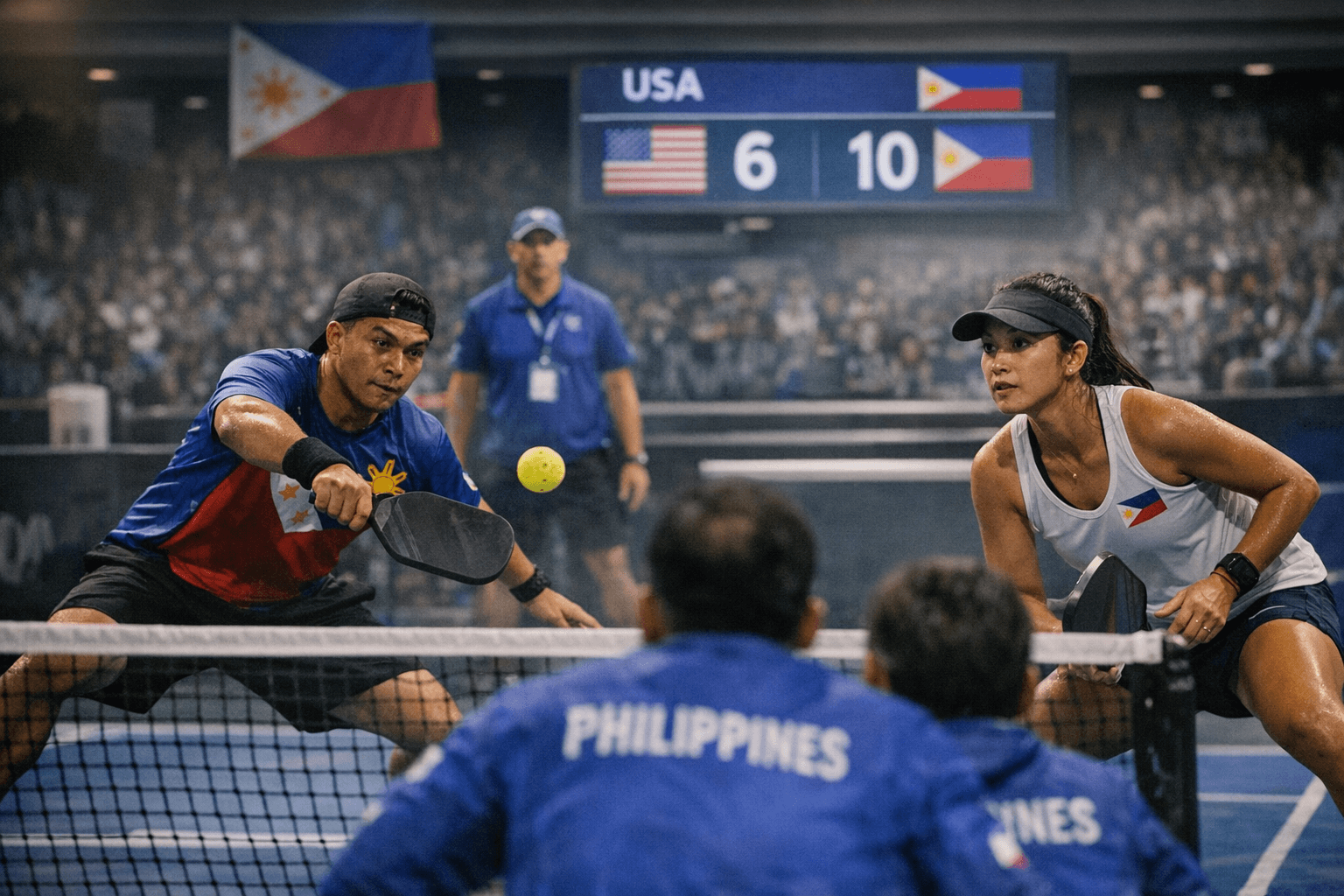
A referral-only pickleball club operating across three Metro Manila venues, the Chill Pickle Club has drawn national attention as one of the clearest examples of how the Philippines is building a legitimate pipeline from recreational play to international competition.
DZRH News, one of the country's most-listened-to radio and news outlets, recently featured the club as a marker of pickleball's growing depth in the Philippines. The club runs sessions at Rolling Hills Clubhouse in New Manila, QC Sports Club in Quezon City, and Forbeswood Heights in BGC, a geographic spread that covers some of Metro Manila's most active sports communities.
What began as weekend games among a tight circle of players has evolved into something more purposeful. The referral-only membership model, uncommon among Philippine clubs, functions as both a quality filter and a growth engine: every new member arrives already connected to the community, keeping the on-court experience consistent even as the sport's overall popularity surges.
The infrastructure around those courts has matured significantly. The Philippine Pickleball Federation's partnership with Pickleball Global gives players a formal global ranking pathway, meaning a Chill Pickle Club member can move from open play to a sanctioned national event and into internationally recognized competition with documented progression. The first Philippine Pickleball National Championship ran in Marikina in June 2025, followed by the first Philippine Pickleball Amateur Nationals, co-presented by Skechers, at Tela Park on March 29, 2026.
The national numbers behind that pipeline are stark. The Pickleball Philippines community has grown to more than 86,000 members, the PPF now recognizes 373 clubs and 911 courts nationwide, and the sport has existed in the country for barely a decade, introduced via a 2016 clinic in Cebu. The competitive calendar is filling in fast.
The one number that would turn this trajectory into a replicable model for clubs across Southeast Asia is how many Chill Pickle Club members entered at least one international sanctioned event in the past 12 months. That figure, alongside average per-player spend on coaching hours, travel, and tournament fees, would quantify what the DZRH feature confirmed qualitatively: the referral circles that built this club now have a clear, structured court to grow into.
This article was produced by Prism’s automated news system from verified source data, official records, and press releases, then run through automated quality and moderation checks before publishing. The system is built and supervised by the people who set the standards it runs under. Read our full AI policy.
Did this article answer your question?