Pickleball fits Asia's cities with compact courts and climate-smart builds
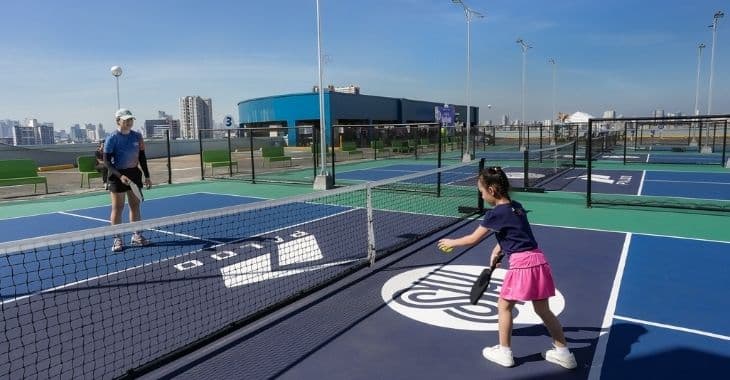
Pickleball’s real edge in Asia is land use, not hype. Its 20-by-44-foot court can slot into rooftops, schools, condos, malls, and converted halls where bigger racquet sports cannot.

A regulation pickleball court is only 20 feet by 44 feet. The non-volley zone runs 7 feet from the net on each side, and the minimum playing area with runoff can be about 30 by 60 feet, with a recommended 34 by 64 feet. That footprint turns pickleball from a novelty into an infrastructure question, because the sport can be built on land that is too tight for a full tennis complex but still large enough for organized, repeatable play.
Why the footprint changes the conversation
The math is the reason pickleball keeps showing up in places that already have roofs, floors, and fences. USA Pickleball recommends north-south orientation for outdoor courts to cut glare in morning and late-afternoon play, and its construction guide sets the net at 36 inches at the sidelines and 34 inches in the center.
That is also why the sport travels so cleanly across Asia’s dense urban footprint. Tennis asks for much more land, while badminton halls and futsal-style indoor floors already teach Asian cities how to think in multipurpose space. Pickleball slides into the same planning logic, with a compact rectangle that can be replicated instead of a facility that demands a rare parcel of vacant ground.
What a real Asia build needs
PickleAsia's Asian build guide imagines courts on compact balconies in Singapore, rooftops in Bangkok, and backyards in Kuala Lumpur. In the region, pickleball works more as a retrofit sport than a greenfield sport. Build choices have to match local weather instead of pretending every city has the same conditions.
For humid places, synthetic turf is one option; treated concrete brings durability; rubber court tiles help with drainage; and heat-tolerant asphalt or painted concrete makes more sense in drier places. Portable nets, shade structures, and drainage are not extras in Asia, they are part of the build. When a court has to survive monsoon rain, tropical heat, and daily use on a shared surface, the venue design matters as much as the lines on the floor.
The sport’s standardized geometry is such a practical asset. It is small enough to be portable but structured enough to feel like a real sport, which is why converted badminton halls, school courts, community centers, and rooftop decks can all work without turning into temporary gimmicks. The best pickleball venues in Asia will not always be dedicated complexes. More often, they will be places that already serve something else during the rest of the day.
Where the next courts can realistically go
The obvious next build sites are the ones that already sit inside city life. Rooftops in Bangkok, condo common areas in Singapore and Kuala Lumpur, school courts, mall decks, and public recreation halls are all realistic because they already have traffic, access, and some version of the right surface. In Singapore, community clubs and ActiveSG sports halls are already hosting regular sessions.
The sport is not growing from the top down. It is growing through places that can be shared, scheduled, and reused. A school court can run daytime classes and evening social play. A condo deck can serve residents without needing a full stadium budget. A mall or community complex can treat pickleball like another piece of the leisure mix, alongside fitness rooms, futsal floors, and other multi-use spaces that depend on efficient turnover.
The numbers show a market that is already wide
The demand story is no longer theoretical. UPA Asia and YouGov found in June 2025 that about 1.9 billion people across 12 Asian territories had heard of pickleball, 812 million had played at least once, and 282 million played monthly. The same research put Asia-wide growth at 60 percent year on year and found that 62 percent of respondents had learned about the sport within the last two years.
The awareness data also show where the pressure is building. Vietnam led awareness at 88 percent, Singapore was at 70 percent, Malaysia logged a 132 percent year-on-year awareness rise, and Vietnam posted 152 percent growth.
Singapore’s institutional setup shows how quickly that can become organized. The Singapore Pickleball Association is the official National Sports Association for the sport. In India, the Indian Pickleball Association is recognized by the Ministry of Youth Affairs and Sports, and the Indian Pickleball League calls itself the country’s first and only national franchise-based pickleball league. By the end of 2024, India had around 60,000 active players and more than 100,000 casual players.
Asia’s calendar is getting real, too
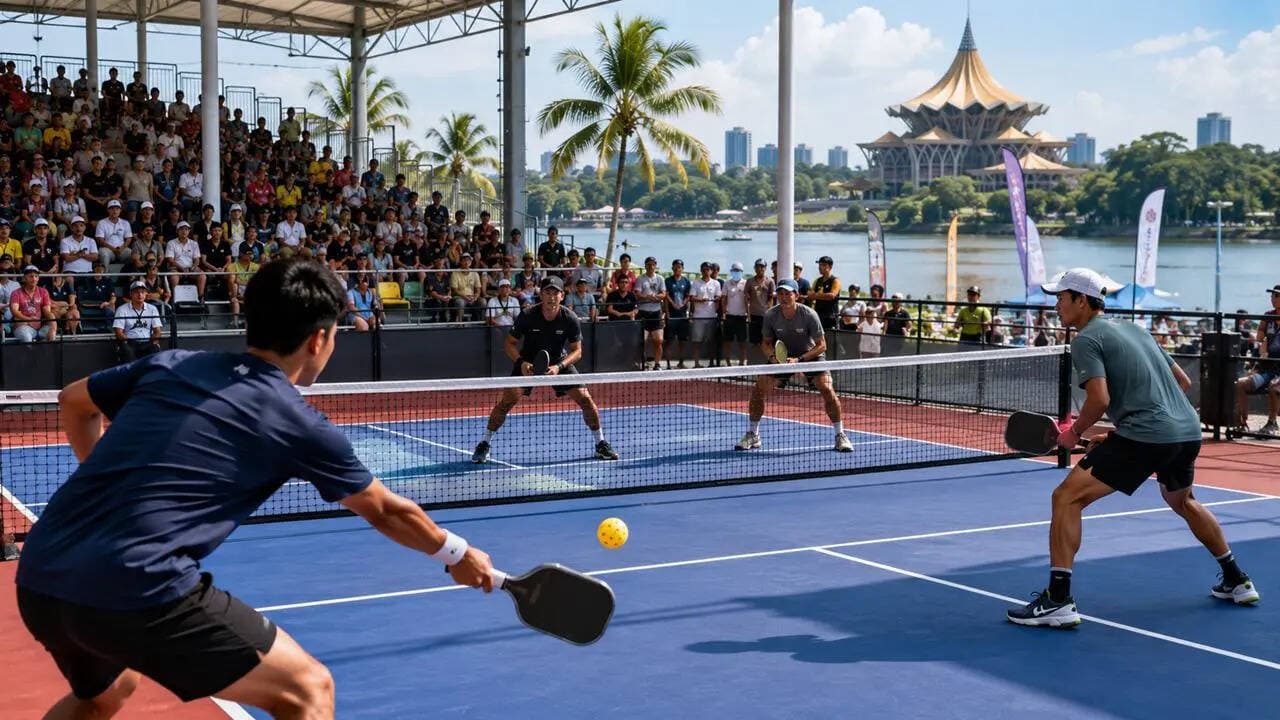
The competitive side is moving from scattered events to a regional structure. The Asia Federation of Pickleball has active communities in 15 Asian countries and regions, and its tournament pages list the first Asia Pickleball Games in Taichung, Taiwan, from October 6 to 9, 2023, along with the second Asia Pickleball Open in Phuket, Thailand, from March 14 to 18, 2023.
The latest signal came on June 25, 2026, when APP and AFP announced that APP Asia Tour had become the world’s first pro pickleball circuit to be dual-sanctioned by both the Asian Pickleball Association and the Asia Federation of Pickleball.
This article was produced by Prism’s automated news system from verified source data, official records, and press releases, then run through automated quality and moderation checks before publishing. The system is built and supervised by the people who set the standards it runs under. Read our full AI policy.
Did this article answer your question?