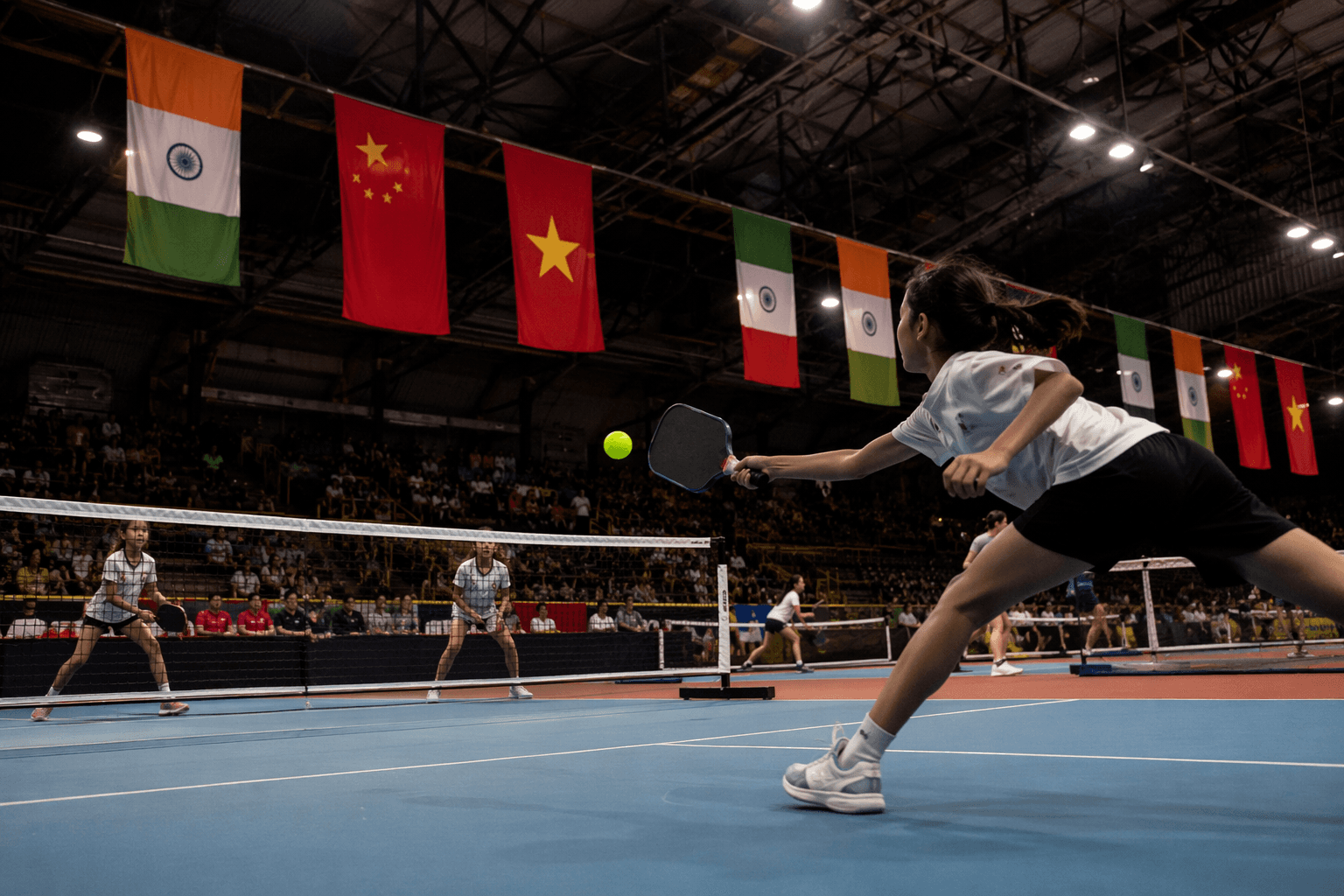
Pickleball surges in Asia, 1.9 billion aware and 282 million play monthly
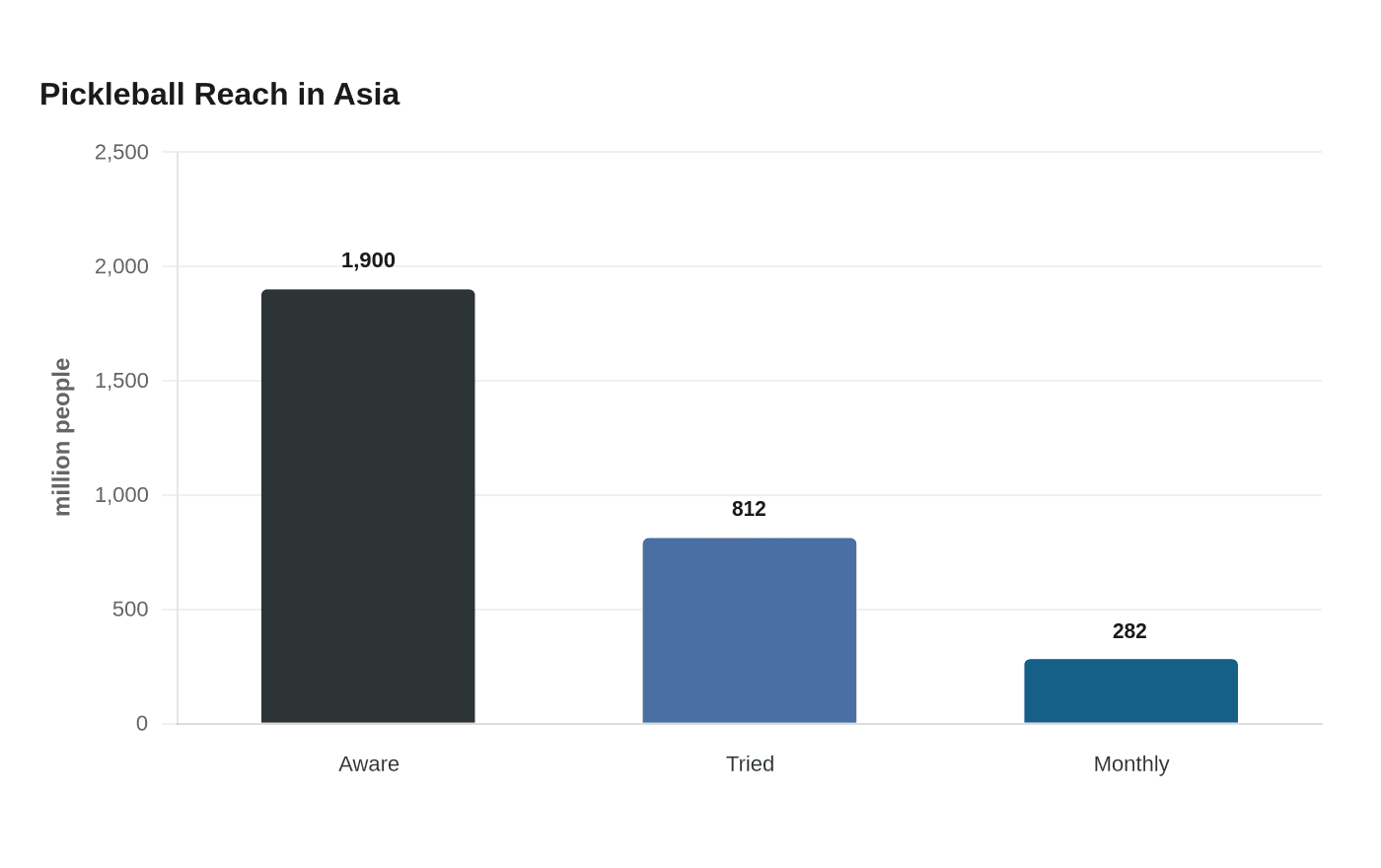
Asia already has 1.9 billion people aware of pickleball and 282 million playing monthly. Vietnam leads awareness as tours, courts and sponsors move toward the sport’s next frontier.

Pickleball is no longer a niche import in Asia when 1.9 billion people across the region already know the sport, 812 million have tried it at least once and 282 million are playing monthly. In a survey of more than 14,000 respondents across 12 Asian territories, UPA Asia and YouGov Singapore captured a market that looks less like an experiment and more like the next center of gravity for the sport.
The scale is already there
The numbers in UPA Asia and YouGov Singapore’s State of Play in Asia research matter because they measure far more than curiosity. The survey says pickleball has grown year-on-year across the territories it covered, which means the sport is not simply landing in one city or one club network. It is building repeat participation across a region large enough to support tours, coaching businesses, court developers and media inventory.
One press summary tied to the research pushed the scale even further, saying Asia has more than 178 million active pickleball players and that the figure is larger than U.S. participation. That comparison matters because it shifts the conversation away from “emerging market” language and toward a simple commercial fact: the sport’s center of mass is moving east.
Why people keep coming back
The survey also explains why pickleball spreads so quickly once it enters a market. Fun led the way, with 29% of respondents naming it as a reason they play. Another 27% said friends and family are already playing, which shows how quickly the game moves through social networks rather than only through formal clubs or elite programs.
That social pull is reinforced by another theme in the report: making new friends. Pickleball’s low-friction rules and mixed-ability format make it unusually well suited to dense Asian cities, where community recreation often has to do more with convenience and social energy than with traditional sport structure. The sport’s growth is therefore not only about competition. It is about a format that can be repeated, shared and adopted inside existing social circles.
Vietnam is the clearest proof point
If the regional headline is scale, Vietnam is the clearest sign that the sport is already deeply embedded in at least one Asian market. The survey found that 88% of Vietnamese respondents know about pickleball, the highest awareness level among the territories measured. A June 2025 summary of the same research said more than 37% of Vietnamese respondents had played, which places the country well beyond casual awareness and into meaningful participation.
That combination of awareness and play matters for what comes next. Markets like Vietnam can support more courts, more coaching, more local tournaments and more standardized pathways for players who want to move beyond casual games. It also gives organizers a concrete place to test how regional demand translates into local event attendance and sponsor interest.
What the business side sees
UPA Asia’s own positioning shows how seriously the industry is treating the region. The organization says it is bringing PPA Tour Asia and Major League Pickleball Asia to Asia, linking the survey directly to a broader plan for professional events and regional growth. That is the clearest sign that the market is being built as a competition ecosystem, not just a participation story.
For tours, the data points to a calendar that can be more than a single showcase stop. When hundreds of millions are already playing monthly, event organizers are not starting from zero. They are trying to convert existing participation into ticket sales, broadcast reach, sponsorship packages and talent pipelines that can sustain multiple markets at once.
For facility investors, the opportunity lies in repeat use. A region with 282 million monthly players needs places to play regularly, not just headline events. That creates room for purpose-built courts, club models and training spaces that can serve both recreational demand and the more formal pathway that professional circuits need.
For brands, the key signal is not just awareness but depth. A market where 1.9 billion people have heard of the sport and 812 million have tried it offers a much stronger base for activation than a one-off event stop. It is the difference between buying a logo placement and buying into a habit that already exists.
The institutional buildout is already underway
The wider ecosystem around the sport is starting to match the numbers. Singapore opened its Trailblazers programme for aspiring pickleball professionals in February 2025, a sign that player development is beginning to move from informal growth into structured pathways. That kind of program matters because it helps create the coaching, competition and progression ladder that fast-growing sports need once participation stops being the problem and organization becomes the challenge.
Around that same buildout sit UPA Asia, YouGov Singapore, the United Pickleball Association, the Asia Federation of Pickleball and the Asia Pickleball Summit. Together, they suggest a region that is moving from discovery to institution-building. The survey gives the market its size; the tours, development programs and regional organizations show how quickly the infrastructure is being assembled around it.
Asia’s pickleball story is compelling because it now has all the ingredients of a durable sporting economy: awareness on a continental scale, monthly play that reaches deep into the market, and a social logic that makes continued growth easier rather than harder. The next phase will not be about proving the sport exists in Asia. It will be about who builds the courts, schedules the events and owns the audience that is already there.
This article was produced by Prism’s automated news system from verified source data, official records, and press releases, then run through automated quality and moderation checks before publishing. The system is built and supervised by the people who set the standards it runs under. Read our full AI policy.
Did this article answer your question?